



Is Balsamic Glaze Healthy? When to Buy It and When to Make It
If you’ve ever stood in the grocery aisle wondering whether the little squeeze bottle of balsamic glaze is a If you’ve ever stood in the grocery aisle wondering whether the little squeeze bottle of balsamic glaze is a sneaky sugar bomb or actually fine, you’re asking the right question — but probably not the most useful one.
The most useful question is whether buying it (or making it) helps you eat better, more often, with less friction. Because a bottle of balsamic glaze in the fridge can be the entire reason you eat the cottage cheese bowl instead of ordering takeout. And that matters more than the ingredient label most of the time.
Here’s the honest answer on whether balsamic glaze is healthy, how to read a label without overthinking it, and when it’s worth making your own versus just buying a bottle and getting on with your life.
Quick Answer: Is Balsamic Glaze Healthy?
Yes, balsamic glaze can be a healthy-ish condiment when used the way it’s meant to be used — as a drizzle, not a dressing.
A teaspoon or two has somewhere around 20 to 40 calories and a few grams of sugar. That’s not a lot in the context of a meal. The real question isn’t whether the glaze is “clean enough.” It’s whether having it on hand changes what you actually eat.
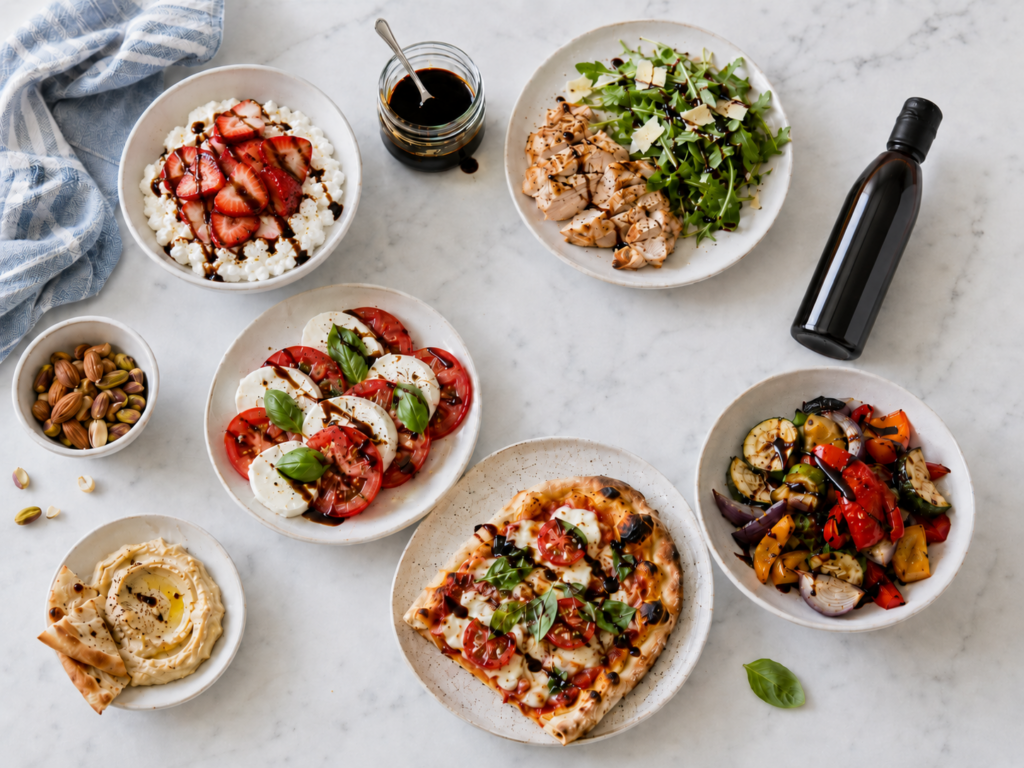
If a $5 squeeze bottle makes you more likely to eat a caprese bowl, a salad, roasted vegetables, grilled chicken, or a homemade pizza — instead of skipping the meal or ordering food — then the glaze is doing useful work. Far more useful than agonizing over whether the third ingredient is corn starch.
What Is Balsamic Glaze, Actually?
Balsamic glaze is balsamic vinegar reduced down until it’s thick, syrupy, and sweet enough to drizzle. You’ll also see it called a balsamic reduction — same thing, different name. “Reduction” is what cooks call it on the stove; “glaze” is what shows up on the bottle.
Sometimes that’s the whole story. Sometimes a brand will add a sweetener (sugar, honey, grape must, glucose syrup), a thickener (cornstarch, modified starch, xanthan gum), and occasionally caramel color or a preservative. The cheapest ones lean more on additives. The simplest ones are mostly just reduced vinegar.
So when someone asks “is balsamic glaze healthy,” the real answer depends a little on which bottle they’re holding. But not as much as you’d think — because you’re using a small amount.
Is Balsamic Glaze Good for You? The Honest Answer
The good news first.
Balsamic vinegar (the base ingredient) contains acetic acid and polyphenols, both of which have been studied for things like blood sugar regulation, gut health, and antioxidant activity. It’s low in fat, low in sodium, and pretty low in calories per serving.
In a small drizzle, balsamic glaze keeps most of those qualities. It’s not a superfood, but it’s a flavor booster that doesn’t come with a long list of downsides.
The things to watch:
- Added sugar. Cheaper glazes can have several grams of added sugar per tablespoon. That’s not a dealbreaker if you’re using a teaspoon, but it adds up if you’re pouring it on like dressing.
- Thickeners and additives. Some bottles use cornstarch or modified starch to get the syrupy texture without reducing the vinegar fully. That’s not dangerous, just less elegant.
- Caramel color. Some brands add it for a darker, more uniform look. Not harmful, but unnecessary in a well-made glaze.
- Portion creep. This is the one nobody talks about. A drizzle is a teaspoon. A “drizzle” can quickly become a tablespoon, then two. Sugar and calories scale with what’s actually leaving the bottle.
Is balsamic glaze keto-friendly? In a small drizzle, it can fit. Most bottles run 4 to 8 grams of sugar per tablespoon, so a teaspoon is around 1 to 3 grams of carbs. If you’re strict, look for a glaze made without added sugar (these exist — they’re usually just reduced balsamic vinegar with nothing else).
So Should You Buy It or Make It?
This is the part most articles skip.
Homemade balsamic glaze is almost always going to have a cleaner ingredient list. You decide the sweetness, you skip the thickeners, and you can use a good vinegar if you want to. On paper, it wins.
In real life, you have to actually make it. And that’s where “technically better” can quietly become “never happens.”
Making balsamic glaze takes about 15 to 25 minutes of mostly hands-off simmering, a clean small saucepan, the willingness to stand near the stove, and the patience to pull it off the heat before it looks done — because it thickens more as it cools.
I’ve over-reduced it. The result is sticky balsamic candy welded to the bottom of a pan, which is its own kind of life lesson.
That doesn’t sound like a lot. But it’s enough friction that on a Tuesday at 6 p.m., when you’re hungry and the difference between a cottage cheese caprese bowl and ordering food is whether the glaze already exists in your fridge, you may not make it.
So the real test isn’t which is better. It’s which one will actually live in your kitchen?
My Honest Take
Buy it if having a bottle in the fridge means you eat better-built meals more often. Make it if you already enjoy small kitchen projects and you’ll use it within a few weeks.
There’s no wrong answer — there’s only the version that gets used.
PS: Since food waste is a big drain to the budget, this is a key concept to saving money on groceries →
How to Make Balsamic Reduction (Balsamic Glaze) at Home
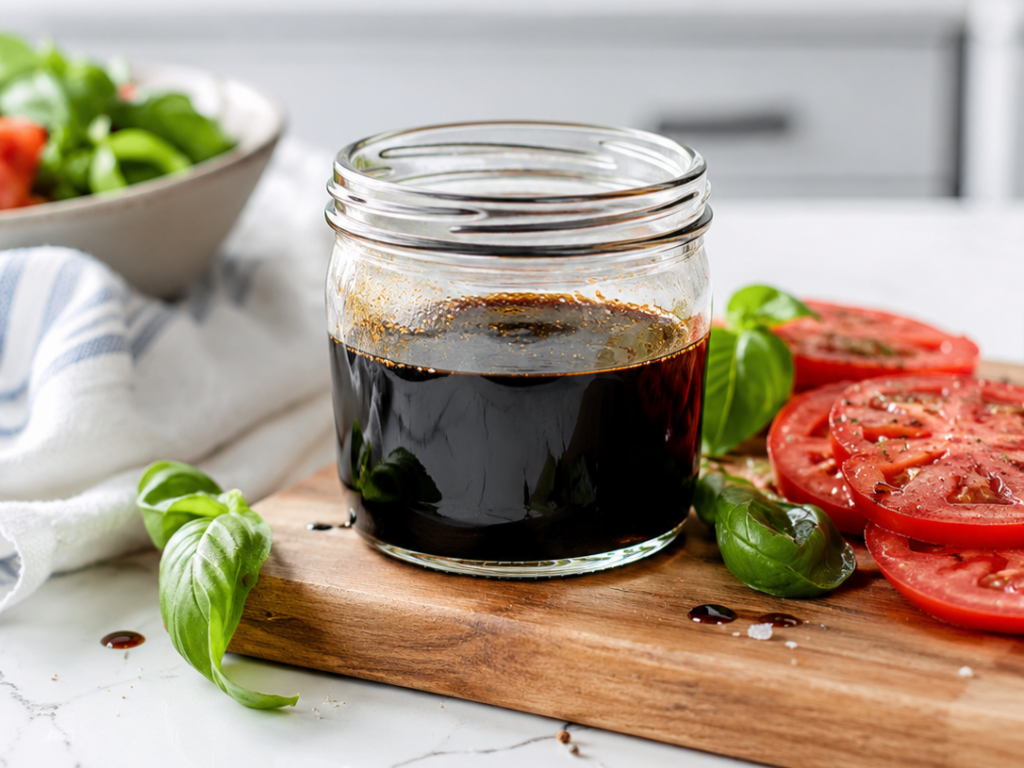
The short version: simmer 1 cup of balsamic vinegar in a small saucepan over low heat for 10 to 20 minutes, until it reduces by about half and coats the back of a spoon. Add a tablespoon of honey or maple syrup if you want it sweeter. Let it cool — it thickens more as it sits.
That’s the whole thing. The catch is that you have to actually do it, stand near the stove (it burns fast at the end), and pull it off the heat before it looks done.
Full step-by-step with tips on what to do if you over-reduce it: How to Make Balsamic Reduction at Home →
How long does it last?
Homemade balsamic glaze keeps for about 2 to 3 weeks in a sealed jar in the fridge.
Store-bought lasts much longer — often 6 months or more after opening — because of preservatives and lower water content. If you make your own, plan to use it.
What to Look for in a Store-Bought Balsamic Glaze
If you’re buying it, you don’t need a complicated checklist. You need a bottle you’ll actually reach for.
Here’s what I check:
- Balsamic vinegar (or “cooked grape must”) is the first ingredient. Not sugar, not water, not glucose syrup.
- No high-fructose corn syrup. Easy to skip.
- Lower added sugar where possible. Some glazes are reduced vinegar plus a touch of sweetener. Others lead with sugar. The label will tell you fast.
- A squeeze bottle. This sounds silly. It’s not. A squeeze bottle gets used. A jar gets forgotten.
- A flavor you actually like. If you’ve tried a brand and didn’t love it, don’t buy it again out of obligation. The whole point is that you use it.
Bottles Worth Trying
A few solid options across price points.
- Best everyday pick — Colavita Balsamic Glaze. Widely available, reasonable price, squeeze bottle, simple label. The “just keep one of these in the fridge” bottle.
- Best clean-label pick — De Nigris Balsamic Glaze. A short ingredient list and a recognizable flavor.
- Best for gifting or special occasions — Giuseppe Giusti Balsamic Glaze. More expensive, more complex, worth it for a charcuterie board or a caprese plate you’re proud of.
- Best no-added-sugar pick — Castillo de Pinar (No Sugar Added) Thyme Balsamic Vinegar Reduction. Useful if you’re watching added sugar specifically, but does have added thyme.
You don’t need all four. You need one that lives in your fridge and gets used.
Easy Ways to Use Balsamic Glaze on a Tuesday
This is the part that makes the bottle worth keeping. Balsamic glaze turns simple food into food you actually want to eat:
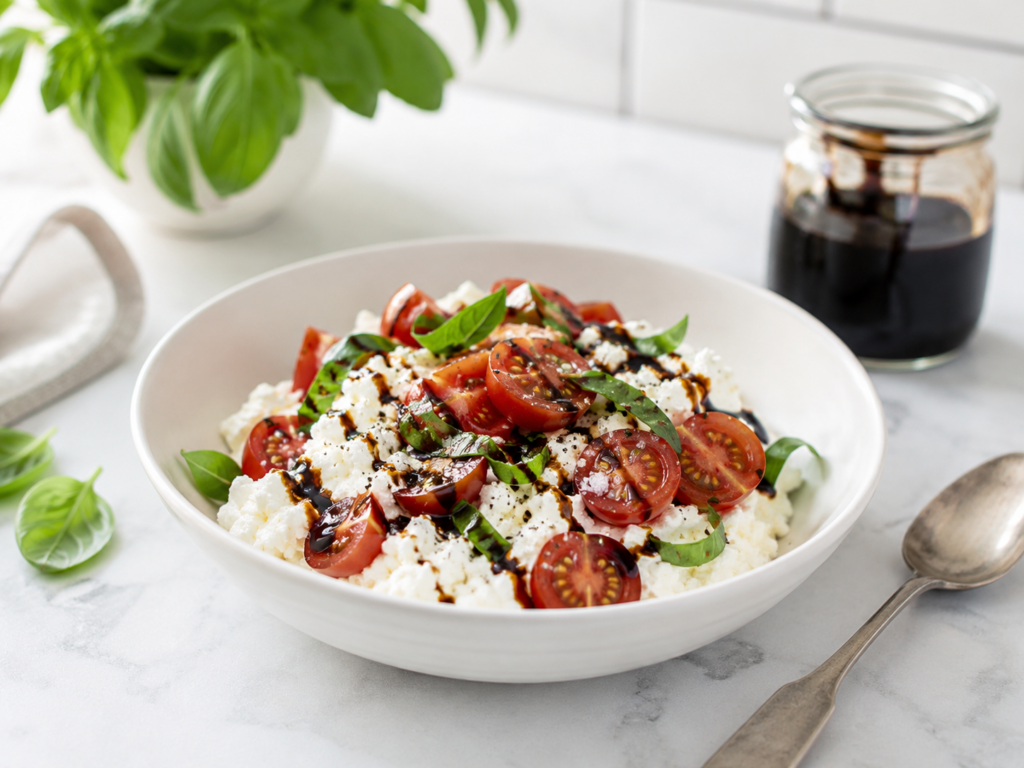
- Cottage cheese + halved cherry tomatoes + cracked pepper + balsamic glaze
- A tortilla pizza or flatbread with mozzarella and tomato, drizzled after baking (like this delicious homemade margherita pizza)
- Grilled or rotisserie chicken with mozzarella, tomato, and a drizzle
- A turkey wrap with lettuce, tomato, and a little feta
- Roasted sweet potatoes, carrots, or brussels sprouts
- A bag of pre-washed greens with whatever protein you have and a drizzle of olive oil + balsamic glaze
- A caprese-style bowl with mozzarella pearls, tomato, basil, and a drizzle
- Avocado toast with cottage cheese instead of just avocado
- Strawberries (yes, really — try it on plain Greek yogurt with berries)
None of these are recipes. They’re defaults. That’s the whole point of keeping the glaze around.
For more elevated snack ideas, check out these 15 cottage cheese snacks →
Final Word: Is Balsamic Glaze Healthy?
Yes, in the way most condiments are healthy — used in small amounts, on real food, in service of meals you’d actually choose to eat.
The healthiest version isn’t always the one with the shortest ingredient list. Sometimes it’s the one that helps you eat the better meal.
Homemade is great if you’ll make it. Store-bought is great if it means you’ll actually drizzle it on dinner instead of skipping the cooking part altogether.
Pick the one that ends up on your food. That’s the one that works.





Get the Weekly Wellth Newsletter
Stay up to date & receive the latest posts in your inbox.