



How to Save Money on Food Shopping: What Actually Works
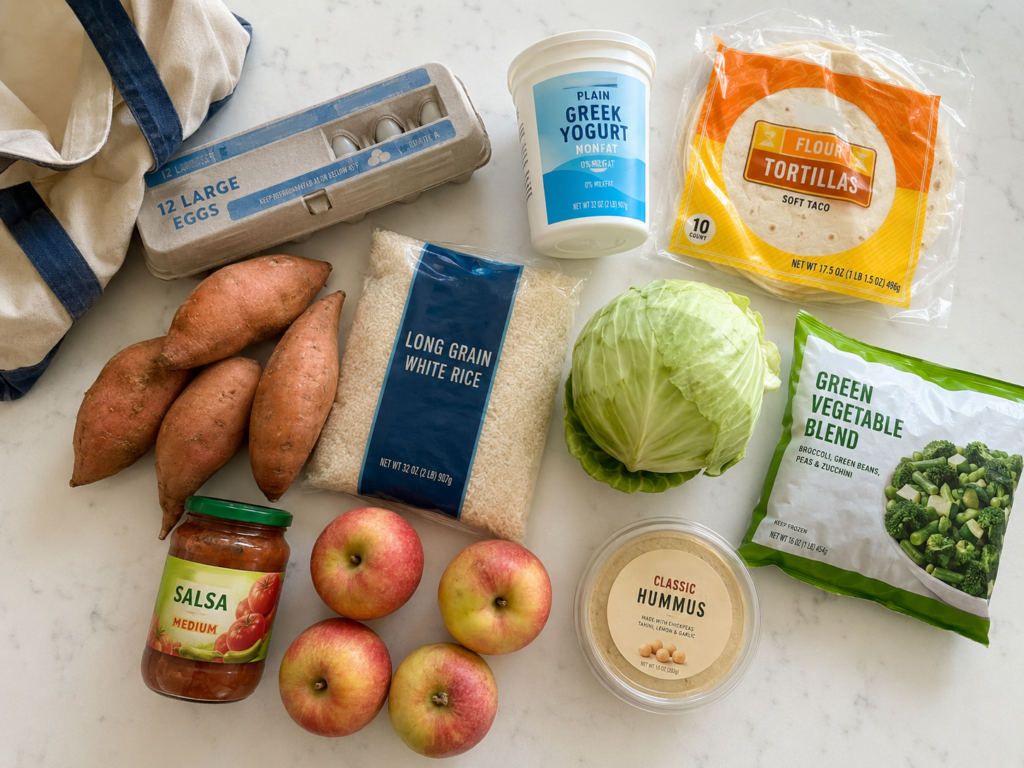
A few weeks ago, someone at a networking meeting asked a very real-life question: how can I save money on groceries?
Not in the extreme couponing way. Not in the “make every single thing from scratch and never buy a convenience food again” way.
Just in the normal-person way where food feels more expensive, life is already full, and you still want to eat well without feeling like every grocery trip requires a financial strategy session.
Someone mentioned shopping in season, which is true. Seasonal produce can absolutely be less expensive, taste better, and make meals feel more fresh with less effort.
But if we are talking about the most impactful ways to save money on food shopping, “shop in season” is only one small piece of the larger system.
The bigger grocery savings usually come from reducing waste, buying ingredients that actually work together, and making fewer expensive decisions during the week.
Because the real leak in most grocery budgets is not always the price of one item. It is the cart full of ingredients that do not turn into meals.
It is the produce that dies in the drawer. It is the extra grocery run because nothing in the fridge sounds good. It is the takeout order after you technically bought food, but not food that fits your actual life.
So if you are wondering how to save money on food shopping in a way that still supports your health, here is what actually works.
1. Build meals around one anchor ingredient
One of the simplest ways to save money on groceries is to stop planning every meal as a totally separate event.
Instead, choose one anchor ingredient and build several meals around it.
For example, sweet potatoes can become:
- breakfast hash with eggs
- taco bowls with beans, chicken, or ground turkey
- roasted cubes for salads
- stuffed sweet potatoes with Greek yogurt and salsa
- a side for chicken or burgers
- a base for a sheet pan dinner
- blended into soup
This works because you are not buying a different starch, vegetable, and flavor profile for every single meal. You are making one ingredient do more than one job.
Variety is expensive when every meal requires a brand-new grocery list.
That does not mean you have to eat the exact same meal all week. It just means your meals should overlap enough that the groceries get used.
Other good anchor ingredients include rice, cabbage, tortillas, eggs, Greek yogurt, rotisserie chicken, pasta, potatoes, oats, and frozen vegetables.
2. Plan ingredient systems, not perfect meal plans
Traditional meal planning can work, but it often falls apart because it assumes your week will go exactly as planned.
Monday: tacos.
Tuesday: salmon.
Wednesday: stir fry.
Thursday: pasta.
That sounds organized, but if one night changes, the whole plan can start to feel annoying. You may not want the meal you planned. You may not have the energy to cook it. Or you may realize you bought ingredients that only work for that one recipe.
A better approach is to plan an ingredient system.
Think in categories:
Protein: chicken thighs, eggs, Greek yogurt, beans, ground turkey
Base: rice, potatoes, tortillas, pasta, greens
Vegetables: cabbage, carrots, frozen broccoli, zucchini, peppers
Flavor builders: salsa, buffalo sauce, pesto, soy sauce, Greek yogurt dressing
Easy add-ons: cheese, avocado, herbs, nuts, seeds, lemon
Now you can make multiple meals from the same cart.
Chicken, rice, cabbage, and salsa can become a taco bowl.
Chicken, frozen broccoli, rice, and soy sauce can become a stir fry.
Eggs, potatoes, cabbage, and cheese can become breakfast-for-dinner.
Greek yogurt, salsa, and roasted vegetables can become a quick lunch bowl.
This is how you save money on grocery shopping without making your meals feel painfully repetitive.
You are not removing variety. You are creating flexible variety from fewer ingredients.
3. Buy food for your real life, not your aspirational life
This might be the most important grocery-saving rule.
Do not buy groceries for the version of yourself who has unlimited time, energy, and executive function.
Buy groceries for the week you are actually in.
If you know you are in a busy season, do not build a cart around meals that require chopping six vegetables every night. If you know you are not going to wash and prep herbs, do not buy three bunches of herbs. If you know you do not reach for raw vegetables unless there is a dip or dressing you love, then buying raw vegetables without the dip is not a health decision. It is future food waste.
Aspirational grocery shopping often looks healthy in the cart and expensive in the trash.
Before you buy something, ask:
- Will I actually eat this this week?
- Do I know how I am going to use it?
- Does this ingredient fit more than one meal?
- Am I buying this because it supports my real routine, or because it looks like something a healthier version of me would buy?
Healthy eating gets a lot easier when it is built around your actual life.
4. Make boring your baseline
A lot of people spend too much on groceries because every week starts from scratch.
New breakfasts. New lunches. New snacks. New dinners. New recipes. New sauces. New everything.
That much novelty is expensive.
One of the most underrated ways to save money on food shopping is to make parts of your routine boring on purpose.
That could look like:
- the same breakfast most weekdays
- two lunch formulas you rotate
- one emergency dinner you always keep on hand
- the same protein prep most weeks
- a reliable snack setup
- a simple “use-it-up” meal before your next grocery trip
Boring does not mean bland. It means repeatable.
If you know you like Greek yogurt with berries, oatmeal with peanut butter, eggs and toast, or a smoothie, you do not need to reinvent breakfast every week. If you know a rice bowl works for lunch, keep the structure and change the sauce.
The goal is to reduce the number of food decisions you have to make.
Fewer decisions usually means fewer impulse buys, fewer wasted ingredients, and fewer nights where takeout feels like the only option.
5. Use the “one fun thing” rule
This is where grocery budgets can quietly fall apart.
You go to the store for normal groceries and somehow leave with a new drink, a seasonal snack, a dip, a protein bar, a frozen meal, a bakery item, and a specialty sauce you saw online.
None of those items are wrong on their own. The problem is when the cart becomes entertainment.
A simple rule: choose one fun thing per grocery trip.
One seasonal drink. One new snack. One fun dip. One convenience item. One bakery treat.
This gives you some flexibility without letting the entire grocery trip become a dopamine cart.
It also helps you notice which “fun” items actually add value.
If the fancy dip makes you eat the vegetables you already bought, great. If the new snack just becomes another half-open bag in the pantry, maybe it is not worth repeating.
6. Know when convenience saves money
A lot of grocery advice acts like convenience foods are automatically bad for your budget.
That is not always true.
Pre-cut vegetables, bagged salad kits, frozen rice, rotisserie chicken, steam-in-bag vegetables, and pre-made sauces cost more than making everything from scratch. But they are often still much cheaper than takeout.
The better rule is this:
Pay for convenience where it prevents a more expensive default.
A $6 salad kit plus chicken is usually cheaper than an $18 takeout salad.
A rotisserie chicken is cheaper than ordering dinner because you forgot to thaw protein.
Frozen rice is cheaper than abandoning the meal because one more step felt like too much.
Pre-cut vegetables are cheaper than buying whole vegetables that rot untouched.
Convenience is not the enemy. Unused groceries are.
If a convenience item helps you actually eat the food you bought, it may be a smart budget choice.
7. Shop your kitchen before you shop the store
Before you make a grocery list, check your fridge, freezer, and pantry.
Not in a vague “see what you have” way. Look for what is already halfway to becoming a meal.
For example:
- rice + frozen broccoli + eggs = fried rice
- tortillas + beans + cheese = quesadillas
- sweet potatoes + salsa + Greek yogurt = loaded lunch bowls
- pasta + frozen peas + parmesan = quick dinner
- cabbage + carrots + chicken = stir fry or slaw bowls
- oats + peanut butter + banana = breakfast
This step matters because duplicate buying is one of the easiest ways to overspend.
It also helps you build your grocery list around what you already own instead of starting from zero every week.
A good grocery list does not just answer, “What do I want to eat?” It answers, “What do I already have, and what do I need to turn it into meals?”
8. Use frozen produce strategically
Frozen produce is one of the best grocery budget tools because it helps solve three problems at once: cost, convenience, and waste.
Frozen fruits and vegetables are usually picked at peak ripeness, available year-round, and much easier to keep on hand than fresh produce. They also give you more flexibility because you can use what you need and leave the rest in the freezer.
This is especially helpful if you are trying to eat more produce without constantly throwing away sad greens and forgotten berries.
Frozen broccoli, green beans, peas, spinach, cauliflower rice, mixed vegetables, berries, mango, and cherries can all make healthy meals easier and more affordable.
This also connects to organic produce. You do not have to buy everything organic to make a healthy grocery cart. If organic produce is part of your grocery budget strategy, use the Dirty Dozen and Clean 15 as a prioritizing tool, not a rulebook.
I break down how to choose organic produce on a budget in this guide: Dirty Dozen and Clean 15: How to Choose Organic Produce on a Budget.
The bigger point: eating fruits and vegetables consistently matters more than building a perfect cart.
9. Stop buying ingredients with only one use
One-use ingredients are a hidden grocery budget killer.
These are the ingredients you buy for one recipe and then never touch again:
- specialty sauces
- random spices
- fancy cheeses
- fresh herbs with no second plan
- niche flours
- unusual condiments
- recipe-specific produce
- expensive toppings
This does not mean you can never buy something special. It just means the ingredient should have a plan beyond one meal.
A good rule: every ingredient should have at least two jobs.
Greek yogurt can be breakfast, dip, dressing, sour cream swap, or a creamy sauce.
Cabbage can be slaw, stir fry, taco topping, soup, or a bowl base.
Cilantro can go in tacos, eggs, bowls, salsa, soup, or salads.
Cottage cheese can become a snack, breakfast bowl, dip, or higher-protein sauce.
Tortillas can become wraps, quesadillas, breakfast tacos, chips, or mini pizzas.
The more jobs each ingredient has, the less likely it is to go to waste.
For more easy snack ideas built around flexible ingredients, you might also like 2 Ingredient Healthy Savory Snacks and these Cottage Cheese Snacks.
10. Build a cheap protein rotation
Protein can be one of the most expensive parts of the grocery bill, especially if every meal is built around a different meat or specialty item.
Instead, build a cheap protein rotation you actually like.
Some budget-friendly options include:
- eggs
- Greek yogurt
- cottage cheese
- canned beans
- lentils
- chicken thighs
- ground turkey or ground beef on sale
- rotisserie chicken
- frozen chicken
- canned tuna or salmon, if you like it
- deli turkey when it prevents a takeout lunch
The key is not just buying cheaper protein. It is buying protein that fits multiple meals.
Chicken thighs can work in rice bowls, salads, tacos, wraps, pasta, and sheet pan dinners. Eggs can work for breakfast, fried rice, sandwiches, breakfast-for-dinner, and snack plates. Greek yogurt can support breakfast, sauces, dips, and dressings.
When protein is already handled, dinner gets much easier. And when dinner gets easier, you are less likely to spend money solving the problem at the last minute.
11. Use store brands for boring staples
Store brands are usually most useful for the basics.
Think:
- oats
- rice
- pasta
- beans
- canned tomatoes
- frozen vegetables
- shredded cheese
- yogurt
- broth
- crackers
- spices
- flour
- sugar
- basic condiments
You do not have to buy the store brand version of everything. Some things are worth being picky about. But for boring staples, the savings can add up because you buy them repeatedly.
This is an easy way to save money on groceries without changing how you eat.
If the item is not the star of the meal, store brand is often good enough.
12. Make “use-it-up meals” part of the plan
Most people plan meals, but they do not plan for leftovers, odds and ends, and the random ingredients that need to be used before they go bad.
That is where use-it-up meals come in.
These are meals designed to absorb whatever is left:
- fried rice
- quesadillas
- omelets
- breakfast-for-dinner
- soup
- pasta
- rice bowls
- baked potatoes or sweet potatoes
- snack plates
- sheet pan dinners
- wraps
A use-it-up meal should be part of the plan every week, not a last-minute panic.
For example, if you grocery shop on Sunday, Thursday night might be your fridge clean-out bowl night. Use the leftover protein, the vegetables that need to go, a base from the pantry, and whatever sauce makes it work.
This is one of the most practical ways to save money on a grocery bill because it turns almost-wasted food into an actual meal.
A simple grocery savings framework
If you want a simple way to build a lower-cost grocery trip, use this framework:
Anchor ingredient + repeatable protein + flexible base + practical vegetables + flavor builders + one fun thing
Example:
Anchor ingredient: sweet potatoes
Protein: chicken thighs and eggs
Base: rice
Vegetables: cabbage and frozen broccoli
Flavor builders: salsa, Greek yogurt, buffalo sauce
One fun thing: a seasonal drink, dip, or snack
From that one grocery structure, you could make:
- chicken taco bowls
- sweet potato breakfast hash
- buffalo chicken rice bowls
- egg and cabbage stir fry
- loaded sweet potatoes
- chicken and broccoli rice bowls
- snack plates with dip and vegetables
That is the difference between buying groceries and building a food system.
Bottom line
Saving money on food shopping is not about becoming the most disciplined person alive.
It is about making the same ingredients work harder.
It is buying for your real life instead of your aspirational one. It is having enough structure that you do not have to make 47 food decisions every week. It is knowing where convenience helps, where it hurts, and which ingredients are actually worth repeating.
Shopping in season helps. Coupons can help. Store sales can help.
But the most impactful grocery savings usually come from reducing waste, reducing friction, and building meals from ingredients that actually connect.
Because the goal is not just a cheaper cart.
The goal is a grocery system that helps you eat well, spend less, and stop making dinner harder than it needs to be.
A BETTER WAY TO EAT HEALTHY
You don’t need more recipes to eat healthy you need a decision system
Get the guide to eating healthy without the overwhelm. We teach you exactly how to make better decisions around food, so eating healthy is easy.
Healthy Eating Decision System →



Get the Weekly Wellth Newsletter
Stay up to date & receive the latest posts in your inbox.