



Costco Optifiber Review: My Honest Experience Using It Every Day
I started using Costco Optifiber almost every day, and I just bought my second container.
That was not exactly on my 2026 wellness bingo card, but honestly? It has become one of the easiest health habits I have actually stuck with.
Fiber is one of those things most of us know we probably need more of, but it is not exactly exciting.
It does not have the same appeal as a new smoothie recipe, a protein-packed lunch, or a cute wellness product you can leave on your counter. It is more boring than that.
But boring does not mean unimportant.
For me, adding Costco Optifiber into my routine has been one of those small, low-friction health habits that quietly supports everything else.
Digestion. Regularity. Feeling full. Feeling a little more steady throughout the day. Having more energy because my body feels like it is actually working with me instead of against me.
This is my honest Costco Optifiber review after using it consistently, including how I started slowly, how I use it, how it compares to Benefiber, and whether I think it is worth buying.
Not a member of Costco? You can get Optifiber on Amazon here →
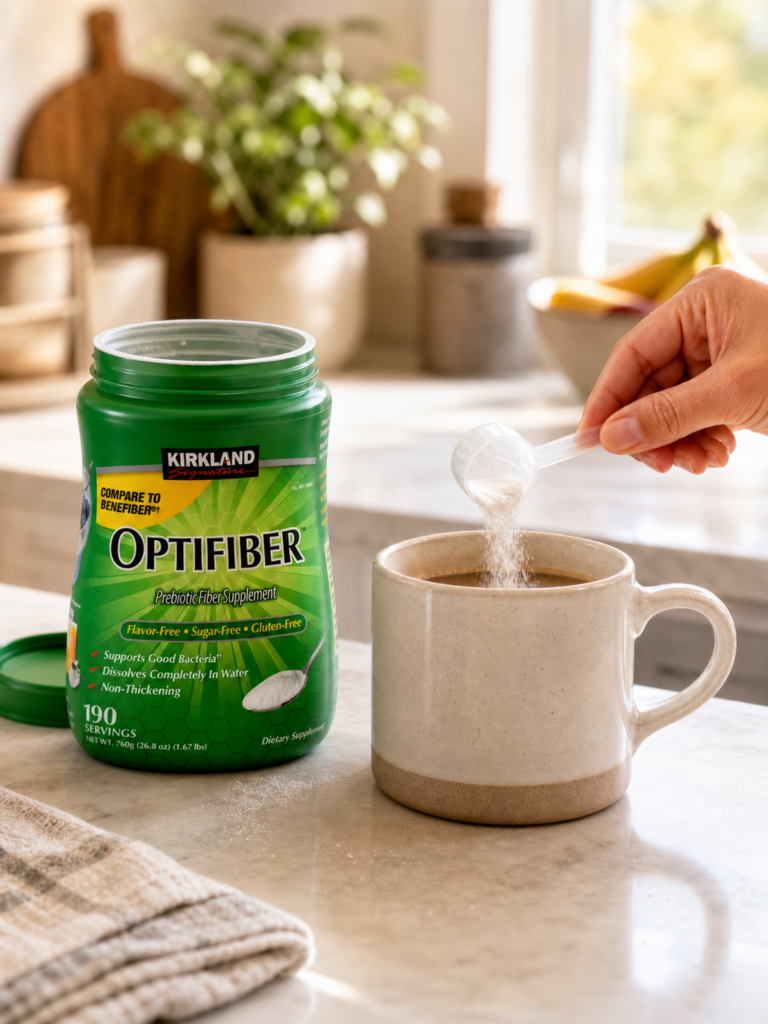
What Is Costco Optifiber?
Costco Optifiber is Kirkland Signature’s fiber supplement powder. It is sold in a large container and is designed to mix into drinks or soft foods without adding flavor, grit, or thickness.
The big appeal is that it is easy.
You do not have to prep anything. You do not have to cook anything. You do not have to overhaul your meals or suddenly become someone who eats lentils three times a day.
You just add it to something you are already drinking or eating.
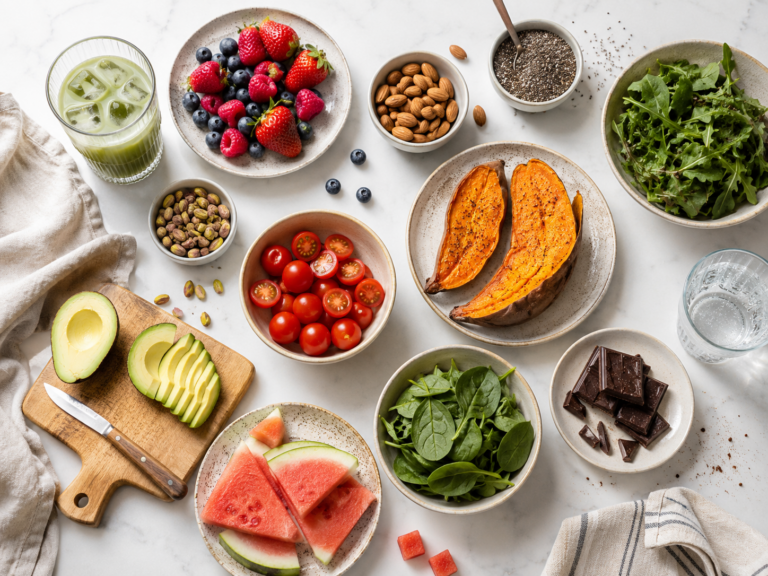
That is why I think it works so well as a habit. It is not replacing whole foods, and I would not use it as an excuse to ignore fruits, vegetables, beans, oats, chia seeds, or other fiber-rich foods. But as a practical way to increase fiber without making your life harder, I get the appeal now.
And clearly, I get the appeal because I finished my first container and went back for a second one.
Why I Started Using Costco Optifiber
I started using Costco Optifiber because I wanted an easier way to get more fiber into my day without making every meal feel like a project.
I care about gut health. I care about eating well. I care about giving my body what it needs to function better. But I am also realistic about what I will actually do consistently.
Some days, yes, I am making a smoothie with fruit, greens, protein, and all the good stuff. Other days, I need the lowest-effort version of a healthy habit possible.
That is where Optifiber has been helpful.
It gave me a way to make my existing routine slightly better without needing to build a whole new routine from scratch.
And honestly, that is the bigger Reach Wellth point here: the best health habits are often the ones you can actually repeat.
How I Started Slowly
The biggest thing I would tell anyone before using Costco Optifiber is this: start slowly.
I did not jump straight into multiple servings a day. I started with a smaller amount and gave my body time to adjust.
That matters because fiber can be really helpful, but adding too much too quickly can backfire. If your body is not used to a higher-fiber routine, suddenly increasing fiber can make you feel bloated, gassy, or uncomfortable.
So I eased in.
I started with a smaller amount than the full serving. Then I slowly increased as it felt comfortable. Eventually, I worked it into my day more consistently.
That slow approach is probably part of why I actually stuck with it. I was not trying to force a dramatic change overnight. I was building a habit my body could adjust to.
If you are trying Costco Optifiber for the first time, I would not treat it like a race. Start small. Drink enough water. Pay attention to how your body feels. Then increase gradually if it is working for you.
Quick note: If you are new to fiber supplements, start with less than the full serving and increase slowly. Adding too much fiber too quickly can be uncomfortable, especially if your body is not used to it yet.
How I Use Costco Optifiber
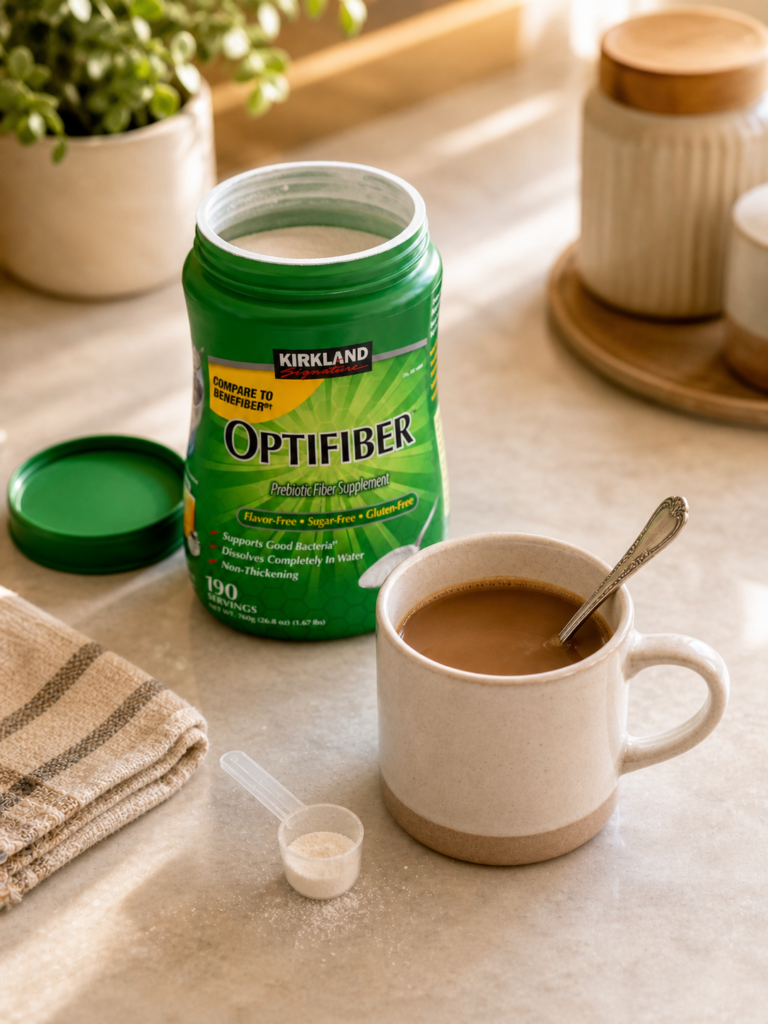
The reason I have used Costco Optifiber so consistently is because it is easy to add to things I already drink.
I usually mix it into whatever makes sense that day. The whole point is that it does not need to become a big production.
You could add it to:
- coffee
- tea
- water
- smoothies
- oatmeal
- yogurt
- protein drinks
For me, the best use is the one I will actually remember to do. That usually means adding it to something already built into my day.
I like that it does not change the taste in a noticeable way. I am picky about texture, and I do not want anything gritty or thick in my drinks unless that is the point of the drink. Optifiber works for me because it is not trying to be the main event.
It just disappears into the routine.
What I Noticed After Using It Consistently
I want to be careful here because I am not saying Costco Optifiber is some magical fix.
It is fiber. It is not a cure-all. It is not a replacement for eating well. It is not going to undo a chaotic diet, poor sleep, high stress, or not drinking enough water.
But I did notice a difference when I used it consistently.
The biggest thing was that I felt more regular. Not in a dramatic way, just in a “my body feels more predictable” way.
I also felt like it helped me feel steadier throughout the day. I do not know that I would credit Optifiber alone for more energy, because health is never that simple. But when I am getting more fiber, eating better, drinking enough water, and staying consistent, I do feel better.
And this helped make that easier.
That is really the point for me.
Costco Optifiber did not require me to become a different person. It just made one healthy choice easier to repeat.
Costco Optifiber vs. Benefiber
Costco Optifiber feels like the Kirkland version of Benefiber.
That is probably why so many people compare them. Benefiber is the more recognizable brand name, while Costco Optifiber is the warehouse-club version that gives you a large container at a Costco-style value.
Both are designed to be clear, taste-free, grit-free fiber powders that mix into drinks or soft foods. Benefiber describes its original powder as a plant-based prebiotic fiber that is clear and taste-free, and Costco describes Optifiber as dissolving in water, non-thickening, and grit-free.
The biggest difference for most people will probably come down to price, serving size, and where you shop.
If you already have a Costco membership and you know you will use the container, Optifiber makes a lot of sense.
If you do not have a Costco membership or want to start with a smaller container first, Benefiber is the easier brand-name option to compare.
For me, Costco Optifiber wins because I actually use it, the container lasts, and the price per serving is hard to beat.
Costco Optifiber Price Comparison
This is where Costco Optifiber gets interesting.
The container is large, and that is part of the value. Costco’s product listing shows Kirkland Signature Optifiber as a 26.8-ounce container with 190 servings. That means the cost per serving can be very low compared with smaller fiber supplement containers, depending on your local warehouse price.
Here is the simple way to compare it:
Costco Optifiber price ÷ 190 servings = price per serving
So if your container costs:
- $13.99 ÷ 190 servings = about $0.07 per serving
- $15.99 ÷ 190 servings = about $0.08 per serving
- $17.99 ÷ 190 servings = about $0.09 per serving
That is the real comparison that matters.
A brand-name fiber supplement may not look wildly expensive on the shelf, but once you compare price per serving, Costco Optifiber can be a much better value if you are using it regularly.
And because I just bought my second container, this is not theoretical for me. I actually used the first one enough to justify buying it again.
That is the difference between a “nice idea” wellness product and something that has become part of my routine.
Price tip: Check your actual Costco receipt or warehouse price before comparing. Costco prices can vary by location, but the price-per-serving math is what makes Optifiber worth paying attention to.
Where To Buy Costco Optifiber
Even though this is a Kirkland Signature product, Costco is not the only place I have seen it listed online.
You may also find Costco Optifiber on Amazon or Walmart, usually through third-party or marketplace-style listings.
That said, I would still compare the price carefully before buying.
Costco may be the best value if you already have a membership, while Amazon or Walmart may be more convenient if you do not shop at Costco or just want it shipped.
The main thing to compare is not just the container price. Look at the number of servings, the container size, shipping cost, and whether you are buying one container or a multi-pack.
Is Costco Optifiber Worth It?
For me, yes. Costco Optifiber is worth it.
Not because it is exciting. Not because it is trendy. Not because I think everyone needs a fiber supplement.
It is worth it because it is easy, affordable, and practical.
I am much more interested in health habits that remove friction than health habits that require me to be perfectly motivated all the time. Costco Optifiber fits into my real life. I can add it to something I am already drinking and move on with my day.
That matters.
If you are trying to increase your fiber intake, Costco Optifiber may be worth trying if:
- you already shop at Costco
- you want a lower-cost Benefiber alternative
- you prefer an unflavored powder
- you want something that mixes easily
- you are trying to build a simple daily fiber habit
- you will actually use a large container
I would probably skip it if you are not sure you will use it, if you do not tolerate fiber supplements well, or if you would rather start with a smaller container before committing to the Costco size.
What I Would Tell Someone Before Trying It
Start slowly.
That is the main thing.
Do not go from barely thinking about fiber to adding multiple servings a day overnight. Give your body time to adjust.
Also, drink water. Fiber and hydration go together. If you are adding more fiber but not drinking enough fluids, you may not feel your best.
And remember that this is a supplement. It can help fill a gap, but it should not replace fiber-rich foods.
The goal is always to get more fiber from real foods when possible: fruit, vegetables, oats, beans, lentils, chia seeds, flax, and whole grains that support your body in a more complete way.
But I also think there is room for practical help.
Sometimes the thing that works is the thing that makes the better choice easier.
Final Thoughts on Costco Optifiber
Costco Optifiber has become one of those boring health habits I actually appreciate.
It is not flashy. It is not complicated. It is not something I would have thought to write about a year ago.
But I have been using it almost every day, and I just bought my second container. That says a lot.
For me, it has been an easy way to increase fiber without overthinking it. I like that it mixes easily, does not have a strong taste, and fits into drinks or meals I already make.
And bigger picture, I like what it represents: a small daily habit that supports feeling better.
That is the kind of wellness I care about most.
Not perfect. Not all-or-nothing. Just practical, repeatable, and useful enough to keep doing.



Get the Weekly Wellth Newsletter
Stay up to date & receive the latest posts in your inbox.