



Easy Balsamic Glaze Recipe (Balsamic Reduction)
This easy balsamic glaze recipe is one of those tiny kitchen upgrades that makes simple food feel so much better.
Balsamic glaze, also called balsamic reduction, is made by simmering balsamic vinegar until it reduces into a thick, glossy, sweet-tangy drizzle. You can make it with just one ingredient, or add a little honey, maple syrup, or brown sugar if you want it sweeter.
And while I am usually very practical about when it makes sense to buy vs. make something, homemade balsamic glaze is one of those recipes that really is simple if you have a little time and patience.
The key phrase there is if you have the time and patience.
Because yes, homemade balsamic glaze is easy. But it does require standing near the stove, letting the vinegar reduce slowly, and pulling it off the heat before it gets too thick. If that sounds like too much friction on a busy weeknight, store-bought balsamic glaze can absolutely have a place in your fridge too.
But when you do have 15 to 25 minutes, this homemade version is so good. It makes homemade pizza, cottage cheese bowls, salads, chicken, roasted vegetables, wraps, and caprese-style snacks taste like something you would order at a restaurant.
That’s the real benefit. Balsamic glaze is not just a condiment. It’s a meal finisher. A little drizzle can make simple food feel like something you actually want to eat.
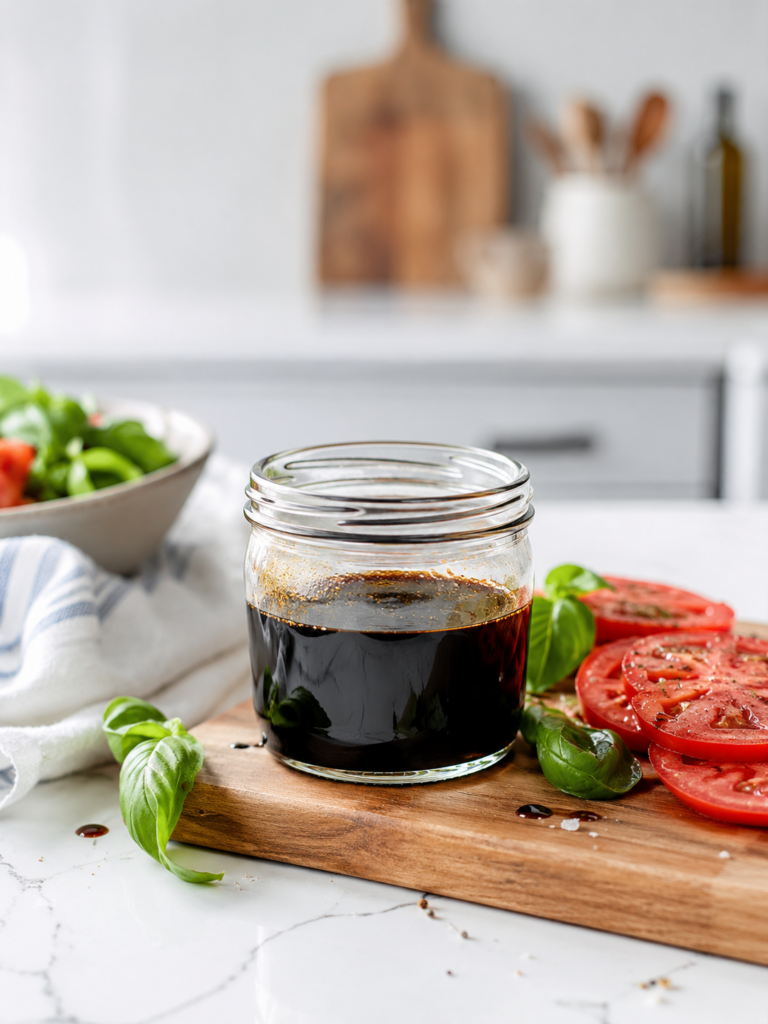
Quick Recipe Summary
Recipe: Homemade Balsamic Glaze
Also called: Balsamic reduction or balsamic vinegar glaze
Prep time: 2 minutes
Cook time: 10 to 20 minutes
Cooling time: 10 minutes
Total time: About 25 minutes
Ingredients: 1 to 2
Best for: Pizza, salads, caprese, cottage cheese, chicken, roasted vegetables, sandwiches, wraps, and bowls
What Is Balsamic Glaze?
Balsamic glaze is balsamic vinegar that has been simmered until some of the liquid evaporates and the vinegar thickens into a syrup-like consistency.
It tastes tangy, slightly sweet, rich, and a little sharp in the best way. It is thicker than balsamic vinegar, so instead of soaking into food like a dressing, it sits on top as a drizzle.
You will often see balsamic glaze used on caprese salad, margherita pizza, bruschetta, grilled chicken, roasted vegetables, and salads. But it is also one of my favorite “make healthy food taste better” shortcuts for everyday meals.
Try it on cottage cheese with tomatoes and cracked pepper. Drizzle it over a tortilla pizza after baking. Add it to a chicken bowl with spinach, mozzarella, and tomato. It gives simple ingredients a sweet, tangy finish that makes the whole meal feel more complete.
Balsamic Glaze Ingredients
You only need one ingredient to make balsamic glaze:
Balsamic Vinegar
Use a balsamic vinegar you like the flavor of because the taste becomes more concentrated as it reduces. You do not need the most expensive bottle, but I would avoid anything that tastes overly harsh or flat.
Optional Sweetener
You can make balsamic glaze without sugar. The vinegar will naturally become sweeter as it reduces.
But if you like a sweeter, thicker, more store-bought-style balsamic glaze, you can add:
- Honey
- Maple syrup
- Brown sugar
Start with 1 tablespoon per cup of balsamic vinegar. You can use 2 tablespoons if you want it sweeter, but I usually prefer keeping it more tangy than sugary.
How to Make Balsamic Reduction (Balsamic Glaze)
Making balsamic glaze is simple, but the timing matters. The biggest mistake is cooking it too long because it thickens more as it cools.
Step 1: Add balsamic vinegar to a saucepan
Pour 1 cup of balsamic vinegar into a small saucepan. If using honey, maple syrup, or brown sugar, add it now and stir.
Step 2: Bring it to a gentle boil
Heat the vinegar over medium heat until it starts to gently bubble. You do not need a hard boil.
Step 3: Reduce to a simmer
Once it starts bubbling, lower the heat to medium-low or low. Let it simmer gently, stirring occasionally.
Step 4: Cook until reduced
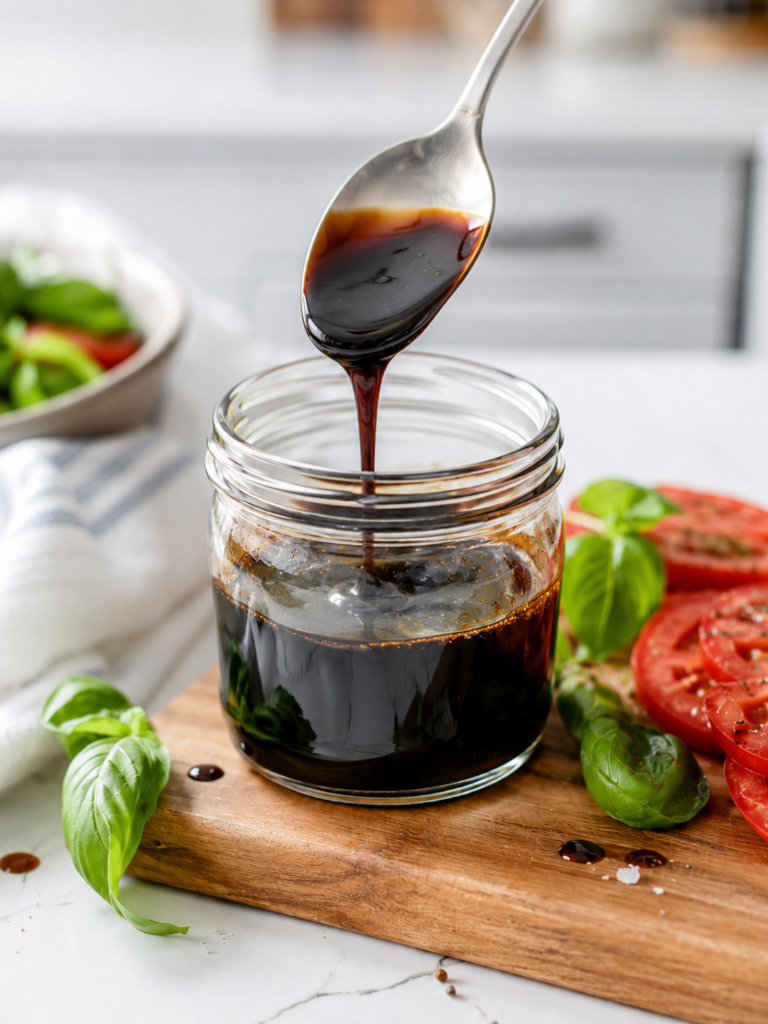
Simmer for about 10 to 20 minutes, or until the vinegar reduces by about half and lightly coats the back of a spoon.
The exact time depends on your pan, stove, heat level, and whether you added sweetener.
Step 5: Cool before using
Remove the glaze from the heat and let it cool for at least 10 minutes. It will continue to thicken as it cools.
This is important: do not wait until it looks as thick as bottled balsamic glaze while it is still hot in the pan. If it looks perfect on the stove, it may become too thick once it cools.
How Do You Know When Balsamic Glaze Is Done?
Balsamic glaze is done when it has reduced by about half and lightly coats the back of a spoon.
It should look glossy and slightly syrupy, but still pourable. If you drag your finger across the back of the spoon, it should leave a faint line.
The glaze will still look a little thinner than you expect when it is hot. That is okay. It thickens as it cools.
If you accidentally cook it too long and it becomes too thick, warm it gently with a tiny splash of water until it loosens back up.
Tips for the Best Homemade Balsamic Glaze
Don’t walk away from it
This is a simple recipe, but it is not a “put it on the stove and forget about it” recipe. Balsamic vinegar can go from reduced to too thick faster than you think.
Keep the heat low after it starts simmering
A gentle simmer is better than an aggressive boil. Lower heat gives you more control and helps prevent burning.
Use a small saucepan
A small saucepan works well because it gives the vinegar enough surface area to reduce without evaporating too aggressively.
Pull it off the heat early
This is the most important tip. Remove the glaze from heat when it is slightly thinner than you want. It will thicken as it cools.
Ventilate your kitchen
Reducing vinegar can smell strong while it cooks. Turn on the fan or crack a window if needed, and avoid leaning directly over the saucepan.
Can You Make Balsamic Glaze Without Sugar?
Yes. You can make balsamic glaze without sugar by using only balsamic vinegar.
As the vinegar reduces, the flavor becomes more concentrated and naturally sweeter. It will still be tangy, but it should not taste as sharp as plain balsamic vinegar.
If you want a glaze that tastes more like the store-bought versions, add a small amount of honey, maple syrup, or brown sugar. But it is optional.
How to Use Balsamic Glaze
This is where balsamic glaze really earns its place in the kitchen. You only need a small drizzle, but it can completely change how satisfying a simple meal feels.
Try balsamic glaze on:
- Margherita pizza or flatbread
- Caprese salad
- Cottage cheese with tomatoes and pepper
- Grilled or baked chicken
- Roasted vegetables
- Turkey wraps
- Avocado toast
- Salads
- Burger bowls
- Bruschetta
- Roasted sweet potatoes
- Grain bowls
- Mozzarella, tomato, and basil snacks
One of my favorite ways to use it is on a quick cottage cheese caprese bowl: cottage cheese, chopped tomatoes, cracked pepper, fresh basil if you have it, and a drizzle of balsamic glaze. It is simple, protein-rich, and tastes so much better than the effort required.
Homemade vs. Store-Bought Balsamic Glaze
Homemade balsamic glaze gives you more control over the ingredients, sweetness, and thickness. It can also be less expensive if you already have balsamic vinegar at home.
But store-bought balsamic glaze can be useful too.
From a practical healthy-living perspective, the best option is the one that helps you eat better more often. If making balsamic glaze from scratch feels like too much effort and a bottle in the fridge makes you more likely to eat salads, cottage cheese bowls, homemade pizza, chicken, or vegetables, that convenience can be worth it.
Homemade is great when you have the capacity. Store-bought is great when it lowers friction.
For this recipe post, I’ll show you how to make it from scratch.
But if you are wondering whether balsamic glaze is actually healthy, or whether it is better to buy or make it, I have a separate post on that here: Is Balsamic Glaze Healthy? →
How to Store Balsamic Glaze
Let the balsamic glaze cool completely, then transfer it to a clean jar or airtight container.
Store it in the refrigerator for about 2 weeks.
It may thicken in the fridge. If it gets too thick to drizzle, let it sit at room temperature for a few minutes or warm it gently with a small splash of water.
PrintEasy Balsamic Glaze Recipe (Balsamic Reduction)
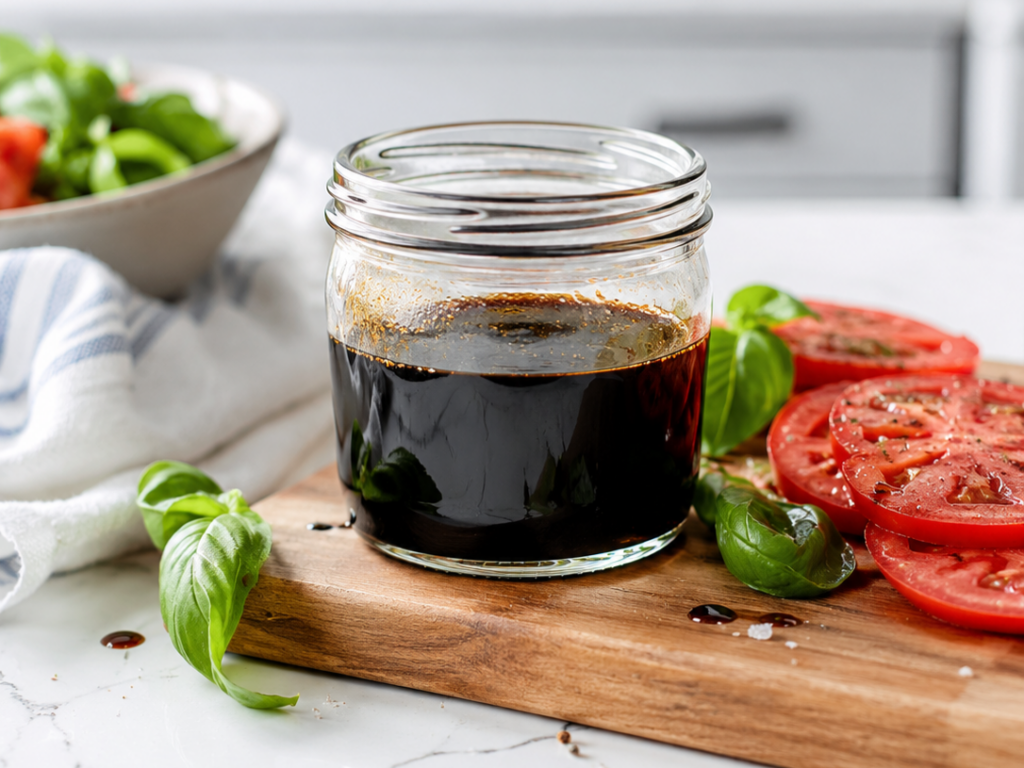
This easy balsamic glaze recipe is made with balsamic vinegar and an optional touch of sweetener. It is perfect for pizza, salads, cottage cheese bowls, chicken, caprese, roasted vegetables, and more.
- Prep Time: 2 minutes
- Cook Time: 10 to 20 minutes
- Total Time: About 22-32 minutes
- Yield: about ⅓ to ½ cup
Ingredients
- 1 cup balsamic vinegar
- Optional: 1 to 2 tablespoons honey, maple syrup, or brown sugar
Instructions
- Pour balsamic vinegar into a small saucepan. Add optional sweetener if using.
- Heat over medium heat until the vinegar begins to gently bubble.
- Reduce heat to low or medium-low and simmer for 10 to 20 minutes, stirring occasionally.
- Cook until the mixture has reduced by about half and lightly coats the back of a spoon.
- Remove from heat and cool for 10 minutes. The glaze will thicken as it cools.
- Transfer to a jar or airtight container and store in the refrigerator.
Notes
- One cup of balsamic vinegar will usually reduce to about ⅓ to ½ cup of balsamic glaze, depending on how thick you make it. For a larger batch, use 2 cups balsamic vinegar and reduce it to about ¾ to 1 cup.
FAQs About Balsamic Glaze
Is balsamic glaze the same as balsamic reduction?
Yes, balsamic glaze and balsamic reduction are usually the same thing. Both are made by simmering balsamic vinegar until it reduces and thickens into a syrup-like drizzle.
How long does it take to make balsamic glaze?
It usually takes about 10 to 20 minutes of simmering, plus about 10 minutes of cooling time. The exact cook time depends on your stove, pan, and how thick you want the glaze.
Can you make balsamic glaze without sugar?
Yes. You can make balsamic glaze with only balsamic vinegar. The vinegar naturally becomes sweeter and more concentrated as it reduces. Adding honey, maple syrup, or brown sugar is optional.
Why is my balsamic glaze too thick?
It probably cooked too long or reduced too much. Balsamic glaze thickens as it cools, so it is best to remove it from the heat while it still looks a little thinner than you want. If it gets too thick, warm it gently with a small splash of water.
Why is my balsamic glaze too thin?
It may need a few more minutes to reduce. Return it to the stove and simmer gently until it coats the back of a spoon. Just remember that it will thicken more as it cools.
What do you use balsamic glaze for?
Balsamic glaze is great on pizza, salads, caprese, cottage cheese bowls, chicken, roasted vegetables, wraps, sandwiches, bruschetta, and avocado toast. It adds a sweet, tangy finish that makes simple meals taste more complete.
How long does homemade balsamic glaze last?
Store homemade balsamic glaze in an airtight container in the refrigerator for about 2 weeks. If it thickens in the fridge, let it sit at room temperature or warm it gently before using.
Can you buy balsamic glaze instead?
Yes. Store-bought balsamic glaze can be a helpful shortcut, especially if it makes you more likely to eat simple meals at home. Homemade gives you more control over the ingredients, but store-bought can reduce friction on busy days.
Final Thoughts
This homemade balsamic glaze recipe is simple, flavorful, and worth knowing how to make. It is one of those small recipes that can make everyday food feel more satisfying with very little effort.
Use it on pizza, salads, chicken, roasted vegetables, cottage cheese bowls, or anything that needs a sweet and tangy finish.
And remember: you do not have to make every single thing from scratch to eat well.
But when you do have the time, this is a simple homemade condiment that can help make nourishing meals feel a lot more craveable.
Get the Weekly Wellth Newsletter
Stay up to date & receive the latest posts in your inbox.