



Salted vs Unsalted Butter: When to Use Each (and Why Unsalted Is the Safer Default)
If you’ve ever stood in the kitchen wondering whether salted vs unsalted butter actually makes a difference, here’s the short answer: it does — mostly in baking — and unsalted is the one to default to.
I spent years grabbing whatever butter was on sale and hoping for the best, because the recipe just said “butter” and nobody ever explained that the two aren’t quite interchangeable.
So I’ll save you the guesswork: here’s what actually separates them, when the difference matters, when it truly doesn’t, and why “just use unsalted” keeps you out of trouble.
No chef speak, no judgment.
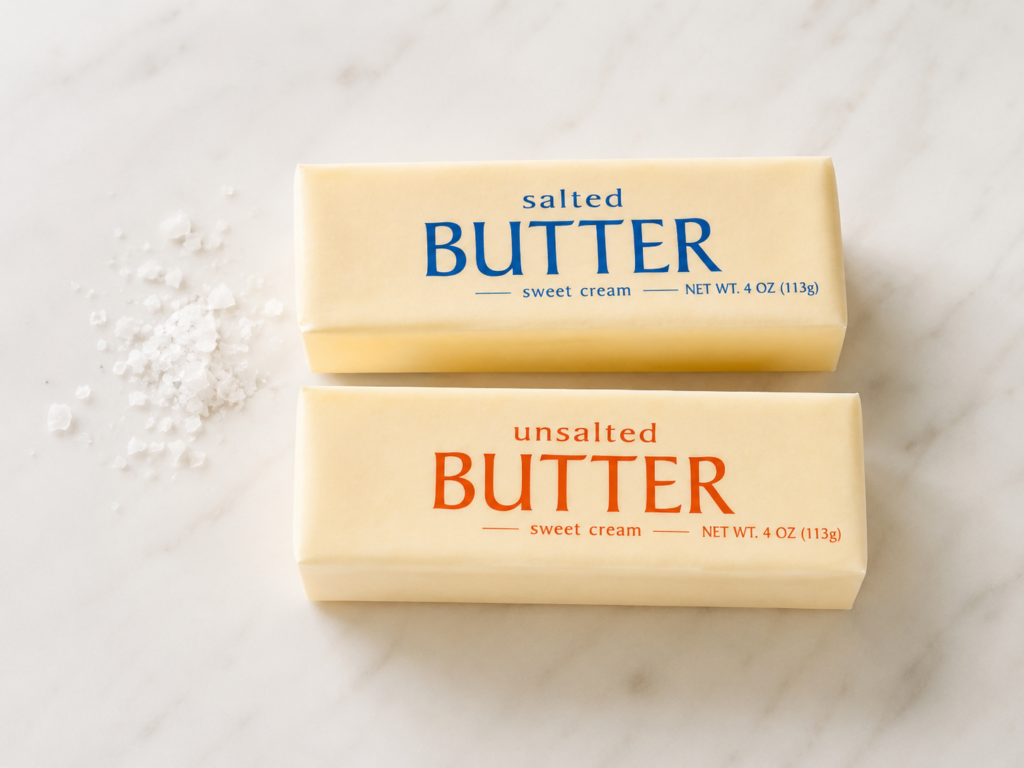
What’s the Difference Between Salted And Unsalted Butter?
On the shelf they look identical. The only real difference is salt.
Salted butter has salt added after the cream is churned.
That salt does two things: it adds a mild savory flavor, and it works as a preservative, so salted butter lasts a little longer. Unsalted butter is just churned cream — nothing added.
Here’s the part that matters more than flavor: the amount of salt in salted butter isn’t standardized.
It lands somewhere around ¼ teaspoon per stick, but it swings from brand to brand.
So when you cook with salted butter, you’re adding an unknown amount of salt to your food before you’ve seasoned anything.
That’s the real difference. Not taste — control.
Salted butter makes a decision for you. Unsalted butter leaves the decision in your hands.
Salted vs Unsalted Butter For Baking
If you only remember one thing from this whole post, make it this: when baking, use unsalted.
Any time a recipe leaves you deciding between salted or unsalted butter for baking, unsalted is the safer answer almost every time.
Baking is chemistry with a nicer smell.
Recipes are written assuming the butter brings zero salt, with whatever salt the recipe needs added separately and measured on purpose.
When you swap in salted butter, you’re stacking an unknown amount of salt on top of that — and because it varies by brand, you can’t reliably correct for it.
Sometimes it’s fine. Sometimes your cookies taste a little off and you can’t figure out why.
I’ve been on the wrong end of this. I made a loaf with salted butter once because it’s what I had, and it came out with this faint, distracting savory edge that didn’t belong in something sweet.
Not ruined. Just… not right. The kind of small miss that makes you second-guess your own baking when the butter was actually the culprit.
So the rule is easy: if a baking recipe just says “butter,” it means unsalted. If it specifically wants salted, it’ll say so.
This is why my go-to baked things — my 3-ingredient baked candied yams, my mini pumpkin bread loaves, even the boxed pumpkin bread hack I lean on when I don’t have the energy for scratch — all use unsalted.
It keeps the results predictable, which is the whole point when you’re baking on a Tuesday and don’t have a backup batch in you.
Salted vs Unsalted Butter For Cooking
Here’s where I’ll give you some breathing room: for everyday savory cooking, it matters way less.
When you’re sautéing spinach, scrambling eggs, or building a sauce, you’re tasting and seasoning as you go anyway.
A little salt from salted butter isn’t going to wreck anything — you’ll just adjust. So if salted is what’s in your fridge, cook with it and move on.
That said, I still reach for unsalted most of the time, for the same reason as baking: I’d rather add salt on purpose than inherit it.
It’s especially nice for dishes where you want the other flavors to lead — like soft scrambled eggs, where the butter sits in the background, or crispy hash browns, where you’re deciding exactly how seasoned they should be.
What about basting a turkey or greasing a pan? Either butter works. If you’re using salted, just go a touch lighter on the salt elsewhere in the recipe.
When To Use Salted Butter
Salted butter isn’t the enemy, and I’m not about to tell you to throw it out. I keep a stick around on purpose. It earns its spot for:
- Toast — that salty-buttery bite is the entire point.
- Popcorn and veggies — a quick hit of flavor with no extra step.
- Finishing and table butter — spreading on warm bread, melting over a steak.
- Cooking somewhere that isn’t your kitchen — traveling or staying with family, when one stick has to do every job.
The pattern: salted butter shines when it’s the last thing you add and you want that salt right up front. Unsalted wins when the butter is an ingredient inside something bigger and you want to control the whole dish.
A Quick Guide To Which Butter To Use
When you’re standing in the kitchen and just want the answer:
- Baking (cookies, cakes, breads): Unsalted
- Everyday savory cooking: Either — unsalted for more control
- Sauces and anything you season as you go: Unsalted
- Toast, popcorn, finishing a dish: Salted
- Basting a turkey or greasing a pan: Either
- Rice Krispies treats: Either — you’re not baking it, so salted is fine (a little salt is nice here)
- When a recipe just says “butter”: Unsalted
Is Unsalted Butter Better For You?
Short answer: not really — and also, a little.
Let’s be honest about butter first: it’s not a health food, and it’s not a villain either. It’s fat and flavor, and it belongs in a real kitchen. Neither salted nor unsalted is going to make or break how you feel.
The one health-relevant difference is sodium, and it’s small. A stick of salted butter adds a few hundred milligrams of sodium you didn’t choose.
On its own, nothing. But most of us are already getting plenty of hidden sodium from bread, sauces, and packaged snacks without trying — the sodium in something as simple as Costco egg bites can sneak up on you.
If you keep a loose eye on salt, using unsalted butter and salting on purpose is one quiet lever. Not a rule. Just an option that keeps you in charge.
That’s really the theme here. This was never about making butter a project or earning some clean-eating gold star.
It’s about one small default that gives you a little more say over what’s in your food — so you can spend your attention on almost anything else.
If the bigger question on your mind is which butter is actually best for you overall — grass-fed, ghee, plant-based, and how they compare — I break all of that down in my guide to the healthiest butter →
How To Store Unsalted Butter
One catch with unsalted: because salt is a preservative, unsalted butter doesn’t last quite as long. Nothing dramatic — just keep it refrigerated and use it within its date.
A few things that make it easier:
- Freeze the extra. Butter freezes beautifully for months. I keep a couple of spare sticks in the freezer and pull them as needed.
- Separate your two butters. I keep unsalted in the main fridge and salted in the door or butter dish, so I never grab the wrong one mid-recipe.
- Keep your spreading butter soft. For the salted stick you reach for on toast, a butter keeper holds it spreadable on the counter without it spoiling — no more tearing up bread with a cold, hard pat. (Stick to salted for this; the salt is what keeps counter butter safe.)
- Buy what you’ll use. If unsalted turns over slower in your house, buy smaller amounts and let the freezer hold the backups.
The Bottom Line: When In Doubt, Go Unsalted
If you take nothing else from this: when a recipe just says “butter,” reach for unsalted.
It gives you control, it keeps baking predictable, and it lets you add salt on purpose instead of inheriting a mystery amount.
Keep salted around for toast and popcorn and the moments convenience wins — but let unsalted be your default.
It’s one small decision you make once. Set it, and every recipe after gets a little easier.
Salted vs Unsalted Butter FAQ
Do you use salted or unsalted butter for baking?
Unsalted, almost always. Baking recipes are written assuming the butter adds no salt, so unsalted lets the recipe’s measured salt do its job. If you only have salted, you can still bake with it — just cut the added salt by about ¼ teaspoon per stick of butter.
Can I use salted butter instead of unsalted in a recipe?
Usually yes, with a small adjustment: reduce the added salt by about ¼ teaspoon per stick of butter. For baking, unsalted is still the safer bet because salt content varies by brand.
Is salted or unsalted butter better?
Neither is better across the board. Unsalted gives you more control and is the default for baking and most cooking; salted is better for finishing, toast, and table use.
What happens if you use salted butter instead of unsalted?
Your food comes out a little saltier, and in baking the flavor can read slightly off since recipes are built around unsalted. In savory cooking you can just season less to make up for it.
How much salt is in salted butter?
Roughly ¼ teaspoon per stick, but it varies by brand — which is exactly why unsalted is easier to cook with predictably.
Is unsalted butter healthier?
Only in that it lets you control your sodium. Nutritionally the two are nearly identical, so the difference comes down to how much salt you want to add yourself. If you’re really asking which butter is healthiest overall, that’s a bigger question — I cover it in my guide to the healthiest butter.





Get the Weekly Wellth Newsletter
Stay up to date & receive the latest posts in your inbox.