


What Is the Healthiest Butter for You?
If you’re wondering what the healthiest butter for you actually is, here’s the short answer: grass-fed dairy butter is the one most experts point to.
It has a slightly better fat profile than conventional butter and skips the additives — and if you eat butter regularly, it’s the easiest quality upgrade to make.
But before you overthink it, one thing worth saying out loud: butter isn’t the thing standing between you and feeling good.
It’s a simple, whole food — cream, and sometimes salt — that’s been on kitchen tables for centuries.
The goal here isn’t to earn points or feel guilty about a pat of butter. It’s to help you pick a better-quality version when you’re standing in the dairy aisle, and to know what actually separates one tub from the next.
So let’s go through it: what makes a butter “healthier,” whether grass-fed is worth it, the brands I actually reach for, and where ghee, plant-based, and whipped butters fit in.
What Makes One Butter Healthier Than Another?
Most butter is nearly identical on paper — it’s cream, churned. But a few real things separate a better butter from a basic one.
What the cows ate. Butter from grass-fed, pasture-raised cows has a richer nutrient profile than butter from grain-fed cows (more on that below). It’s the single biggest quality difference.
How short the ingredient list is. The best butters have one or two ingredients: cream, maybe salt. That’s it. Cheaper spreads add oils, flavorings, or preservatives — which is where “butter” quietly turns into something else.
How much salt it hides. Salted butter adds an unmeasured amount of sodium to whatever you’re making. If you’re keeping a loose eye on salt, unsalted lets you season on purpose instead of inheriting it. I broke that whole decision down in my guide to salted vs unsalted butter — worth a read if you bake.
Here’s the honest part: these differences are real, but they’re modest. You’re eating butter in tablespoons, not bowls. So the smartest move isn’t hunting for a “perfect” butter — it’s picking a good-quality one you enjoy and using it like you always have.
Is Grass-Fed Butter Actually Healthier?
Yes — modestly, and in ways that are real.
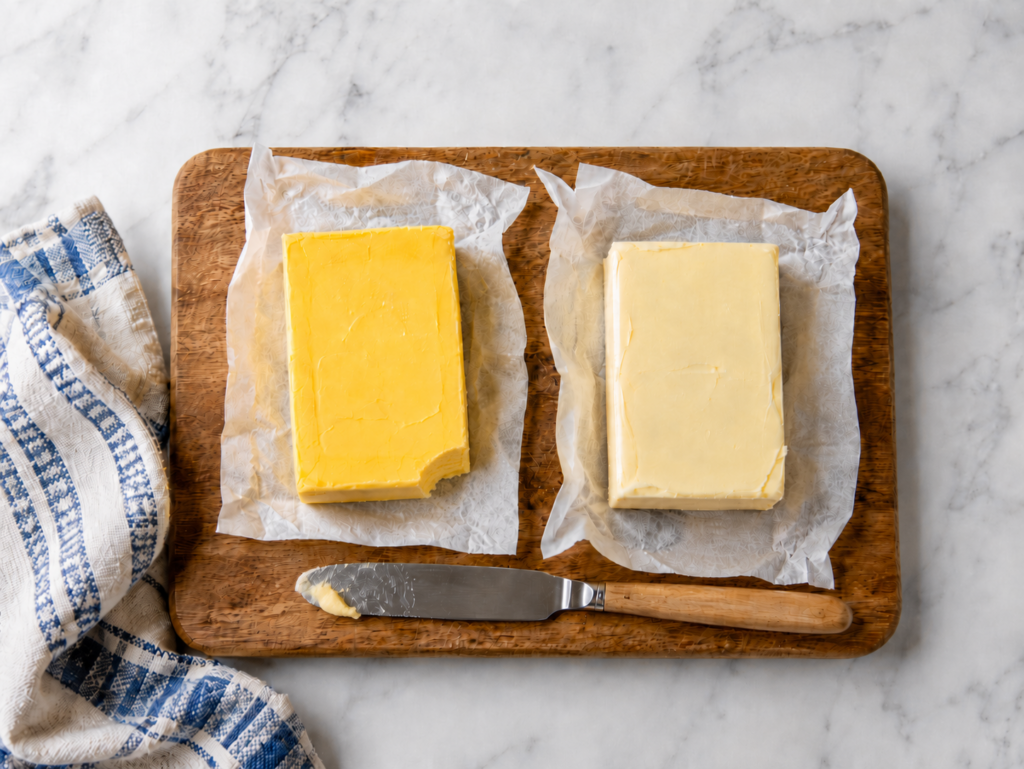
Butter from cows that graze on grass tends to be richer in omega-3 fatty acids and CLA (conjugated linoleic acid), along with more vitamin K2 and beta-carotene — that last one is why grass-fed butter has its deeper yellow color.
Conventional butter from grain-fed cows has less of each.
The caveat I’ll keep repeating: you’re getting these in small amounts, because you eat butter in small amounts. Grass-fed butter isn’t a supplement, and it won’t undo an otherwise rough week of eating.
But if butter is a regular part of your kitchen — toast, eggs, baking, finishing vegetables — upgrading to grass-fed is a genuine, low-effort improvement.
Same habit, slightly better inputs.
The Healthiest Butter Brands To Buy
When people ask which brand of butter is the healthiest, this is usually the shortlist. These are the ones I reach for, with the honest tradeoffs:
Kerrygold (grass-fed Irish butter)
The most widely available grass-fed option — you can find it at almost any grocery store. Rich, golden, and great for both spreading and baking. It’s my everyday pick for the balance of quality and availability.
Vital Farms (pasture-raised)
Pasture-raised with strong sourcing standards, and it comes in both salted and unsalted. A little pricier, but a clean, high-quality choice.
Organic Valley Grassmilk / Pasture Butter
Organic and grass-fed, with the deep-yellow, high-butterfat quality bakers love. Ideal if you want organic on top of grass-fed.
Plugrà (European-style butter)
Higher butterfat than standard American butter, which makes a real difference in baking — flakier pastry, richer flavor. Not always grass-fed, but a quality upgrade for baking specifically.
You don’t need all of these. If I had to pick one to start with, it’s Kerrygold — easy to find, hard to beat for the price.
What About Ghee?
Ghee is butter with the milk solids cooked off and strained out.
That does two useful things: it removes nearly all the lactose and casein (so it works for a lot of dairy-sensitive people), and it raises the smoke point to around 450°F, which makes it better than butter for high-heat cooking like searing and sautéing.
Is it “healthier” than butter? Not exactly — it’s still concentrated dairy fat.
But it’s a genuinely useful option if dairy bothers your stomach or you cook hot and want something that won’t burn. I use it for exactly that — it’s what I reach for in my garlic green beans. A brand like 4th & Heart makes a good grass-fed ghee.
Is Plant-Based Butter Healthier Than Dairy?
Here’s where I’ll push back on the assumption a little: plant-based doesn’t automatically mean healthier.
Some plant butters are genuinely well-made — Miyoko’s, for example, is built on cashews and coconut oil with a short, recognizable ingredient list.
Others are mostly refined oil blends with additives, no better (and sometimes worse) than the margarine everyone spent decades avoiding. The label “plant-based” tells you what it isn’t; it doesn’t tell you whether it’s good.
So if you’re dairy-free by need or choice, plant butter is a fine swap — just read the ingredients the same way you would for dairy.
Short list, real ingredients, no long chain of oils and stabilizers. A vegan label isn’t a health guarantee.
What About Whipped And Lower-Calorie Butter?
Whipped butter is just regular butter with air beaten into it.
Because you’re getting air along with the butter, a tablespoon has noticeably fewer calories — often close to half — than a tablespoon of stick butter.
It’s not a different or “healthier” food; it’s the same butter, spread thinner by volume.
But if you want the flavor with a little built-in portion control, especially for spreading on toast, it’s a useful option. Just know it doesn’t behave the same in baking, where you want the real, measured amount.
How To Choose And Use Your Butter
If you want the whole thing in one breath:
- For everyday use, a grass-fed butter like Kerrygold is the easy upgrade.
- If dairy bothers you or you cook at high heat, keep ghee on hand.
- If you’re watching portions, whipped butter gives you the flavor with fewer calories per spread.
- If you’re dairy-free, choose a plant butter with a short, real ingredient list.
And once you’ve picked a good butter, the last small lever is salted vs unsalted — unsalted gives you the most control over your food, which I walk through in this guide.
Good butter is worth treating well, too: freeze what you won’t get to soon, and if you like it soft enough to spread, a butter keeper keeps a little fresh on the counter.
That’s really the whole point. The healthiest butter isn’t about finding a perfect product or earning a gold star. It’s one small quality choice you make once at the store — so you can stop thinking about it and get back to enjoying your food.
Healthiest Butter FAQ
What is the healthiest butter you can buy?
Grass-fed dairy butter from pasture-raised cows is the top pick — it has more omega-3s, CLA, and vitamin K2 than conventional butter, with no additives. Kerrygold and Vital Farms are widely available options.
Which brand of butter is the healthiest?
Kerrygold, Vital Farms, and Organic Valley Grassmilk are all strong grass-fed choices. If you want organic, go with Organic Valley; for the best mix of quality and availability, Kerrygold is hard to beat.
Is grass-fed butter worth it?
If you eat butter regularly, yes — it’s a small, low-effort upgrade with a genuinely better nutrient profile. If you rarely use butter, the difference is minor enough that any quality butter is fine.
Is butter or margarine healthier?
Real butter, in most cases. Modern butter is a simple whole food, while many margarines are processed oil blends. The exception is a well-made plant butter with a short, clean ingredient list.
Is ghee healthier than butter?
Not dramatically, but it’s nearly lactose- and casein-free and has a higher smoke point, which makes it a better choice for dairy-sensitive people and high-heat cooking.
What is the healthiest butter for baking?
A high-butterfat, European-style unsalted butter (like Plugrà) gives the best results. Use unsalted so you control the salt — more on that in the salted vs unsalted butter guide.





Get the Weekly Wellth Newsletter
Stay up to date & receive the latest posts in your inbox.