



Roasted Vegetable Soup: 5 Easy Recipes (One Roast-and-Blend Method)
This post contains affiliate links. If you buy through them, Reach Wellth may earn a small commission, at no extra cost to you.
Roasted vegetable soup turns a sheet pan full of vegetables into dinner with very little hands-on cooking. Roast everything until tender, blend with broth, and adjust the seasoning. That’s the method behind all five soups in this collection.
You learn the technique once, then swap the vegetables.
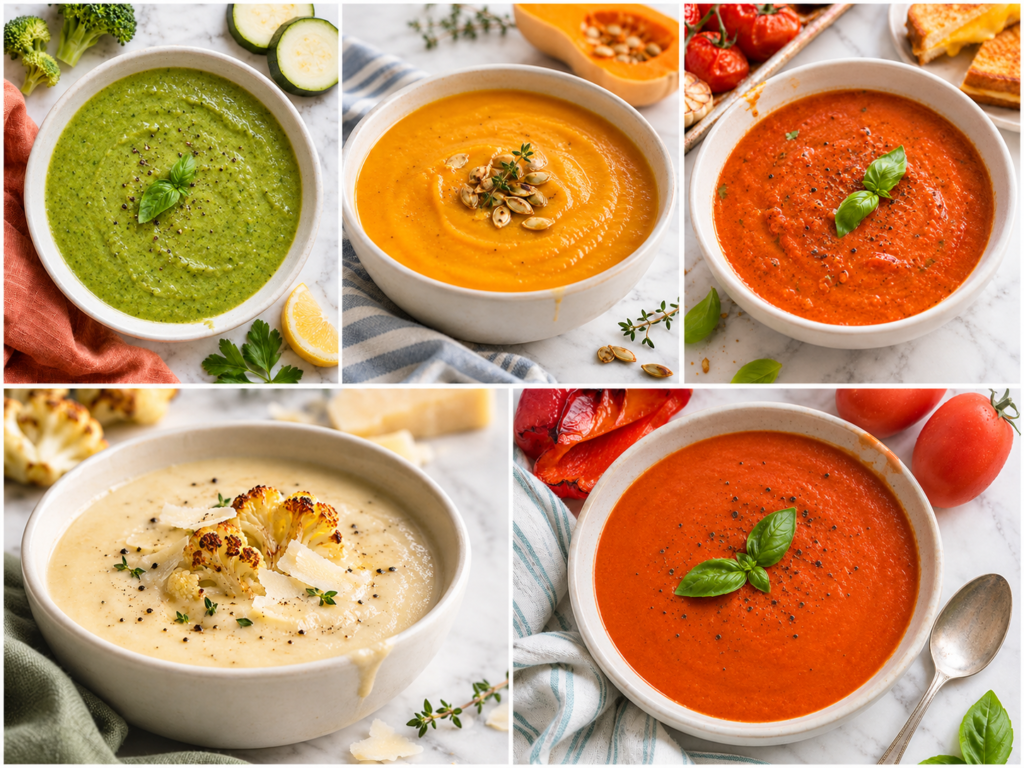
Butternut squash becomes a smooth, savory soup with thyme and roasted garlic. Tomatoes turn into a rich, basil-finished classic. Cauliflower gets nutty and golden. Red peppers bring sweetness and a little smoke. And broccoli, zucchini, spinach and herbs make a surprisingly creamy green goddess soup.
Different vegetables. Different flavors. Same process.
You also don’t need a cup of heavy cream to make vegetable soup creamy.
Why Roasted Vegetables Make Better Soup
You can make vegetable soup by boiling everything in broth, but roasting builds flavor before the soup ever reaches the pot.
Roasting builds flavor without extra ingredients
Boiled cauliflower tastes like cauliflower. Roasted cauliflower with golden edges tastes deeper and nuttier.
The same goes for tomatoes, onions, squash and bell peppers. Those browned edges add flavor that simmering can’t, so you get a satisfying soup without piling on extra ingredients.
Blended vegetables make their own creamy texture
Butternut squash, cauliflower, potatoes and other tender vegetables turn smooth when blended with broth. That’s why four of these five soups are naturally dairy-free. The cauliflower version adds a little Parmesan for savory flavor, and even that one skips the heavy cream.
The key is adding broth gradually. Too much and you have thin soup. Too little and you’ve made vegetable puree. The thick, spoonable middle is the goal.
Most of the cooking happens without you
You still have to chop the vegetables. But once they’re on the pan, the oven does most of the work, and nobody is standing over a pot stirring for 45 minutes.
Roast, blend, season, eat. Sometimes that’s all dinner needs to be.
Roasted Vegetable Soup Recipes At a Glance
| Soup | Oven temp | Total time | Diet | Best for |
|---|---|---|---|---|
| Sheet Pan Green Goddess Soup | 400°F | 55 minutes | Vegan | A fresh, vegetable-packed lunch |
| Roasted Butternut Squash Soup | 425°F | 60 minutes | Vegan | Cozy fall and winter dinners |
| Roasted Tomato Soup | 425°F | 60 minutes | Vegan | Grilled cheese night |
| Creamy Roasted Cauliflower Soup | 425°F | 55 minutes | Vegetarian | Rich and savory, no cream |
| Roasted Red Pepper Soup | 425°F | 60 minutes | Vegan | Sweet, smoky and colorful |
Times and diets match each recipe card; vegan versions assume vegetable broth.
5 Easy Roasted Vegetable Soup Recipes
Each of these soups uses the same roasting technique, but they’re different enough that it never feels like the same recipe five ways.
1. Sheet Pan Green Goddess Soup
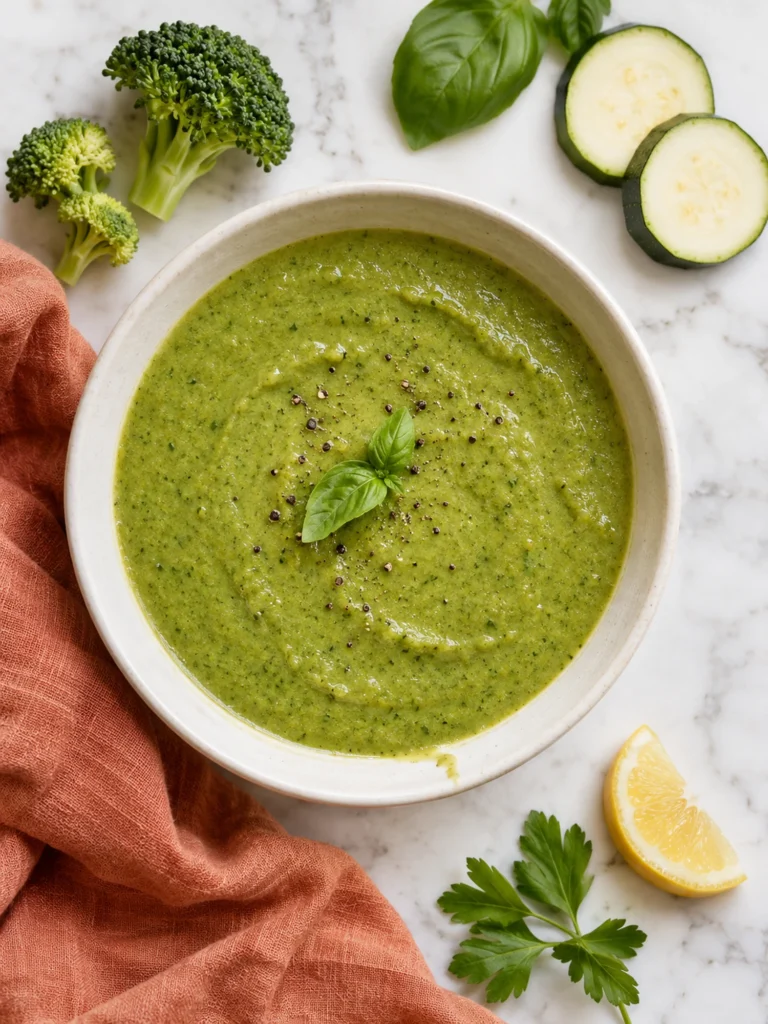
This sheet pan green goddess soup blends roasted broccoli, zucchini, Yukon Gold potatoes, onion and garlic with fresh spinach, peas, parsley and basil. The roasted vegetables build the savory base, and lemon and herbs keep it bright.
The difference is timing. The broccoli and zucchini roast, but the spinach and herbs go in at blending instead of spending 40 minutes in the oven. The potatoes thicken it, so it’s creamy with no dairy.
Best for: a vegetable-packed lunch when you want something fresh instead of another cream-based soup.
2. Roasted Butternut Squash Soup
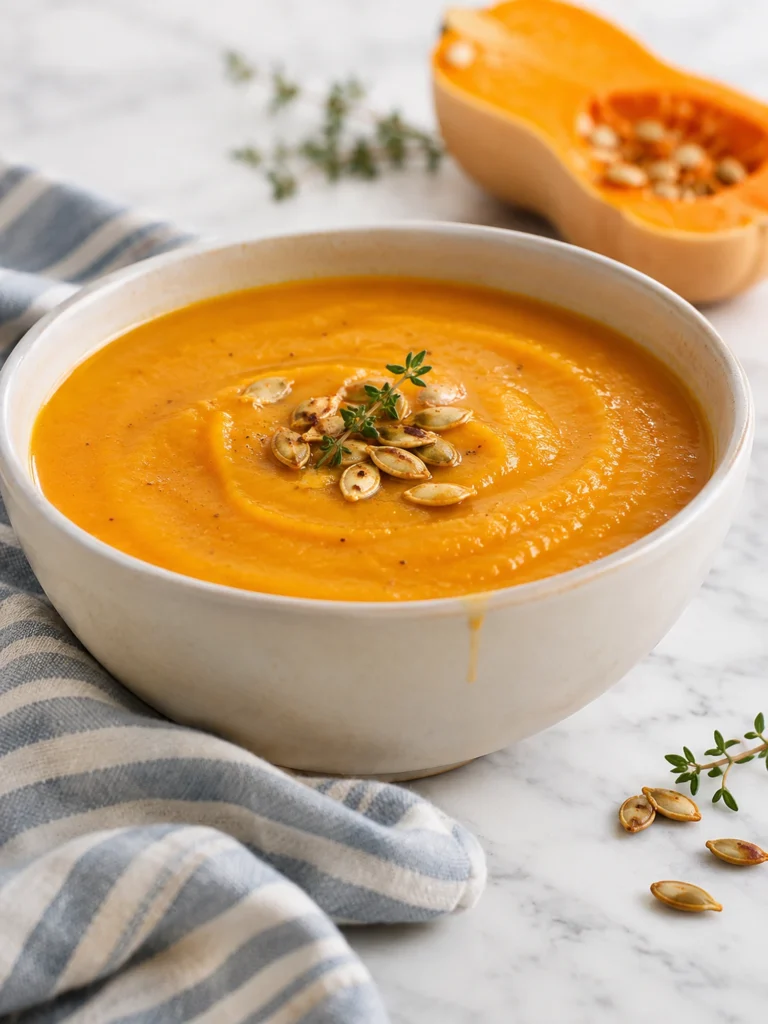
Butternut squash is naturally sweet, and roasting turns that up. This roasted butternut squash soup balances it with roasted onion, a whole head of garlic, thyme, a little nutmeg and lemon.
There’s no pumpkin puree, apple juice or added sugar. The squash does the work and the rest keeps it savory. If you want the sweeter café-style version with apple and dairy, that’s my Panera autumn squash soup copycat. Think of this one as its roasted, savory counterpart.
Best for: fall and winter dinners, or any night you want a cozy bowl without a dozen ingredients.
3. Roasted Tomato Soup
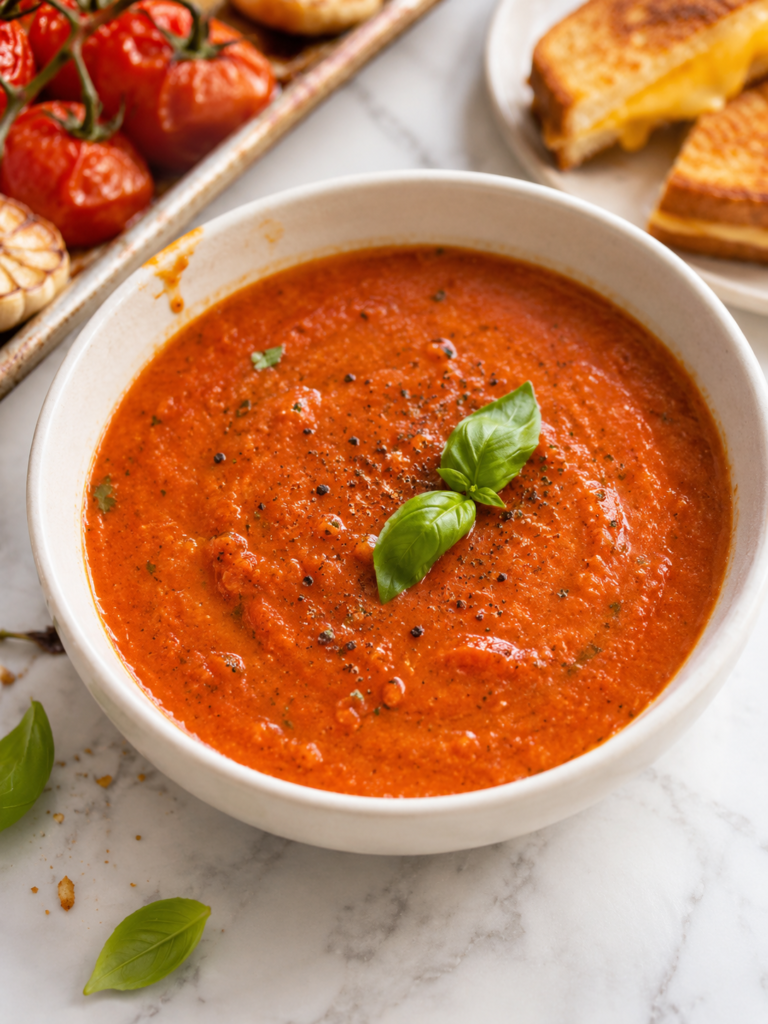
Tomato soup doesn’t need much convincing. It needs good tomatoes and enough time to develop flavor.
This roasted tomato soup starts with fresh Roma tomatoes, onion and garlic roasted until soft and lightly browned, then blended with broth and fresh basil. The tomatoes release plenty of liquid, so start with less broth than you think you need. Balsamic is optional, depending on how sweet or tart your tomatoes are.
And yes, this is the one to make with grilled cheese.
Best for: classic comfort food, an easy lunch, or a homemade swap for canned tomato soup.
4. Creamy Roasted Cauliflower Soup
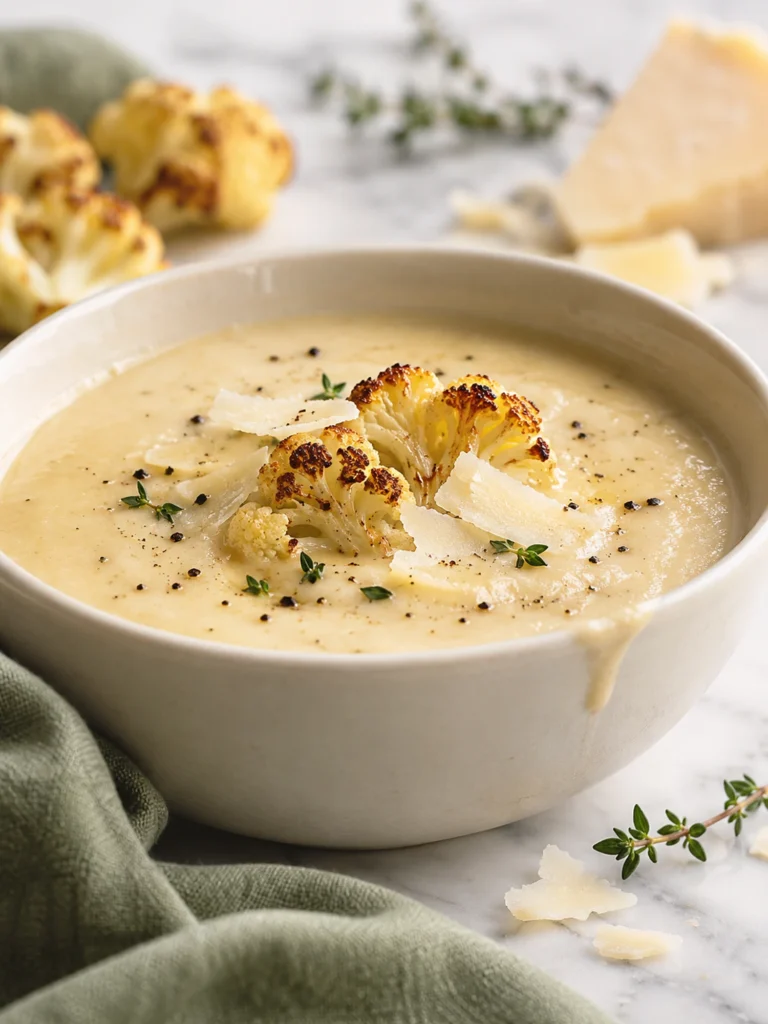
Cauliflower doesn’t look like much going into the oven. Give it time to turn golden at the edges and it becomes a much more interesting vegetable.
This roasted cauliflower soup combines cauliflower with a small Yukon Gold potato, onion, roasted garlic, thyme and Parmesan. The potato makes it smooth, and the Parmesan adds savory depth without turning it into cheese sauce. Set aside a few browned florets before blending; they make a better topping than a swirl of cream.
Want the full cheddar-and-cream version? That’s the Zupas Wisconsin cauliflower soup copycat.
Best for: a mild, savory soup that feels rich without heavy cream.
5. Roasted Red Pepper Soup
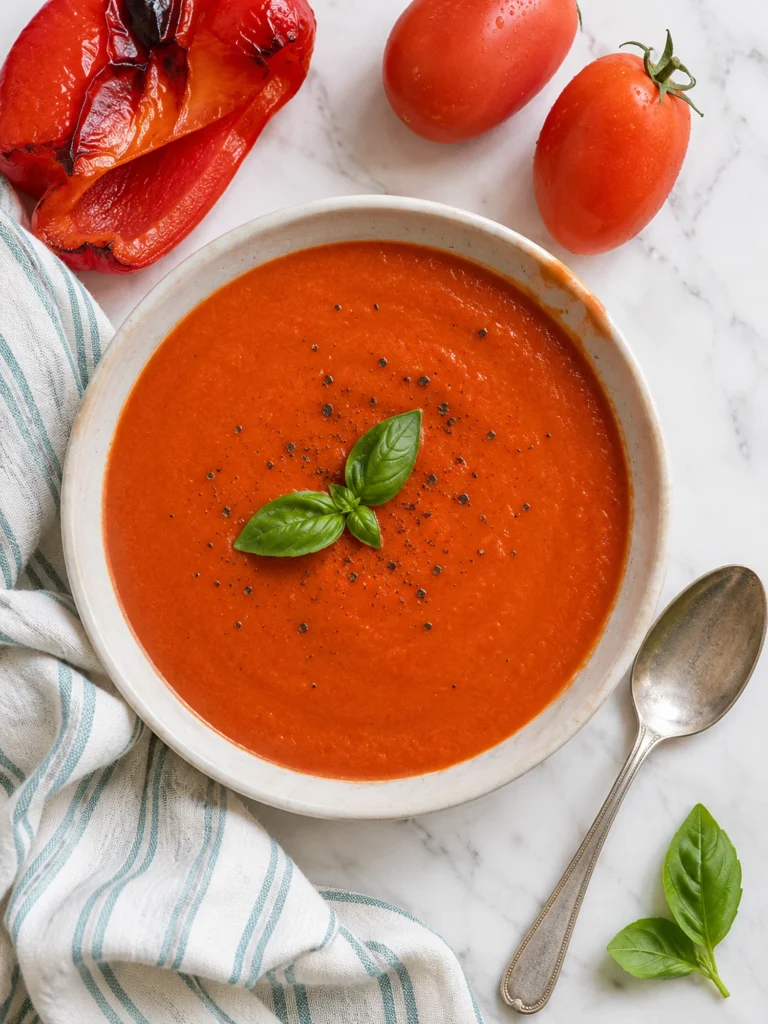
Red bell peppers are already sweet, and roasting deepens them and adds a little smoke at the edges.
This roasted red pepper soup combines fresh red peppers, Roma tomatoes, onion and garlic with smoked paprika and thyme. The tomatoes keep it from tipping too sweet, and the paprika backs up the roasted flavor. It blends smooth on its own, or you can peel the skins or pour it through a fine-mesh strainer for a silkier finish.
Best for: a colorful, sweet-and-savory soup with a little smoky depth.
How To Make Roasted Vegetable Soup
After one of these recipes, the method will feel familiar.
Step 1: Cut and season the vegetables
Preheat the oven to the temperature in your recipe, usually 400°F to 425°F. Cut the vegetables into similar sizes, keeping cooking times in mind: dense vegetables like potatoes and butternut squash get smaller pieces than soft ones like zucchini.
Spread everything on a heavy, rimmed Nordic Ware half-sheet pan, drizzle with olive oil and season. Don’t crowd the pan. Vegetables need room for moisture to evaporate so their edges can brown.
Step 2: Roast until tender and golden
Most of these soups roast for about 30 to 45 minutes. The goal is tender vegetables with golden edges, not charred ones.
Broccoli and zucchini can finish before potatoes, and tomatoes and peppers release juices as they cook. Follow each recipe’s timing, and keep those tomato and pepper juices. That liquid belongs in the soup.
Step 3: Blend with warm broth
Transfer the roasted vegetables to a blender or soup pot. Add warm broth gradually and blend until you reach the consistency you like. A jar of Better Than Bouillon Reduced Sodium Vegetable Base lets you mix exactly as much as you need.
Start with less liquid. It’s much easier to thin a thick soup than to rescue a watery one.
Step 4: Taste before adding anything else
Roasted vegetables bring plenty of flavor, but the finish still matters. If the soup tastes flat, add salt. If it’s too sweet, add a little lemon juice. If it needs freshness, add herbs.
You don’t need five more spices every time a soup needs a tweak.
How To Blend Roasted Vegetable Soup
There are two ways to get a smooth roasted vegetable soup: an immersion blender or a countertop blender. Both work, and they aren’t identical.
Immersion blender: easiest cleanup
An immersion blender purees the vegetables right in the pot. No transferring hot soup, no pitcher to wash. A corded KitchenAid immersion blender handles all five of these soups.
Take the pot off the heat, make sure there’s enough broth for the blade to move, and lower the blending head fully into the soup before switching it on. Start on low, keep the blade guard submerged, and stop the blender completely before lifting it out. The full technique, splatter-proofing included, is in this guide to how to use an immersion blender for soup.
The trade-off: depending on the blender and the vegetables, the texture may not be quite as silky as a high-powered countertop blender. For everyday soup, that rarely matters.
Countertop blender: smoothest texture
A high-powered countertop blender like the Ninja Professional Plus is the better pick when you want a very smooth soup, especially with cauliflower, tomato skins or pepper skins. The downside is transferring the soup and washing one more appliance.
Hot liquids need extra care. Use only a blender approved for hot ingredients, let the soup cool as its manual directs, don’t overfill the pitcher, and follow its venting instructions so steam can escape. Blend in smaller batches and start on low. Never put hot soup in a sealed personal blender cup unless the manufacturer says it’s designed for that.
Can you make blended soup without a blender?
Yes, with a different result. If the vegetables are completely tender, a potato masher breaks them down into a thicker, rustic soup. It won’t be smooth, and skins will leave noticeable pieces. For these five recipes, an immersion or countertop blender is the practical choice.
How To Fix Soup That’s Too Thick, Thin, Or Bland
The blender isn’t the last step. Texture and seasoning usually need one final adjustment.
If your soup is too thick
Add warm broth in small amounts and stir between additions. Blended vegetable soups thicken as they cool, especially ones with potatoes or squash.
If your soup is too thin
Simmer it uncovered to reduce some of the liquid, or blend in more cooked vegetables. Next time, start with less broth. It’s the easiest fix because the problem never happens.
If your soup tastes bland
Before reaching for another spice, add salt. Roasted vegetables have flavor, and that flavor still needs seasoning. For sweeter soups like butternut squash or red pepper, a small squeeze of lemon helps too.
If your soup tastes bitter
Check how dark the vegetables got. Golden edges are good; burned broccoli or blackened garlic adds bitterness the blender can’t hide. Pull vegetables that finish early instead of letting them burn while the potatoes catch up.
What To Serve With Roasted Vegetable Soup
Vegetable soup makes an easy lunch, but whether it’s a full dinner depends on the soup and the portion.
Grilled cheese is the natural partner for roasted tomato or red pepper soup, and a 12-inch cast iron skillet gets the bread evenly golden. Toasted sourdough works with all five, especially the thicker cauliflower and butternut squash.
For more protein, add a turkey sandwich, a scoop of Crockpot shredded chicken, this Mexican chicken salad or soft scrambled eggs with cottage cheese. A smaller bowl also works before roasted chicken or another main.
The point is to make dinner easier, not to add a second recipe project.
Storage + Freezing
A full batch of soup doesn’t mean eating it for five days straight.
Refrigerator
Cool the soup promptly in shallow containers and refrigerate within 2 hours. Store it in airtight containers, like these glass meal-prep containers, for 3 to 4 days. If you know you won’t finish it in that window, freeze the rest.
Freezing
Portion the soup into freezer-safe containers, leaving room for expansion, and use it within about 2 to 3 months for best quality. Souper Cubes 1-cup freezer trays freeze single servings you can pop into a bag.
The dairy-free soups freeze especially well. The cauliflower soup holds up best if you freeze it before adding the Parmesan and stir the cheese in when you reheat.
Reheating
Thaw frozen soup overnight in the refrigerator. Reheat on the stovetop, stirring occasionally, until steaming hot throughout (165°F), and add a splash of broth or water if it thickened.
Single portions are the move. One container of soup is far more useful on a weeknight than a frozen stockpot’s worth, and it packs into a wide-mouth insulated food jar for work lunches.
More Soups To Try
Not every good soup starts on a sheet pan. If you want something heartier or closer to a restaurant favorite:
- Copycat Olive Garden minestrone for a brothy, bean-and-pasta bowl
- Copycat Olive Garden chicken and gnocchi soup when you want creamy and filling
- Slow cooker Panera broccoli cheddar soup for a hands-off cheesy option
- Zupas Wisconsin cauliflower soup for the full-cream cauliflower version
Or browse every soup recipe in one place.
FAQs
What vegetables are best for roasted vegetable soup?
Butternut squash, cauliflower, carrots, tomatoes, bell peppers, broccoli, potatoes and onions all work well. Pick by the flavor you want: squash and peppers are sweeter, cauliflower and broccoli are more savory, and tomatoes bring acidity.
Is it better to roast or boil vegetables for soup?
Both work. Simmering is faster and keeps everything in one pot. Roasting takes an extra pan, but browning concentrates flavor and gets you a richer soup with fewer ingredients.
Can I use frozen vegetables for roasted soup?
Yes, especially frozen cauliflower and cubed butternut squash. Frozen vegetables release more moisture, so spread them out, allow extra roasting time, and expect to need less broth when blending.
Can I make roasted vegetable soup without cream?
Yes. Squash, potatoes and cauliflower turn creamy when they’re fully cooked and blended. The amount of broth shapes the texture most, so add it gradually.
What’s the best blender for vegetable soup?
An immersion blender is the easiest, since it blends right in the pot with minimal cleanup. A high-powered countertop blender gives a smoother result, especially with tomato or pepper skins. If you’re new to the stick kind, start with this guide to immersion blender soup.
Why is my roasted vegetable soup grainy?
The vegetables may not be fully tender, or the soup needs more blending time. For an especially smooth soup, use a high-powered blender or strain the finished puree.
Can you freeze roasted vegetable soup?
Yes. Most blended vegetable soups freeze well. Store individual portions, thaw them in the fridge, and reheat until steaming hot.
Is roasted vegetable soup filling enough for dinner?
On its own it’s light and fairly low in protein. Pair it with a sandwich, eggs or chicken, or browse these high-protein recipes to round it out.
One Method, Five Different Dinners
You don’t need five cooking techniques to make five different soups. Roast the vegetables until tender and golden, blend with broth, and finish with whatever suits the vegetables.
Start with tomato for the grilled-cheese classic. Make butternut squash for something cozy, cauliflower for savory and creamy, red pepper for sweet and smoky, or green goddess when you want something fresh.
A sheet pan and a blender do more for a dinner rotation than another complicated meal plan. If cooking still feels like the hard part, start with how to eat healthy when you hate cooking.



Get the Weekly Wellth Newsletter
Stay up to date & receive the latest posts in your inbox.