



Roasted Butternut Squash Soup (Easy, Creamy, and No Heavy Cream)
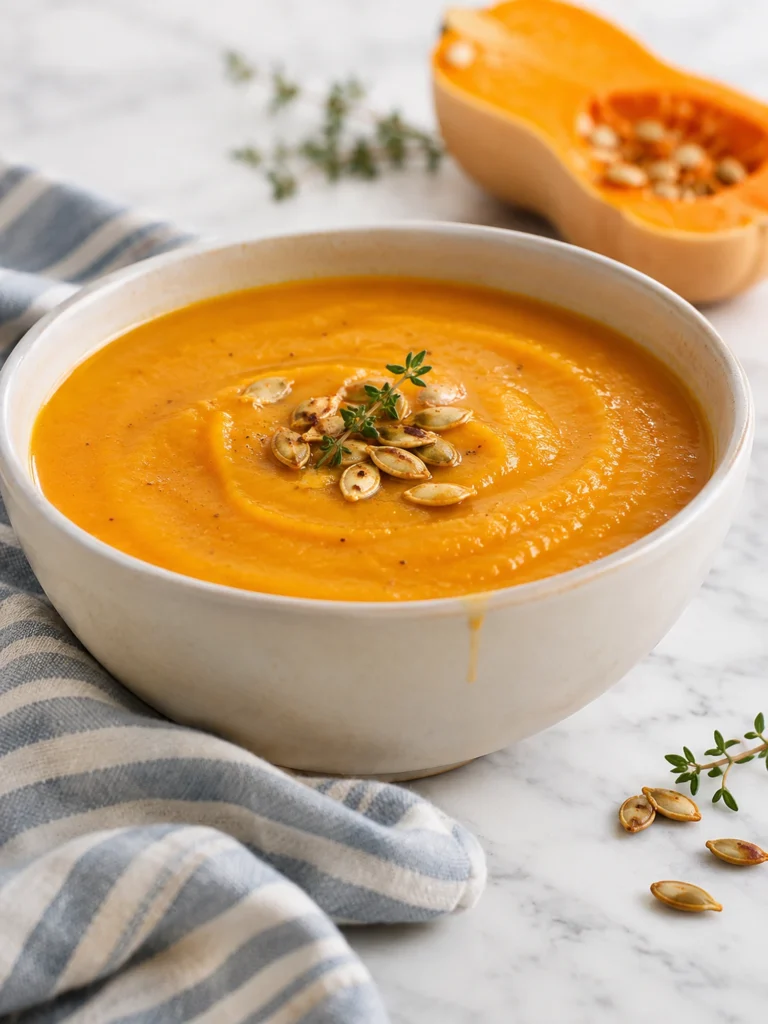
Roasted butternut squash soup is one of the easiest ways to turn a handful of seasonal ingredients into a creamy, comforting meal. Roast the squash with onion and garlic, blend with warm broth, and you get a naturally sweet, savory soup with very little hands-on cooking.
If you’ve only made butternut squash soup by simmering everything in a pot, roasting is worth the extra step. The edges caramelize in the oven, and that deeper flavor carries through to the finished soup.
Pre-cut squash is a completely reasonable shortcut here. And if you want the sweeter, café-style version with apple and pumpkin, that’s my Panera autumn squash soup copycat. This one keeps the flavor centered on the roasted vegetables.
This post contains affiliate links. If you buy through them, Reach Wellth may earn a small commission, at no extra cost to you.
Why This Works
Simple ingredients
Butternut squash, onion, garlic, broth and pantry seasonings do most of the work.
Naturally creamy
Blended squash creates a smooth texture without heavy cream.
Roasting adds flavor
Caramelized edges bring more depth than boiling the vegetables.
Easy to make ahead
Roast the vegetables in advance and blend when you’re ready.
Versatile
Serve it as a light lunch, a starter, or alongside a sandwich.
How It Comes Together
Olive oil, vegetable broth, thyme and a small pinch of nutmeg complement the squash without overpowering it. A splash of lemon at the end balances the sweetness.
There’s no heavy cream required. The roasted squash turns smooth once it’s blended with warm broth.
Butternut Squash Soup Ingredients
Butternut squash
Choose a medium-to-large squash that feels heavy for its size, with firm, unblemished skin. You’ll need about 2½ to 3 pounds whole, which yields roughly 5 to 6 cups peeled and cubed.
Even pieces roast consistently, and pre-cut squash skips the prep entirely. If you end up with extra squash, butternut squash pasta puts it to work.
Yellow onion
Roasted onion adds savory sweetness and balances the squash. Cut it into large wedges so it doesn’t burn before the squash is tender.
Garlic
A whole roasted head turns soft and mellow and blends right in.
Olive oil
Helps the squash caramelize and keeps the vegetables from drying out.
Vegetable broth
Use a flavorful broth, ideally lower in sodium so you control the seasoning. Better Than Bouillon Reduced Sodium Vegetable Base keeps in the fridge for whenever you run out of cartons. Chicken broth works if you don’t need the soup to be vegetarian.
Fresh thyme
Adds a subtle earthy note that suits winter squash. Dried works too; use about half as much, since dried herbs are more concentrated.
Nutmeg
A small pinch adds warmth without making the soup taste like dessert.
Lemon juice
A little brightens the soup and keeps the squash’s natural sweetness from taking over.
Salt and pepper
Season the vegetables before roasting, then again after blending.
Helpful Tools
A sturdy OXO Good Grips Y-peeler is the difference between peeling a butternut squash in five minutes and fighting it for twenty. Trim both ends first so the squash sits flat.
A sharp 8-inch chef’s knife handles the cutting. A heavy Nordic Ware half-sheet pan keeps the cubes in one layer, which is what gets you golden edges.
For blending, a high-powered blender like the Ninja Professional Plus gives the silkiest texture, while a KitchenAid immersion blender blends right in the pot. If you’re warming it in a 7-quart enameled Dutch oven, there’s room to double the batch.
How To Make Roasted Butternut Squash Soup
Step 1: Prep the squash
Preheat the oven to 425°F. Peel the squash, scoop out the seeds and cut the flesh into roughly 1-inch cubes.
For easier peeling, trim the ends first and use a sharp vegetable peeler.
Step 2: Season the sheet pan
Spread the squash and onion across a large sheet pan. Drizzle with most of the olive oil and season with salt, pepper and thyme. Toss to coat, then spread into a single layer.
Trim the top from the garlic head, drizzle with the remaining oil, wrap it in foil and set it on the pan.
Step 3: Roast until caramelized
Roast for about 35 to 45 minutes, turning the squash halfway. The squash should be fork-tender with golden edges, and the onion soft and lightly browned.
If the pan is crowded, divide the vegetables between two pans. Crowding traps steam and stops the browning.
Step 4: Blend the soup
Let the garlic cool enough to handle, then squeeze the cloves into a blender with the squash and onion.
Add about 3 cups warm vegetable broth and a small pinch of nutmeg. Blend until smooth, working in batches if needed.
Step 5: Adjust the consistency
Pour the blended soup into a large pot. Add more broth until it reaches the consistency you like, then warm gently over medium-low heat, stirring occasionally.
Step 6: Finish and serve
Stir in lemon juice, starting with 1 teaspoon. Taste and adjust the salt, pepper, thyme and lemon.
Serve with roasted pepitas, fresh thyme or cracked black pepper.
Tips For the Perfect Roasted Butternut Squash Soup
Roast until the edges are golden. Most of the flavor lives in the browned edges. Pulling the squash the moment it’s tender is the most common reason this soup tastes flat, so give it a few more minutes as long as nothing is burning.
Give the pan room. A crowded sheet pan steams instead of roasts. If you’re doubling the recipe, use two pans and rotate them halfway.
Start with less broth. You can always thin the soup, but it’s harder to thicken once it’s watery. Start with about 3 cups and add more gradually.
Balance sweetness with acid. Roasted squash is naturally sweet. A little lemon and enough salt make it taste balanced without adding anything else.
Blend thoroughly. For the smoothest soup, blend until no pieces remain. An immersion blender works, but a countertop blender gives a silkier texture.
Easy Variations
Add fresh ginger. Roast a few slices of peeled ginger with the vegetables, or blend in a little freshly grated ginger.
Make it spicy. Add a pinch of cayenne or crushed red pepper flakes.
Use rosemary. Swap a small amount of rosemary for the thyme for a woodsier flavor.
Add coconut milk. Replace some of the broth with unsweetened coconut milk for a richer texture and a subtle coconut flavor.
Use pre-cut squash. Check the package weight so you’re using about the same amount.
What To Serve With Roasted Butternut Squash Soup
A warm slice of crusty bread or toasted sourdough is the easy pairing.
For lunch, serve it with a turkey sandwich, a grilled cheese, or a simple green salad with maple Dijon dressing. Butternut squash quinoa salad leans all the way into fall, and butternut squash flatbreads with smoked Gouda turn it into a full dinner.
It also works as a starter before roasted chicken or pork tenderloin. If the soup is the main meal, add a protein-rich side, or stir a scoop of Crockpot shredded chicken into each bowl.
Storage + Freezing
Refrigerator
Let the soup cool, within 2 hours, then refrigerate it in airtight containers for 3 to 4 days. Glass meal-prep containers go straight from the fridge to the microwave.
Reheating
Reheat gently on the stovetop over medium-low heat until steaming hot throughout (165°F). The soup thickens in the fridge, so add a little broth or water as it warms.
Meal prep
Roast the vegetables up to 2 days ahead, refrigerate them, and blend with hot broth when you’re ready to eat. It’s a natural fit for work lunches you’ll actually want to pack.
Freezing
Freeze individual portions for about 2 to 3 months for best quality. Because this version has no cream, it freezes and reheats without separating. Souper Cubes 1-cup freezer trays make single servings easy. Thaw overnight in the fridge before reheating.
FAQs
Do you have to peel butternut squash before roasting it for soup?
For this cubed-squash method, peeling first makes blending easier. You can also roast squash halves with the skin on and scoop out the softened flesh, but the timing will differ.
Why roast butternut squash before making soup?
Roasting encourages browning and caramelization, which builds deeper flavor than simmering the squash alone.
How do you make butternut squash soup creamy without cream?
Fully cooked butternut squash blends into a naturally smooth texture. Adding broth gradually controls how thick and creamy the soup becomes.
Can you freeze roasted butternut squash soup?
Yes. This dairy-free version is especially convenient to freeze because there’s no cream to separate.
Why does my butternut squash soup taste bland?
It usually needs more salt, more browning on the roasted vegetables, or a little acid. Taste before adding extra spices.
Is roasted butternut squash soup filling enough for a meal?
On its own it’s light and low in protein. Pair it with a sandwich, a salad with chicken, or one of these high-protein recipes to make it a full meal.
PrintRoasted Butternut Squash Soup
Creamy roasted butternut squash soup made with caramelized squash, onion, roasted garlic, thyme and a pinch of nutmeg. An easy roast-and-blend recipe with no heavy cream.
Ingredients
For the sheet pan
- 1 medium-to-large butternut squash, about 2½ to 3 pounds whole
- 1 large yellow onion, cut into wedges
- 1 head garlic
- 3 tablespoons olive oil, divided
- 1 teaspoon fresh thyme leaves, or ½ teaspoon dried thyme
- ¾ teaspoon kosher salt, plus more to taste
- ¼ teaspoon black pepper
For the soup
- ⅛ teaspoon ground nutmeg
- 3 to 4 cups low-sodium vegetable broth
- 1 to 2 teaspoons fresh lemon juice
- Toasted pumpkin seeds and fresh thyme, optional garnish
Instructions
- Preheat the oven to 425°F.
- Peel, seed and cube the squash into roughly 1-inch pieces.
- Spread the squash and onion on a sheet pan. Toss with most of the olive oil, the thyme, salt and pepper.
- Trim the garlic head, drizzle with the remaining oil, wrap in foil and place on the pan.
- Roast 35 to 45 minutes, turning halfway, until tender and golden.
- Squeeze the roasted garlic into a blender with the squash, onion, nutmeg and 3 cups warm broth.
- Blend until smooth, adding more broth as needed.
- Transfer to a pot, warm gently, and finish with lemon juice and additional seasoning.
Notes
- Pre-cut squash works well. Use about the same weight.
- Start with less broth for a thicker soup.
- Use caution when blending hot liquids. Vent the lid and work in batches.
Fall Soup Without the Fuss
Fall cooking has a way of turning into a project. Three pots, a long spice list, an afternoon gone.
This soup asks for one pan and a blender. The oven does the caramelizing, and the freezer holds the rest.
This roasted butternut squash soup keeps it simple: roasted squash, garlic and onion, warm broth and a squeeze of lemon. No cream, no apple juice, no fuss.
Make it once and it will earn a spot in the fall rotation.
That’s the whole point: something warm and real on the nights you don’t have much left. When the shorter days start to drag, this fall routine reset is the next read.





Get the Weekly Wellth Newsletter
Stay up to date & receive the latest posts in your inbox.