



Butternut Squash Pasta (Easy Trader Joe’s Copycat)
Butternut squash pasta usually arrives with a project attached: peel the squash, cube the squash, roast the squash, blend the squash, then finally start dinner.
This version skips every one of those steps and opens a can of pumpkin instead.
Here’s where it comes from. Trader Joe’s Butternut Squash Mac & Cheese is one of those seasonal foods that causes perfectly reasonable people to start stockpiling frozen pasta. I understand it.
Creamy squash, Gouda, cheddar, Parmesan and fall spices is a very good combination, and the fact that it disappears every year only makes everyone want it more.
But I’m not reorganizing my freezer around macaroni and cheese, and I’m definitely not peeling, cutting, roasting and blending a whole butternut squash every time the craving hits.
If cooking is something you tolerate rather than enjoy, that math doesn’t work for you either.
So this is the same cozy, slightly sweet, deeply savory flavor with one extremely practical shortcut: canned pumpkin.
Before you picture pumpkin pie poured over noodles — stay with me. Pure pumpkin isn’t sweetened.
It has a mild, earthy flavor and a smooth texture that behaves beautifully in a savory sauce. Combined with garlic, sage, thyme, Dijon and the same three cheeses in the Trader Joe’s version, it stops tasting like an ingredient from a pie and starts tasting like fall mac and cheese.
You’ll boil the pasta normally, drain it, and make the sauce in the same pot. No roux, no blender, no one-pot liquid ratio to monitor. Roasted pumpkin seeds go on at the end for the salty crunch the frozen version never had.
If you want this flavor in soup form instead, my Panera Autumn Squash Soup copycat covers that. Otherwise, dinner in 30 minutes.
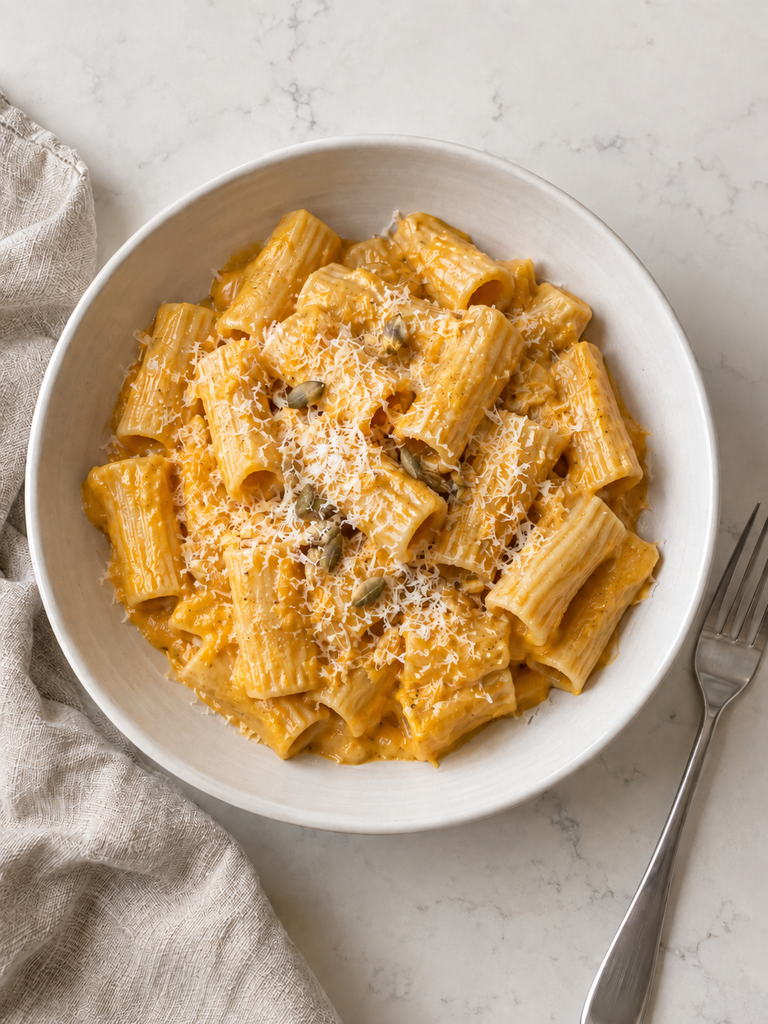
Why This Butternut Squash Pasta Works
Canned pumpkin does the squash’s job with none of the labor
No peeling, no cubing, no roasting, no blender to wash. One can, opened, stirred in.
Three cheeses give the sauce actual dimension
Gouda, sharp cheddar and Parmesan are the same blend behind Trader Joe’s butternut squash mac and cheese. Cheddar alone tastes flat next to squash.
Cooking the pasta separately removes the guesswork
You’re not standing over the pot wondering whether the noodles will absorb the right amount of liquid. They cook, they drain, they get stirred into a finished sauce.
No roux means no babysitting
There’s no flour to cook out and no lump risk. If you like that approach, it’s the same reason my easy baked mac and cheese skips the roux too.
Reserved pasta water does the heavy lifting
The starch in that water loosens the sauce while helping it cling to the noodles. Milk thins the sauce. Pasta water finishes it.
Pumpkin seeds add crunch with zero extra work
Straight from the bag, sprinkled on top. That’s the entire technique.
One more practical note: this uses the whole can of pumpkin and the whole box of pasta. There’s no half-used pumpkin container quietly migrating to the back of your refrigerator.
Is It Butternut Squash Or Just Pumpkin?
Technically, this uses canned pumpkin in place of butternut squash purée.
Fresh butternut squash is delicious. It also requires cutting, seeding, roasting and blending until completely smooth.
That work makes sense when squash is the entire point of the meal — like it is in these butternut squash flatbreads with smoked Gouda. It makes much less sense when you’re just trying to get dinner on the table on a weeknight.
Canned pure pumpkin brings the same smooth texture, subtle sweetness and warm orange color with no prep at all. Gouda, cheddar, Parmesan, sage and thyme do most of the flavor work anyway, so the finished pumpkin butternut squash pasta sauce still lands firmly in Trader Joe’s territory.
If you happen to have prepared butternut squash purée, use it. Substitute the same amount and continue with the recipe as written.
For everyone else: open the can.
Ingredients For Butternut Squash Pasta
Full quantities are in the recipe card below. Here’s what each thing is doing.
Short pasta
Trader Joe’s uses mezzi rigatoni, and it’s the right call — short tubes catch thick sauce inside and out. I use mezzi rigatoni when I want the closest match, but regular rigatoni, cavatappi, shells or elbows all work. Skip delicate shapes that can’t stand up to a creamy sauce.
Pure pumpkin
One 15-ounce can of 100% pure pumpkin — not pumpkin pie filling. Pie filling is sweetened and spiced, and that is an entirely different dinner than the one we’re making.
Butter and garlic
Butter adds richness and gives the garlic somewhere to soften before the rest of the sauce goes in. Fresh garlic beats garlic powder here without adding real work, and two cloves is enough to make the sauce savory without overpowering the squash and cheese.
Milk
Whole milk makes the creamiest sauce, but 2% works. Heavy cream isn’t necessary — the pumpkin and cheese already give the sauce plenty of body, and milk keeps it creamy without making it so rich you can only eat four bites.
Dijon mustard
A teaspoon of Dijon sharpens the cheese without making the pasta taste like mustard. You probably won’t identify it in the finished dish. You’d notice if it were missing.
Gouda, sharp cheddar and Parmesan
The three-cheese blend comes straight from the flavor profile of Trader Joe’s Butternut Squash Mac & Cheese. Gouda melts smoothly and adds a nutty note. Sharp cheddar brings the familiar macaroni-and-cheese quality. Parmesan provides salt and depth so the sauce doesn’t taste flat or sweet.
Cheese shredded from a block melts most smoothly, which is the argument for keeping a sturdy box grater within reach. Pre-shredded cheese still makes a good pot of pasta.
Sage, thyme and nutmeg
Sage and butternut squash pasta is a classic pairing for a reason: sage is savory and woodsy, which balances the natural sweetness of winter squash and pumpkin. A jar of ground sage is the one spice worth having on hand for fall cooking.
Thyme reinforces that savory direction, and a small amount of nutmeg makes the cheese sauce taste warmer and more developed. Grating it fresh with a zester — the same tool that handles the Parmesan — makes a real difference.
The important phrase is “small amount.” We are not making pumpkin-spice pasta.
Pumpkin seeds
Pumpkin seeds, roasted or raw, or pepitas, add the crunch creamy pasta desperately needs. Use salted pumpkin seeds straight from the bag and sprinkle them on individual bowls right before serving so they stay crisp.
How To Make Butternut Squash Pasta
Step 1: Cook the pasta
Bring a large pot of generously salted water to a boil. Cook the pasta until just al dente, using the lower end of the range on the package — it will soften a little more in the hot sauce.
Before draining, reserve about 1½ cups of the starchy pasta water. Drain the pasta and set it aside. The same pot becomes the sauce pot, so this is still one pot to wash.
Step 2: Cook the garlic
Return the empty pot to the stove over medium-low heat. Melt the butter, add the minced garlic and cook about 30 seconds, just until fragrant. Don’t let it brown.
Step 3: Make the pumpkin sauce
Stir in the pumpkin, milk, Dijon, sage, thyme, nutmeg, salt and pepper. Whisk until smooth and let it warm for two to three minutes, stirring frequently. Keep the heat moderate — you don’t want the milk at a hard boil.
The sauce should look smooth but slightly loose at this point. The cheese and pasta will thicken it considerably.
Step 4: Add the cheese
Turn the heat to low. Add the Gouda, cheddar and Parmesan gradually, stirring after each handful until it melts into the pumpkin sauce.
Low heat matters here. Too much heat makes cheese grainy instead of smooth.
Step 5: Add the pasta
Return the drained pasta to the pot with ½ cup of the reserved pasta water. Stir until every piece is coated, then add more pasta water a few tablespoons at a time until the sauce looks glossy and slightly looser than you actually want it.
It will keep thickening as it sits. Resist the urge to cook it down.
Step 6: Add the pumpkin seeds
Spoon the pasta into bowls and finish each serving with pumpkin seeds, extra Parmesan and freshly cracked black pepper. The seeds go on at the very end — their crunch against the creamy pasta is the whole reason they’re here.
Tips For the Perfect Butternut Squash Pasta Sauce
Salt the pasta water
Pasta absorbs seasoning while it cooks. Salting only the finished sauce leaves the noodles themselves bland, which you notice most underneath a thick sauce.
Reserve more pasta water than you think you need
You may not use the full 1½ cups, but it’s much easier to pour extra down the drain than to recreate it after it’s gone.
Keep the heat low when the cheese goes in
The pumpkin mixture should be hot enough to melt cheese but not actively boiling. Add it gradually and stir smooth before adding more.
Leave the sauce slightly loose
This thickens fast as it cools. When it looks perfect in the pot, it’s often too thick by the time everyone sits down. Pull it off the heat while the sauce still moves. Thinning a too-thick sauce takes ten seconds. A dry bowl of mac and cheese takes more.
Garnish individual bowls, not the pot
Pumpkin seeds stirred into the whole pot soften in the sauce. Keep them separate so every bowl gets the salty crunch.
Easy Variations
Use actual butternut squash
Replace the canned pumpkin with about 15 ounces, or 1¾ cups, of smooth butternut squash purée.
Add protein
Stir in crockpot shredded chicken or sliced chicken sausage when you return the pasta to the sauce. Crispy bacon works too, especially with the sage, though it makes the finished pasta noticeably richer.
Make it higher in protein
If protein is the goal more than the copycat flavor, my cottage cheese Alfredo sauce and high-protein Panera broccoli mac and cheese are both built for that.
Add vegetables
Fold in baby spinach during the last minute, or serve with roasted broccoli or green beans.
Make it gluten-free
Use your favorite gluten-free short pasta — brown rice penne rigate holds this sauce well. Because there’s no flour-based roux, no other substitutions are needed. Cook it separately as directed and reserve some of its cooking water before draining.
Give it heat
Add a pinch of cayenne or red pepper flakes to the sauce. You don’t need much — the goal is balancing the sweetness, not turning this into spicy macaroni and cheese.
Add crispy sage
If you have fresh sage and want the finished dish to feel a little more special, fry a few leaves in butter until crisp and use them as a second garnish. Completely optional. The ground sage in the sauce is plenty for a weeknight.
What To Serve With Butternut Squash Pasta
This is rich enough to be the main dish, so the easiest pairing is something green and uncomplicated.
- Garlic green beans
- Roasted cabbage quarters
- Roasted broccoli
- A simple green salad
- Steamed peas
- 15-minute honey garlic chicken or chicken sausage
- Sliced apples or pears on the side
The pumpkin seeds already handle texture, so there’s no need to manufacture an elaborate topping or side. Pasta, something green, dinner.
Storage And Reheating
Store leftovers in an airtight container in the refrigerator for three to four days. This reheats well enough that it earns a spot in my rotation of work lunch ideas.
The sauce thickens substantially once chilled. Add a splash of milk or water before reheating, then stir again halfway through. Individual portions do fine in the microwave. For a larger amount, warm it gently in a covered pot over medium-low heat, adding liquid as needed.
I don’t recommend freezing the finished pasta. Dairy-based cheese sauces can separate after freezing and the noodles tend to go too soft.
If you want to work ahead, shred the cheeses and combine the seasonings in advance. The sauce comes together fast enough that making it fresh is the better option.
FAQs
Can I use canned pumpkin for butternut squash pasta?
Yes. Canned pure pumpkin has a similarly smooth texture and mild, earthy flavor, which makes it a practical shortcut for a creamy butternut squash pasta sauce. Just make sure the can says pure pumpkin, not pumpkin pie filling.
What cheese is in Trader Joe’s Butternut Squash Mac & Cheese?
The package lists Gouda, cheddar and Parmesan. This Trader Joe’s butternut squash mac and cheese recipe uses the same three, with sharp cheddar for a little more flavor.
What pasta shape works best?
Mezzi rigatoni is closest to the Trader Joe’s version. Regular rigatoni, cavatappi, shells and elbows also work well because they hold thick sauce.
Can I use pre-shredded cheese?
Yes. Cheese shredded from a block melts more smoothly because it doesn’t contain anti-caking ingredients, but pre-shredded is a reasonable shortcut. Keep the heat low and add it gradually.
Why is my pumpkin pasta sauce too thick?
Pumpkin, cheese and pasta all thicken the sauce, especially as it cools. Stir in reserved pasta water or milk a few tablespoons at a time until it loosens.
Can I make this without Gouda?
Yes. Fontina, Monterey Jack or another mild melting cheese can stand in. It won’t taste exactly like the Trader Joe’s butternut squash pasta, but the sauce still works.
Is this pasta vegetarian?
It is vegetarian as written, assuming the Parmesan you buy is made without animal-derived rennet. Check the package if strict vegetarian preparation matters to you.
PrintButternut Squash Pasta (Easy Trader Joe’s Copycat)
Creamy Trader Joe’s-inspired butternut squash pasta made with canned pumpkin, Gouda, sharp cheddar and Parmesan. Ready in 30 minutes and finished with roasted pumpkin seeds for a salty crunch.
- Prep Time: 10 minutes
- Cook Time: 20 minutes
- Total Time: 30 minutes
- Yield: 6 servings
- Category: Dinner
- Method: Stovetop
- Cuisine: American
- Diet: Vegetarian
Ingredients
- 1 pound mezzi rigatoni or another short pasta
- 2 tablespoons butter
- 2 cloves garlic, minced
- 1 (15-ounce) can 100% pure pumpkin
- 1¼ cups whole or 2% milk
- 1 teaspoon Dijon mustard
- ¾ teaspoon ground sage
- ½ teaspoon dried thyme
- ¼ teaspoon ground nutmeg
- ½ teaspoon kosher salt, plus more for the pasta water
- ¼ teaspoon black pepper, plus more for serving
- 1 cup shredded sharp cheddar cheese (about 4 ounces)
- 1 cup shredded Gouda cheese (about 4 ounces)
- ½ cup finely shredded Parmesan cheese (about 2 ounces)
- 1½ cups reserved pasta water, as needed
- ⅓ cup roasted, salted pumpkin seeds, for serving
- Additional Parmesan, for serving
Instructions
- Bring a large pot of generously salted water to a boil. Add the pasta and cook until just al dente, following the lower end of the package directions.
- Before draining, reserve 1½ cups of pasta water. Drain the pasta and set it aside.
- Return the empty pot to the stove over medium-low heat. Add the butter and minced garlic. Cook about 30 seconds, stirring constantly, until the garlic is fragrant but not browned.
- Add the pumpkin, milk, Dijon mustard, sage, thyme, nutmeg, salt and black pepper. Whisk until smooth. Cook two to three minutes, stirring frequently, until warmed through.
- Reduce the heat to low. Add the cheddar, Gouda and Parmesan one handful at a time, stirring until each addition melts before adding the next.
- Return the pasta to the pot and add ½ cup of the reserved pasta water. Stir until evenly coated. Add more pasta water a few tablespoons at a time until the sauce is creamy, glossy and slightly looser than desired.
- Remove the pot from the heat. Taste and adjust salt and pepper.
- Divide among bowls and garnish with roasted pumpkin seeds, additional Parmesan and black pepper. Serve immediately.
Notes
- Use 100% pure pumpkin, not sweetened pumpkin pie filling.
- For a true butternut squash version, replace the pumpkin with about 15 ounces or 1¾ cups of smooth butternut squash purée.
- Shred cheese from blocks for the smoothest sauce; packaged shredded cheese works for convenience.
- Keep the heat low after the cheese goes in to prevent a grainy sauce.
- The sauce thickens as it sits. Use reserved pasta water or milk to loosen it.
- Add pumpkin seeds to individual servings right before eating so they stay crunchy.
- Refrigerate leftovers in an airtight container for three to four days. Reheat with a splash of milk or water.
- Freezing is not recommended.
Fall Dinner Should Not Be a Project
The reason Trader Joe’s Butternut Squash Mac & Cheese sells out every year isn’t that it’s complicated. It’s that it hits exactly the right fall note — creamy, cheesy, savory, a little sweet — with no effort required from you.
That’s the part worth keeping. Not the squash, not the roasting pan, not the freezer inventory. The flavor, on a night when you have about thirty minutes and no interest in a cooking project.
Final Thoughts
This version keeps everything worth keeping: the pumpkin-squash flavor, the Gouda, cheddar and Parmesan, the sage. It removes the unnecessary work. No squash to cut, no blender to clean, no roux to babysit.
Boil the pasta, stir together the sauce, add pumpkin seeds before serving.
If you end up with a fall canned-pumpkin habit, the healthy pumpkin pie smoothie and these mini pumpkin bread loaves are where the rest of my cans go.

Get the Weekly Wellth Newsletter
Stay up to date & receive the latest posts in your inbox.