



The Best Weighted Vest for Walking: My Pick for Everyday Walkers
I started noticing weighted vests on walkers long before I went looking for the best weighted vest for walking myself.
Not on fitness influencers, but on the people right next to me — a wellness networking walk where half the group had one on, neighbors looping the block at seven in the morning, women my age moving at a conversational pace with the weight built right into the vest.
Enough of them that I stopped writing it off as a coincidence and started asking which vest, how much weight, and whether it was actually worth it.
So rather than send you to sort through dozens of near-identical options, I narrowed it to the two vests actually worth considering — one to start with, one to grow into.
This post contains affiliate links, which means Reach Wellth may earn a commission if you buy through them — at no extra cost to you. I only point to gear I’d actually hand to a friend before a walk.
Why Walk With a Weighted Vest?
Walking with a weighted vest has quietly become one of the most practical ways to get more out of a walk you’re already taking.
The reason is straightforward: adding weight raises the intensity of every step. Your muscles work harder to move the extra load, your heart rate climbs a little higher, and a gentle walk starts asking more of your body without asking more of your schedule.
That added load lands in a few useful places. Your legs, hips, and core do more to carry and stabilize the weight, which tends to make you feel more engaged and upright as you move. Your bones and connective tissue get more of the load-bearing stimulus they respond well to.
And because you’re moving more mass over the same distance, you’re doing more cardiovascular and metabolic work than you would empty-handed. None of this turns a walk into a hard workout — it just makes an easy one count for more.
And if you’ve ever wondered whether walking even counts as real exercise, a vest is one of the easiest ways to make sure it does.
You’re not bolting a workout onto an already-full day. You’re making a walk you’d take anyway do a little more work — all without turning a habit you enjoy into something you have to psych yourself up for.
That’s the kind of change I pay attention to: the smallest addition that returns real capacity, not another thing to maintain.
My Pick At a Glance
The best weighted vest for walking really comes down to one choice: do you want an adjustable vest you can add weight to over time, or a fixed-weight vest you buy at one set weight? Both work well for walking — it’s about how you want to buy. Here’s the vest I’d point to in each type:
If you want to start light and build (adjustable): the Sportneer Adjustable Weighted Vest. You add weight as you get stronger, so one vest grows with you — ideal if you’re not yet sure how much weight you want.
If you know your weight and want to spend less (fixed-weight): the Zeerun Weighted Vest. A single set weight in lots of colors and sizes, at a price that makes it easy to say yes.
What To Look For In a Weighted Vest For Walking
Most vests look alike in a product photo. The differences that actually matter over months of real walks come down to a short list.
Adjustable versus fixed weight. A fixed-weight vest is one number, forever — simpler to buy, but you’re locked in. An adjustable vest lets you start light, then add small increments as your body adapts. For walking specifically, where you want to progress gradually rather than start heavy, adjustable is the more forgiving choice for most people.
The right amount of weight for you. A vest is only useful if it’s carrying a load your body is ready for. That means the weight range matters more than the maximum. You want a vest that goes light enough to start and heavy enough to grow into (more on the actual numbers below).
Fit and stability. The whole point is added resistance, not added bouncing. Look for adjustable shoulder and waist straps so the weight sits close to your body and stays put. A vest that shifts on every stride gets left in the closet.
Comfort for the walks you actually take. If your walks are long or social, thin straps and hard weight plates become a problem fast. Padded shoulders and evenly distributed weight are what let you forget you’re wearing it — which is exactly what you want on a group walk where you’re mid-conversation, not counting the minutes.
Visibility. If you walk early, late, or into the evening, reflective detailing is a genuine safety feature, not a nice-to-have.
Ease on and off. A vest you can zip on in ten seconds is a vest you’ll actually reach for. Fiddly ones lose to the walk itself.
Best Adjustable: Sportneer Weighted Vest
Here’s where I’m coming from, because it shapes what I recommend and what I skip.
I’ve spent the better part of two decades in and around fitness — as a certified health coach, and as someone who has cycled through boutique studios, cycling classes, personal training, home setups, and more fitness apps than I’d like to admit. I don’t recommend gear based on how it photographs. I recommend it based on whether it survives a real week.
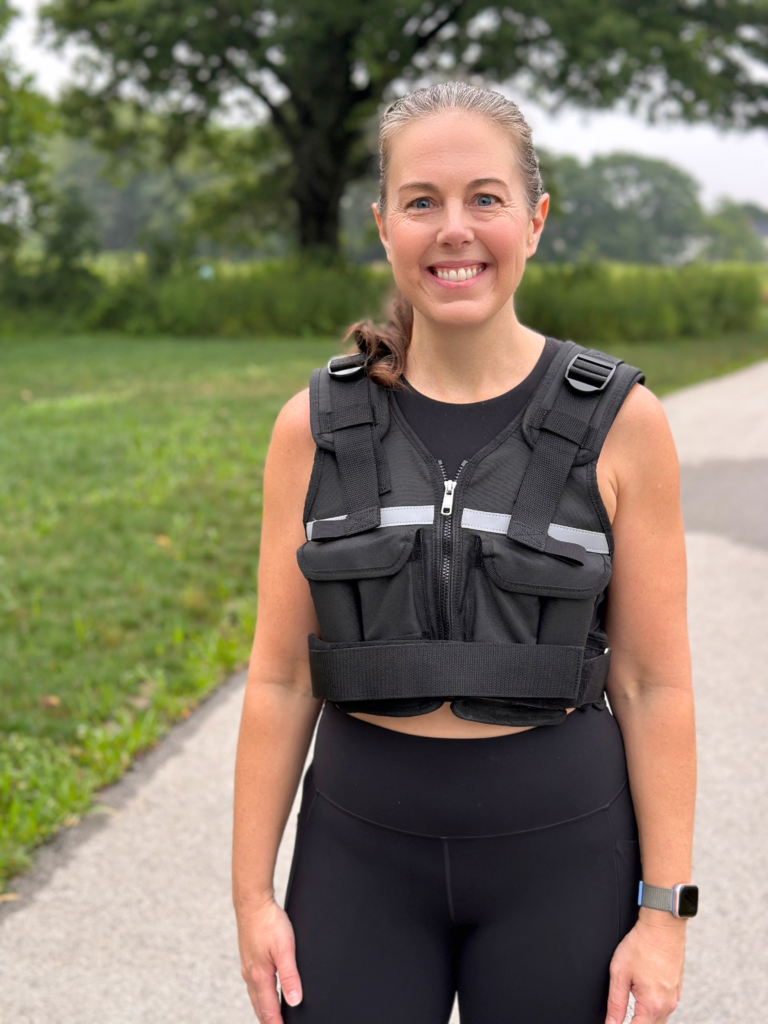
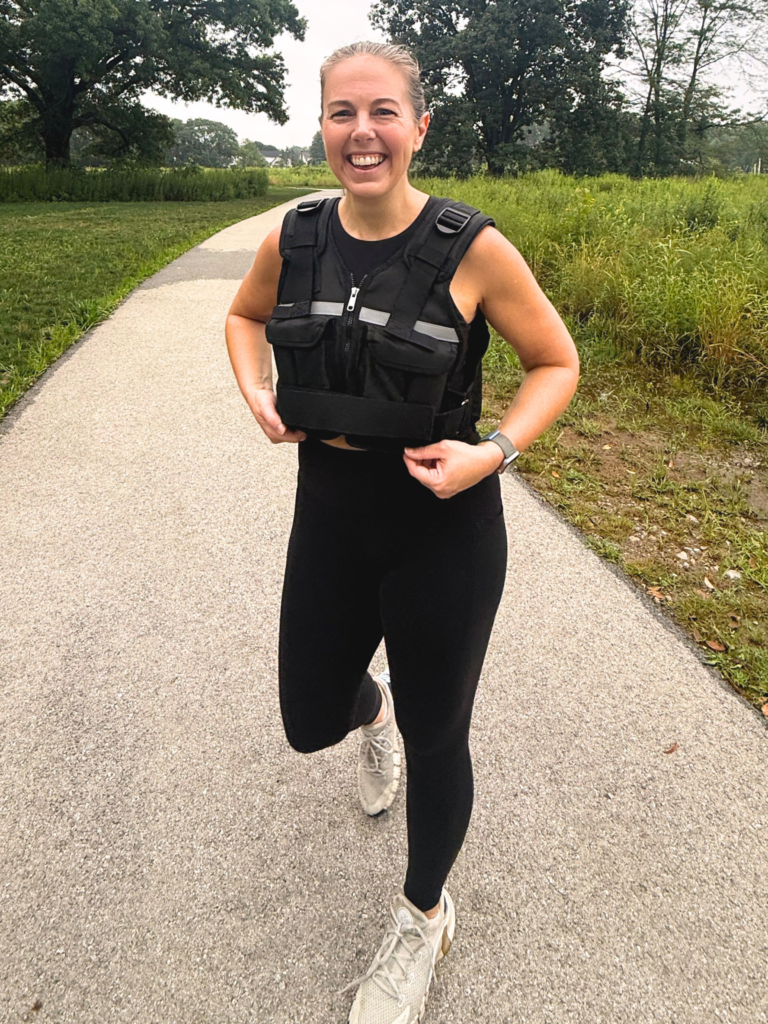
By that standard, the adjustable vest I’d point to right now is the Sportneer Adjustable Weighted Vest — a well-built example of the type, and the one I’d steer you toward if you want a single vest that grows with you.
The core reason is the adjustability.
The standard version holds removable weight packs that let you dial the load anywhere from a couple of pounds up to eighteen, and heavier configurations are available if you outgrow it.
That range solves the single biggest mistake people make with weighted walking: starting too heavy. You can begin with a light load your body can genuinely handle, then add a pound or two at a time as walking with weight starts to feel easy. One vest carries you from your first cautious walk to a load that actually challenges you.
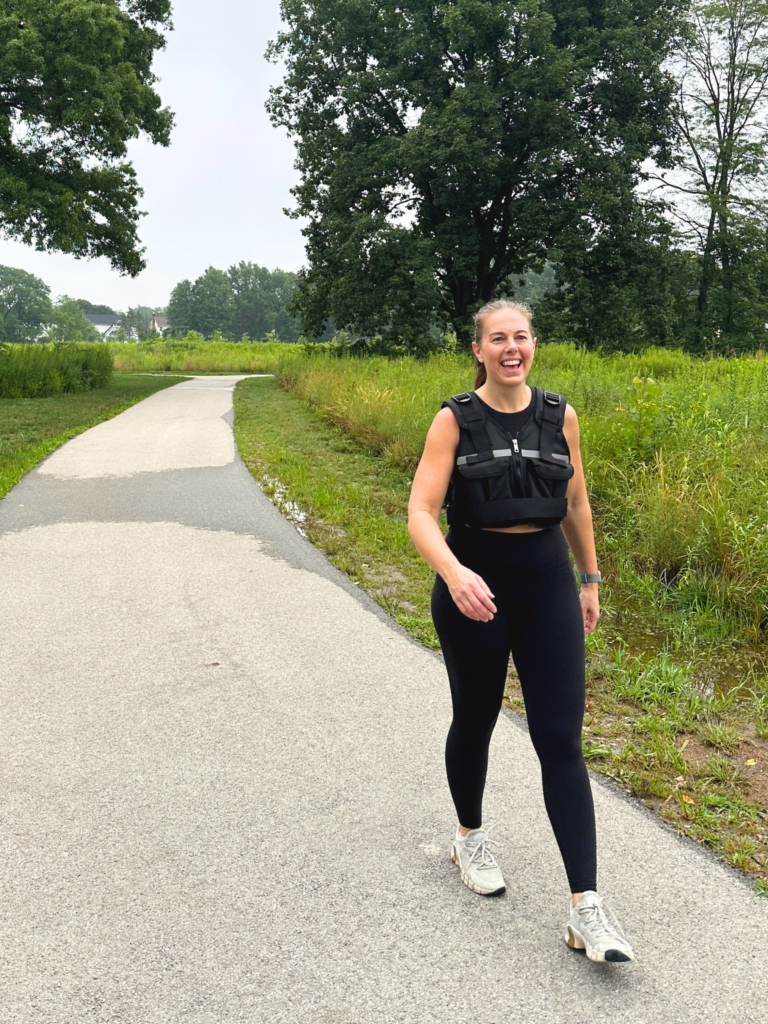
The fit is built for real use, too — and this is the part that genuinely surprised me about both vests. They’re far more comfortable than a slab of weight on your torso has any right to be.
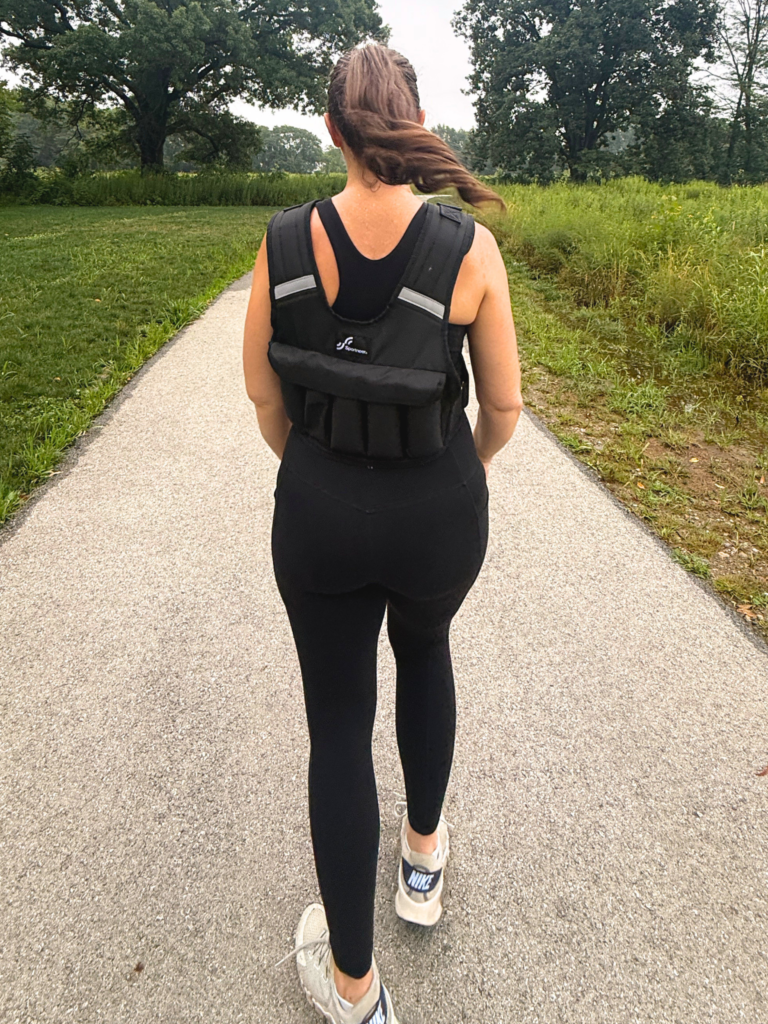
After the first minute of a walk, I stopped noticing I had one on at all; it just becomes part of you. Double locks at the shoulders and waist let you snug it down so the weight rides close instead of swinging, the weight sits evenly across the front and back rather than pulling you in one direction, and reflective strips front and back handle the low-light walks. It zips on and off, and the weight packs pull out — which matters more than it sounds, because it means you can actually clean it.
Owners consistently back this up: reviewers describe it as easy to adjust as they get stronger, comfortable, and stable enough to wear under a winter coat, with weights that come out and go back in without a fight. Several women note it fits well through the chest and shoulders, which is not a given with vests designed around a male frame.
For a piece of gear you’ll wear against your body for an hour at a stretch, that fit feedback is worth as much as any spec sheet.
Best for: anyone who’s new to weighted walking, unsure exactly how much weight they need, or who wants one vest they can keep progressing with.
Best Fixed-Weight Pick: Zeerun Weighted Vest
Not everyone needs adjustability, and not everyone wants to spend for it. If you already know your number — you’ve walked with weight before, or you’re confident about where to start — a fixed-weight vest is the straightforward, low-commitment way in, and the one I’d grab is the Zeerun Weighted Vest.
It comes in a wide spread of fixed weights, from six pounds up to thirty, in several colors, with thickened shoulder pads, an adjustable buckle and elastic band to reduce shifting, and double-stitched seams.
It’s one of the most popular walking vests on the market for a reason: it’s comfortable, the weight is distributed evenly, and it delivers exactly what the price promises, for a fraction of what an adjustable vest costs.
The one honest caveat is in the owner reviews: people find it comfortable and effective, but feedback on fit and sizing is mixed — some find it easy to adjust, others say it runs small. And because the weight is fixed, it’s worth getting your number right up front (more on that below). Do that, and you’ve got a comfortable, capable vest for a lot less money.
Best for: confident buyers who know their starting weight and want the most vest for the least money.
So which one? If you already know your weight and want to spend less, go fixed-weight. If you’d rather start light and keep your options open, go adjustable. Both types work well for walking — it’s really a question of which trade-off suits you.
How Heavy Should Your Walking Vest Be?
This is the question that decides whether weighted walking helps you or just makes your shoulders hate you.
The common, sensible guidance is to keep the vest to roughly five to ten percent of your body weight when you’re starting, and to build from there over weeks — not days — as it starts to feel manageable.
Most walkers who stick with it settle somewhere in the ten-to-fifteen-percent range, and general advice tops out around twenty percent for walking. Beginning on the lighter end and adding gradually protects your shoulders, neck, and lower back while your body adapts to carrying load in a new way.
To make that concrete: if you weigh around 145 pounds, five percent is a little over seven pounds — so an 8-pound vest is a gentle, sensible place to start.
Around 180 pounds, you’d reach for a 10- or 12-pound vest for that same easy entry point. This is exactly the math to run before you buy a fixed-weight vest like the Zeerun, since you’re committing to a single number: take your body weight, find five to ten percent of it, and pick the fixed weight that lands in that range.
With an adjustable vest, you skip the guesswork entirely and just start at the bottom.
And don’t underestimate what even a few pounds does. The first thing both vests taught me is how much difference a small amount of added weight makes — you genuinely feel it, right away, even at the low end.
It’s a good reminder that carrying your own body around is already work, and that you do not need a heavy vest to get something real out of this.
Early on, keep the sessions reasonable, too — think a normal walk, not hours under load.
This, again, is where an adjustable vest earns its price: it lets you actually follow that progression instead of guessing at a fixed number and hoping you got it right.
How To Start Walking With a Weighted Vest
You don’t need a new routine. You need to add weight to the one you already have.
Start with a walk you already take — a route and a duration your body knows — and add the vest to that, light, for the first few outings.
Pay attention to your posture: the added weight shouldn’t pull you forward or round your shoulders, so if you notice yourself hunching, that’s a signal to lighten the load or shorten the walk.
Progress one thing at a time. Add a little weight, or add a little distance, but not both in the same week.
And give yourself permission to leave the vest at home on recovery days or high-stress days — a regular walk is still a complete, worthwhile walk.
The vest is a way to ask more of your body when you have more to give, not a rule you owe it every day.
When To Check With a Doctor First
Weighted walking is gentle by the standards of exercise, but adding load changes the equation. It’s worth a conversation with a medical professional before you start if you’re pregnant, managing back, spine, joint, or balance issues, living with a heart condition, dealing with osteoporosis or low bone density, or returning to movement after a long break.
And listen to your body in the moment. If you feel dizzy or notice your heart rate climbing in a way that doesn’t feel right, use the vest only on days you’re feeling well, and stop rather than pushing through.
Weighted walking should make an ordinary walk a little more effective — not turn it into something you have to endure.
A Weighted Vest Won’t Replace Strength Training
Here’s the honest part a lot of weighted-vest content skips: a vest makes your walk harder, but it is not a substitute for actually lifting weights.
Walking with added load raises the intensity of a walk and asks a little more of your muscles and bones along the way — but the kind of progressive resistance that builds real strength and protects muscle as you age comes from strength training, where you can steadily and deliberately add load over time.
Think of a weighted vest as a way to make the easy, everyday movement you’re already doing count for more — not as the thing that replaces your squats, your deadlifts, or your reformer work.
The walkers who get the most out of a vest treat it as a complement to strength work, not a shortcut around it. If anything, a vest is a good on-ramp: if carrying a few extra pounds on a walk makes you curious about what your body could do with real resistance, that’s a win worth following.
Frequently Asked Questions
Is walking with a weighted vest good for you?
For most healthy adults, yes. Adding weight raises the intensity of an ordinary walk — more demand on your muscles and cardiovascular system — without adding time to your day or turning a low-impact habit into a hard workout. The key is matching the load to where your body actually is and building gradually.
How heavy should a weighted vest be for walking?
Start around five to ten percent of your body weight and build from there over weeks. Many walkers land in the ten-to-fifteen-percent range over time, with general guidance capping walking loads near twenty percent. Starting light and progressing slowly is what protects your shoulders, neck, and back.
How long should you walk with a weighted vest?
Begin with the length of a walk you already take comfortably, and keep early sessions reasonable rather than pushing for hours under load. As your body adapts, you can extend the time or add weight — just not both at once.
Can beginners walk with a weighted vest?
Yes, as long as you start light. An adjustable vest is especially beginner-friendly because you can begin with just a couple of pounds and add weight only once the current load feels easy, instead of committing to a fixed number on day one.
Fixed or adjustable weighted vest — which is better for walking?
For most people, adjustable.
It lets you start light, progress gradually, and keep the same vest as you get stronger.
A fixed-weight vest is a solid, lower-cost choice only if you already know exactly the weight you want and don’t expect that to change.
Do you need a special vest, or can you just use a backpack?
A loaded backpack (sometimes called rucking) can work in a pinch, but the weight tends to pull backward and shift as you move. A vest built for walking keeps the load close and evenly distributed across your body, which is more comfortable and more stable over a real walk — the difference you’ll feel most on longer or hillier routes.
Weighted walking found me the way most of my favorite habits have: not through a program, but through the people I was already walking beside. If you’ve been circling the idea, this is the answer to the only question that really matters — which one do I actually buy.
If you want to start light and grow into it, an adjustable vest like the Sportneer is the way to go; if you know your weight and want to spend less, a fixed-weight vest like the Zeerun does the job. Both are good — pick the trade-off that fits you.
Either way, you’re not adding a workout to your life. You’re asking a little more of a walk you were going to take anyway.
And if you’re building out the rest of your routine, I’ve put the same real-world testing into budget-friendly home gym equipment and the extra-large yoga mat I actually use.




Get the Weekly Wellth Newsletter
Stay up to date & receive the latest posts in your inbox.