



How to Build a Capsule Wardrobe With AI That You’ll Actually Wear
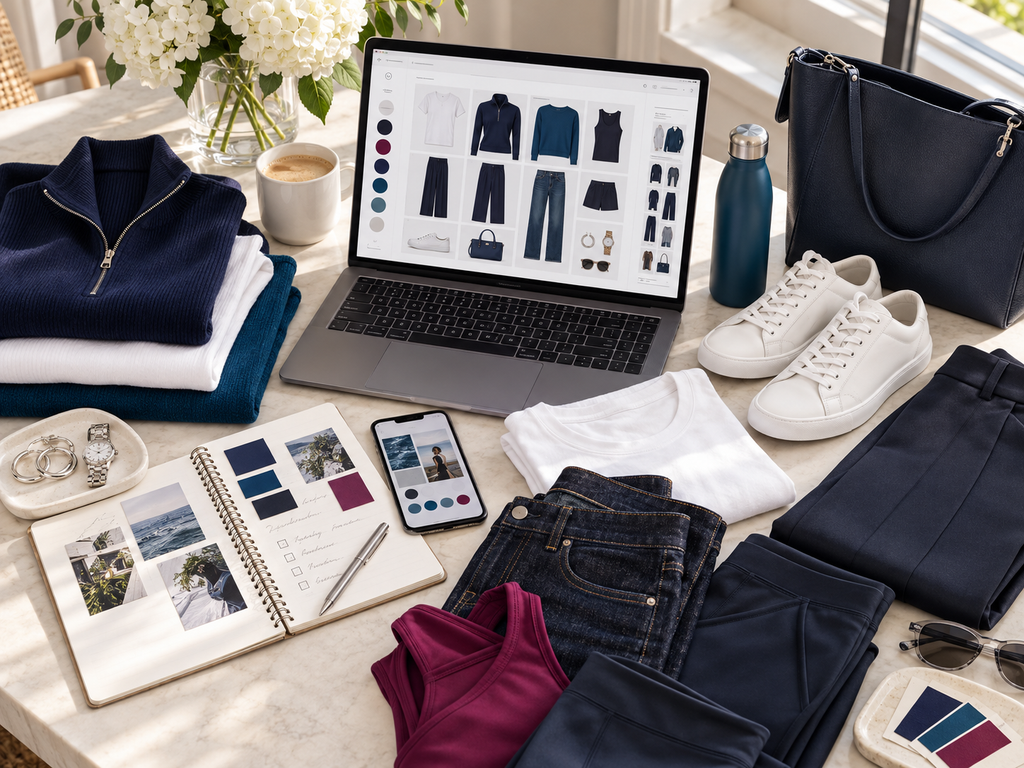
If you’ve asked AI how to build a capsule wardrobe, you already know it can produce one in seconds.
The problem is that its first attempt tends to look like every generic capsule wardrobe on the internet: a blazer, a white button-down, loafers, a cardigan and a wrap dress. Every piece coordinates, and none of it is guaranteed to fit your life.
The concept isn’t the problem. A small set of clothes that work together is still one of the easiest ways to make getting dressed faster and shopping less random. What fails is the order of operations. Most capsule advice starts with the clothes, when it should start with the person who has to wear them.
That’s where AI earns its place. Used as a planning tool rather than an automated shopping list, it can take your lifestyle, proportions, preferred silhouettes, color palette and the clothes you already love, and turn them into a wardrobe system you’ll actually reach for. Here’s how to do it.
What Is a Capsule Wardrobe?
A capsule wardrobe is a relatively small collection of clothing designed to work together across many outfits. There’s no required number of pieces. You might build a 20-piece seasonal capsule, a 30-piece everyday wardrobe or several smaller capsules for work, weekends and travel. Most capsule wardrobe for women guides fixate on the count, but the system matters far more than the number.
A good capsule should give you:
- multiple outfits from each piece
- a consistent color palette
- silhouettes that flatter you
- clothes that match your actual schedule
- enough variety that getting dressed doesn’t feel repetitive
- fewer pieces you own but rarely wear
That last point is where many capsules fall apart. Coordination is not the same thing as usefulness, and a closet where everything matches can still be a closet full of clothes you skip.
Why Generic Capsule Wardrobes Don’t Work
Search for capsule wardrobe ideas and the same pieces show up again and again. They aren’t bad clothes.
They’re built for an imaginary, universally stylish woman who apparently loves blazers, white shirts and loafers, and who may have nothing in common with you.
A capsule can fail even when every item coordinates. Usually it’s one of these:
- the silhouettes don’t flatter your proportions
- the clothes don’t match your daily life
- you’re building around an aesthetic you admire but don’t wear
- the colors coordinate with each other but not with you
- the wardrobe is too formal or too casual for your week
- the fabrics aren’t comfortable enough to choose on a busy morning
- the “versatile” pieces are ones you consistently avoid
That’s why the first step shouldn’t be a shopping list. It should be defining your wardrobe parameters, which is exactly the information AI needs to give you something better than the internet’s greatest hits.
How to Build a Capsule Wardrobe With AI in 10 Steps
The first seven steps build the information AI needs. The last three put AI to work. Skipping straight to the prompt is how you end up with the blazer-and-loafers capsule.
Step 1: Start With Your Real Life
Before thinking about clothes, look at how you actually spend your week.
Someone who works remotely, takes barre3 or Pilates classes several times a week and has the occasional client meeting needs a very different capsule from someone in a formal office five days a week.
Estimate what share of your week goes to each of these: work, working from home, exercise, errands, school or daycare drop-off, social events, dates, travel, weekends and formal occasions. Then build roughly the same proportions into your wardrobe.
Count the hours at home, too. If evenings on the couch are a real part of your week, loungewear like Costco’s Room Service pajamas belongs in the plan as much as anything you wear out.
If 60% of your life is casual, a capsule that’s 60% polished workwear won’t make getting dressed easier. It will give you a beautifully coordinated collection of clothes that stay on the hanger.
Step 2: Define Your Style Before You Define Your Pieces
You don’t need a perfectly named fashion aesthetic, but you do need a vocabulary. The easiest way to build one is to choose between opposites:
- fitted or oversized
- structured or draped
- sporty or romantic
- minimal or decorative
- classic or trend-driven
- polished or relaxed
- feminine or androgynous
Then describe your ideal wardrobe in three to five words. “Sporty, polished, streamlined, feminine, comfortable” is far more useful than “classic,” because it rules things out. The more specific the description, the easier it is to cut clothes that look good on paper but don’t belong in your closet.
Step 3: Factor In Your Body Proportions
This is the step generic capsule lists almost completely ignore. Two women can love the same aesthetic and still need very different clothes to pull it off.
Pay attention to your shoulder width, bust, waist definition, torso length, hip width and thigh shape, along with practical details like preferred rise, inseam, where tops naturally hit, which necklines you keep choosing and where jackets look best on you. You don’t need rigid body-type rules. You’re looking for patterns.
If you consistently feel best in fitted tops and straight-leg pants, that’s more useful than any article insisting everyone needs an oversized button-down. If cropped jackets flatter you more than long blazers, make cropped jackets part of your capsule language. Your best wardrobe is usually hiding in the shapes you already reach for.
Step 4: Choose a Color System
A capsule gets dramatically easier when the colors coordinate, and that doesn’t require a closet of beige, black and white.
Start with three to five foundational neutrals, such as navy, charcoal, dark denim, crisp white and black. Then add three to five signature colors, such as cobalt, teal, berry, emerald and raspberry.
If you already know your seasonal palette, use it. If you don’t, an AI color analysis using your own photos is a quick way to find it.
Even without one, look through photos of yourself and note the colors you consistently like wearing. A capsule becomes much more interesting when the silhouettes are simple and the colors are intentional.
Step 5: Build Outfit Formulas Before Buying Individual Pieces
This is one of the easiest ways to stop random purchases. Instead of asking “Do I need a white shirt?” ask “What outfits do I need to be able to make?” Each answer becomes a formula, and the formulas become your shopping list.
| Occasion | Outfit formula |
|---|---|
| Everyday | Fitted knit + jeans + clean sneaker + lightweight jacket |
| Elevated casual | Sleeveless knit + ankle trouser + streamlined sneaker or sandal |
| Work | Structured knit top + tailored stretch pant + short jacket |
| Athleisure | Matching fitted set + quarter-zip + clean sneaker |
| Casual dinner | Polished top + dark denim + simple jewelry + dressier shoe |
Notice how often the same pieces repeat. A fitted ribbed tank, like these slim-fit 2-pack of tanks in French blue and aqua, covers both the everyday and elevated casual formulas.
A clean white sneaker like the adidas Stan Smith shows up in three.
For athleisure, CRZ Yoga Butterluxe flare leggings and a fitted CRZ Yoga half-zip read polished enough for errands, not just the studio. The shopping list is now built on function instead of fashion clichés.
Step 6: Create Your Capsule Categories
Once you know your formulas, decide how many pieces you realistically need in each category. A practical capsule wardrobe for women might look like this:
| Category | Approximate number |
|---|---|
| Tops | 7–9 |
| Bottoms | 5–6 |
| Layers | 4–5 |
| Dresses and one-pieces | 3–5 |
| Athleisure | 3–5 |
| Shoes | 4–6 |
| Outerwear | 2–4 |
Treat this as a starting point, not a prescription. If you love dresses, you may need fewer separate tops and bottoms. If you live in athletic clothes, shift numbers from traditional casual pieces into activewear. The categories should mirror the proportions you found in Step 1.
Step 7: Use the Three-Outfit Rule
Before adding anything to your capsule, make sure you can immediately picture it in at least three outfits. A cobalt knit top, for example, might work with dark jeans and white sneakers, navy trousers and silver flats, or charcoal pants and a lightweight jacket.
If an item only works with one specific outfit, it may still be worth owning, but it probably isn’t a capsule essential. The goal isn’t maximal minimalism. It’s useful versatility.
Step 8: Use AI to Stress-Test the Wardrobe
This is where AI becomes useful. Once you’ve defined your parameters, a general AI tool works like a free AI outfit planner: it can spot gaps, generate combinations and flag purchases that don’t fit the system. But don’t open with “Build me a capsule wardrobe.” That prompt produces the internet’s greatest hits.
I saw this firsthand after finishing my AI color analysis. My first AI-generated capsule had blazers, wrap dresses, cardigans and generic business-casual pieces. The colors coordinated perfectly, and the wardrobe was still wrong. It improved considerably once I added real information about my body proportions, preferred fit, lifestyle, favorite retailers, disliked silhouettes, comfort requirements, color palette and existing wardrobe. That context is what turns AI from a generic outfit generator into an actual planning tool.
AI Capsule Wardrobe Prompt
Copy this and fill in the bracketed sections:
Help me build a capsule wardrobe based on my real lifestyle, proportions and personal style.
My lifestyle includes: [work, remote work, exercise, errands, travel, social events, etc.]. My preferred style is: [3–5 descriptive words]. I generally prefer clothing that is: [fitted, relaxed, structured, soft, minimal, sporty, feminine, etc.]. My body proportions are: [relevant details such as shorter torso, longer legs, fuller hips, broad shoulders, etc.].
Silhouettes I consistently like on myself include: [list]. Silhouettes I rarely wear or dislike include: [list]. My best colors are: [list]. My preferred neutrals are: [list]. Stores or brands that tend to fit me well include: [list].
Build the capsule around outfit formulas first. Then recommend approximately 25–35 pieces that can create those outfits. Do not automatically include traditional capsule wardrobe staples such as blazers, button-down shirts, loafers or wrap dresses unless they match the style information above. Prioritize pieces that can be worn at least three different ways.
That instruction about traditional staples matters more than it looks. AI has absorbed the same generic capsule advice as the rest of the internet, so you have to give it explicit permission not to follow it.
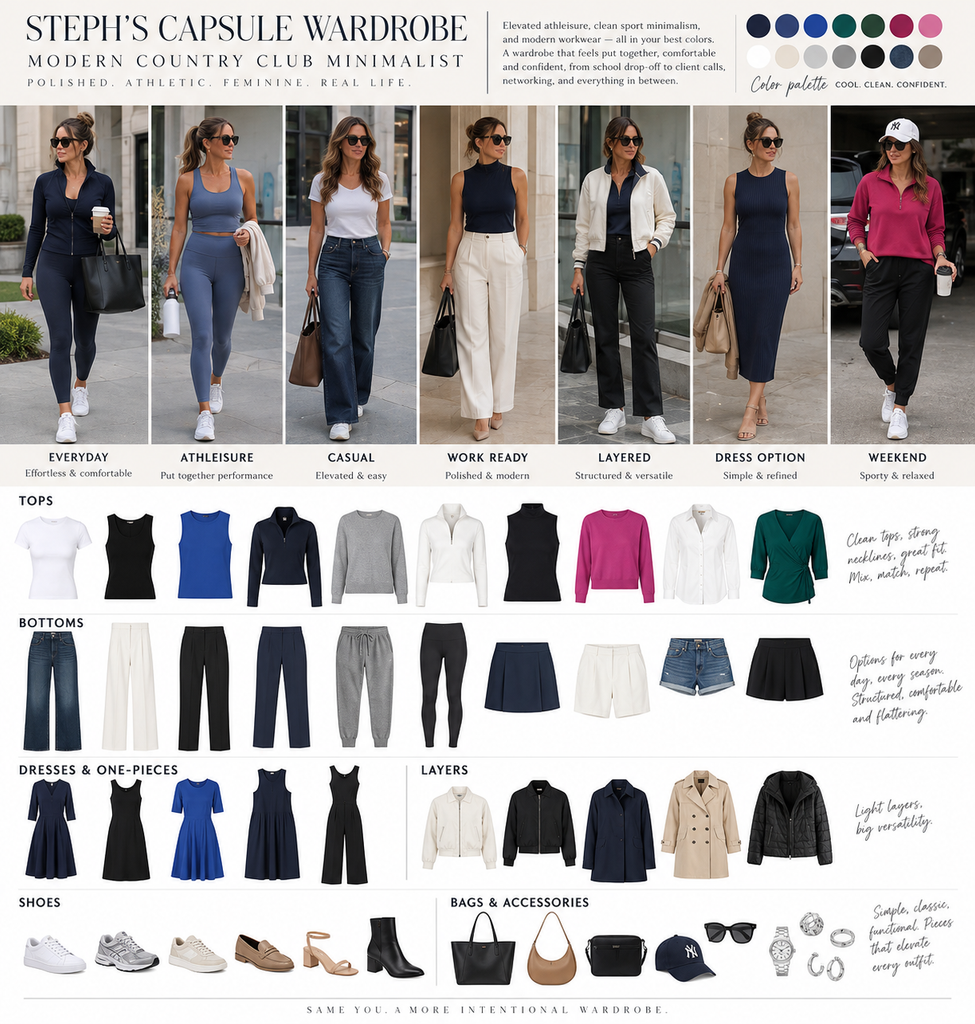
Step 9: Correct the AI When It Gets Your Style Wrong
This may be the most valuable part of the process. A bad first recommendation doesn’t mean the exercise failed; it means the AI needs better direction. “I don’t like this” gives it nothing to work with. Try something specific instead:
The colors are right, but the silhouettes feel dated and too corporate. I prefer fitted, athletic, streamlined pieces with structure and stretch. Remove blazers, draped wrap tops and traditional cardigans.
Each round of specific feedback sharpens the next set of recommendations. Treat it less like a quiz and more like working with an AI personal stylist who’s learning your taste in real time.
Step 10: Shop the Gaps, Not the Entire Capsule
Once your ideal wardrobe exists on paper, compare it to what’s already in your closet. You likely own some of it already: your best jeans, everyday sneakers, a fitted navy tee, leggings, a favorite jacket or a few flattering dresses. Those pieces count.
It helps to pull your capsule pieces together in one section of the closet so the gaps are obvious at a glance. Matching slim hangers, like these velvet hangers, save space and make the capsule easy to see. Then ask the AI to compare your current closet to the plan and list only the missing pieces.
The goal isn’t to replace your wardrobe with a brand-new aesthetic. It’s to find the few missing pieces that make the clothes you already own work harder. That’s how a capsule saves you money instead of becoming another excuse to shop.
How to Build a Work Capsule Wardrobe
A work capsule wardrobe follows the same method with a narrower brief: dress for the workdays you actually have, not the ones in a corporate catalog.
Start by counting how many days you’re in an office, on video calls or meeting clients, then build two or three work formulas around those days.
For most hybrid and business-casual schedules, the foundation is smaller than you’d expect: structured knit tops, two or three pairs of tailored stretch pants, one or two short jackets and shoes you can walk in.
Stretch trousers from a brand like Athleta bridge the gap between polished and comfortable, so the same pants can carry a client meeting and an afternoon of errands.
Add the AI prompt above with your dress code and commute, and ask it to keep every work piece wearable on at least one non-work day.
A Better Capsule Wardrobe Checklist
Before buying anything for your capsule, run it through these questions:
- Does this fit my actual lifestyle?
- Does the silhouette consistently flatter me?
- Is the color part of my palette?
- Can I wear it with at least three pieces I already own?
- Does it work with shoes I already own?
- Is it comfortable enough that I’ll actually choose it?
- Does it match my personal style?
- Am I buying this because I need it, or because capsule wardrobe lists say I should own it?
If the honest answer to that last question is the lists, leave it on the rack.
Your Capsule Wardrobe Doesn’t Need to Look Minimal
A capsule can include bright color, prints, athletic clothes, feminine pieces, trend-forward silhouettes and statement jackets. It only needs enough cohesion for the pieces to work together.
You can build one around navy, cobalt and berry as easily as beige, camel and black, around sneakers instead of loafers, or around knit dresses instead of button-downs.
Minimalism is one aesthetic. A capsule wardrobe is a system, and it should look like you.
The Bottom Line
The best capsule wardrobe isn’t the one with the fewest clothes. It’s the one with the fewest wrong clothes.
If you’re figuring out how to build a capsule wardrobe from scratch, work in this order: start with your lifestyle, define your style, notice the silhouettes you actually like on your body, set a color palette and create outfit formulas.
Then use AI to organize and stress-test the system, not to decide who you’re supposed to dress like. That’s the difference between owning a capsule wardrobe and actually wanting to wear one.



Get the Weekly Wellth Newsletter
Stay up to date & receive the latest posts in your inbox.