


Pilates vs. Strength Training: Which One Do You Actually Need?
If you’re weighing Pilates vs. strength training, you’ve probably noticed that most articles answer the question by refusing to answer it.
Both are great! It depends on your goals! Do what you enjoy!
All technically true, and all completely useless when you’re standing in your kitchen trying to decide where your limited time and money should go.
So here’s the direct version: these two things are not interchangeable, and pretending they are is the single biggest mistake in every comparison you’ll read.
They build different things, they answer different questions, and the honest answer to “which one do I need” depends entirely on what you’re already doing.
I can say that with some confidence because I’ve spent serious time on both sides.
I trained with a strength and circuit coach for close to a decade, competed in sports into my thirties, coached collegiate women’s lacrosse, and once trained for and finished a hundred-mile bike ride in about three months.
On the other side of the room, I’ve logged hundreds of studio classes like Pilates and barre classes and hold a health coaching certification.
I’m not a Pilates instructor selling reformer packages, and I’m not a powerlifter who thinks anything without a barbell is a waste of time.
I’ve lived in both worlds long enough to tell you where each one genuinely earns its place.
What Each One Actually Does
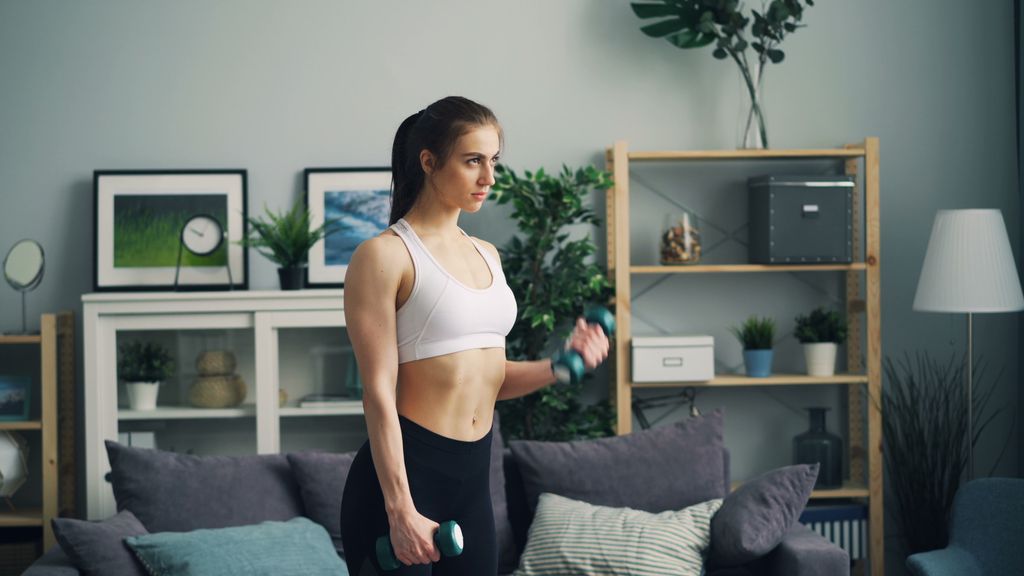
Strength training is any form of resistance work built around progressive overload — gradually asking your muscles to move more load over time.
Free weights, machines, kettlebells, resistance bands, your own bodyweight.
The mechanism is straightforward: you challenge the muscle, it adapts, you add more. Over months and years, that’s how you build and maintain muscle, bone, and raw force production.
Pilates is a system of controlled, low-impact movement focused on the deep stabilizing muscles, spinal mobility, breath, and precise motor control.
Mat Pilates uses your bodyweight and gravity; reformer Pilates adds spring-based resistance that changes the load in ways bodyweight alone can’t.
If you want the full breakdown of the method itself, I covered that in what is Pilates.
The short version for this conversation: Pilates trains how you move — the quality, control, and stability underneath every movement — more than it trains maximum strength.
That distinction is the whole article. One builds capacity. The other builds control. You need both, but not in equal measure, and not for the same reasons.
The Real Difference Between Pilates And Strength Training
Here’s the framing that finally made this click for me: strength training is infrastructure. Pilates is what keeps that infrastructure running smoothly.
When you lift with progressive overload, you’re building the structural capacity of your body — the muscle mass that determines your metabolism, the bone density that protects you as you age, the force you can produce when you pick up a kid or a couch or a heavy bag of dog food.
That’s foundational. It’s the thing that, if it’s missing, nothing else quite compensates.
Pilates works on a different layer. It sharpens the deep core, the stabilizers, the mobility and body awareness that keep you moving well and keep you out of the physical therapist’s office. It makes the infrastructure more usable.
What it doesn’t do — and what no honest instructor will claim it does — is replace the progressive loading that builds and preserves muscle over time. Spring resistance is real resistance, especially at higher levels, but it isn’t designed to be loaded heavier and heavier the way a barbell is.
That ceiling is the point where the two methods stop being comparable.
Where Strength Training Wins
If your goal is building noticeable muscle, getting measurably stronger, or protecting your long-term health, strength training isn’t just better — it’s in a different category.
Muscle is the clearest case. Progressive overload is the most reliable way to build and hold onto lean mass, and lean mass is what supports a higher resting metabolism, which is a big part of why strength work outperforms almost everything else for body composition over time.
I get into that fully in is Pilates good for weight loss, but the headline is that muscle is metabolically active tissue and building it changes the math of your whole day, not just your workout hour.
Bone density is the one people forget. Loading your skeleton through resistance work signals your bones to stay dense and strong, which matters enormously heading into your forties, fifties, and beyond — especially for women.
This is protective infrastructure you’re either building now or wishing you had later. Pilates, being low-impact and low-load by design, simply doesn’t provide the same signal.
And then there’s functional strength: the ability to produce force in the real world. Strength training builds that directly and it carries into everything, including your Pilates practice.
Where Pilates Wins
Now the other side, because this is where a lot of lifters get quietly humbled the first time they get on a reformer.
Pilates is exceptional at deep core strength and stability — not the six-pack muscles, but the deeper layer that stabilizes your spine and pelvis under everything you do.
That’s the exact system traditional lifting tends to undertrain, and weakness there is behind a surprising number of nagging back and hip issues.
Strengthen it and your squat, your deadlift, and your posture all quietly improve.
It also builds mobility and body awareness better than a standard lifting program. The slow, controlled tempo teaches you to actually feel what your body is doing — which muscle is firing, where you’re compensating, how a movement should sequence.
That awareness transfers directly to lifting with better form and fewer injuries.
Finally, Pilates makes for genuinely useful active recovery. On a day when your body needs to move but not get hammered, a controlled session restores mobility and blood flow without adding to your recovery debt — which, paired with actual sleep, is how you keep training consistently instead of breaking down.
If you’re curious how it compares to a similar low-impact studio format, I broke that down in what is barre3.
The Honest Answer: Replace Or Supplement?
So can Pilates replace strength training? For most people already lifting two to three times a week, no — Pilates is supplemental, and that’s not a knock on it.
It targets the stabilizers, mobility, and control that make your strength work more effective and more sustainable. What it won’t do is replace the progressive overload that builds and preserves muscle and bone.
Swap your lifting days for reformer days and you’ll move beautifully while slowly losing the ground your strength work was holding.
The exception is worth naming honestly. If you’re coming back from injury, brand new to structured movement, pregnant or postpartum, or working around limitations that make heavy loading a bad idea right now, Pilates can absolutely be a primary form of training for a season.
In that context it’s not a lesser choice — it’s the right one. Reformer work in particular, which I wrote about after my first class in my Club Pilates review, can carry real load for a beginner.
But for the healthy person deciding where to spend a limited budget: strength training is the infrastructure you build first, and Pilates is the high-value addition that makes it hold up.
How To Combine Both In One Week
You don’t have to choose, and the strongest routine usually uses both.
A realistic week for someone with a few hours to spend might look like two to three strength sessions as the backbone, one Pilates session for core, mobility, and control, and some cardio you actually enjoy — walking, indoor cycling, sport, whatever keeps you moving. Pilates slots in cleanly on a lighter day or in place of a cardio session, not in place of your lifting.
If you only have room for one thing right now and you’re generally healthy, start with strength. Build the infrastructure first.
Add Pilates when you have the capacity — your lifting will be better for it.
Frequently Asked Questions
Can Pilates replace strength training?
For most healthy people already lifting, no. Pilates supplements strength training by building deep core stability, mobility, and control, but it doesn’t provide the progressive overload that builds and maintains muscle and bone. The exception is a season of injury recovery, a fresh start, or pregnancy and postpartum, where Pilates can reasonably serve as primary training for a time.
Is Pilates or strength training better for weight loss?
Strength training has the edge, because building lean muscle raises your resting metabolism and changes your body composition over time. Pilates supports the effort by keeping you mobile and consistent, but it’s not the engine.
Can you build muscle with Pilates?
You can build meaningful core strength, stability, and muscular endurance, and reformer work at higher levels does more than most people expect. But for building visible muscle size and maximum strength, progressive resistance training is far more effective.
How many days a week should I do each?
A common, sustainable split is two to three strength sessions plus one Pilates session per week, with Pilates on a lighter or recovery day. Adjust to your schedule and how your body recovers.
Which is better for a beginner?
If you’re new to structured movement, both are beginner-friendly with good instruction, though reformer Pilates has a real learning curve. Many people find starting with foundational strength work builds a base that makes everything else — including Pilates — feel more accessible.
The Bottom Line
Pilates vs. strength training was never really a competition — they’re answering different questions.
Strength training builds the structural capacity your body runs on: the muscle, the bone, the force you’ll want more of every year you’re alive.
Pilates makes that capacity more usable and more durable.
Treat strength as your infrastructure and Pilates as the thing that keeps it running well, and you stop having to choose between them at all.
You just build in the right order.




Get the Weekly Wellth Newsletter
Stay up to date & receive the latest posts in your inbox.