


What Is Pilates and What Does It Do? A Straight-Talk Guide
This post contains affiliate links, meaning I may earn a commission if you make a purchase—at no additional cost to you. As an Amazon Associate I earn from qualifying purchases. When this article was published, Trideer and Hapbear offered me a higher commission on purchases made through its Amazon links. All opinions are genuinely my own.
Pilates has a reputation for being harder — and more intimidating — than it looks.
The equipment looks like something between a rowing machine and a physical therapy table. The people who do it seem to already know exactly what they’re doing. And somewhere along the way, “Pilates is really hard” became the thing everyone repeats.
Here’s the honest version, from someone who walked in nervous and walked out wanting to sign up.
Pilates is a low-impact strength method built around your core, your control, and your breath. It’s not cardio, it’s not weightlifting, and it’s not stretching — though it borrows a little from each.
Let me break down what it actually is, what it does for your body, and whether it’s as hard as everyone says.
My experience is with reformer Pilates through a studio, so that’s the lens I know best — but most of what’s below applies whether you’re eyeing a reformer class, a mat class, or anything in between.
What Is Pilates?
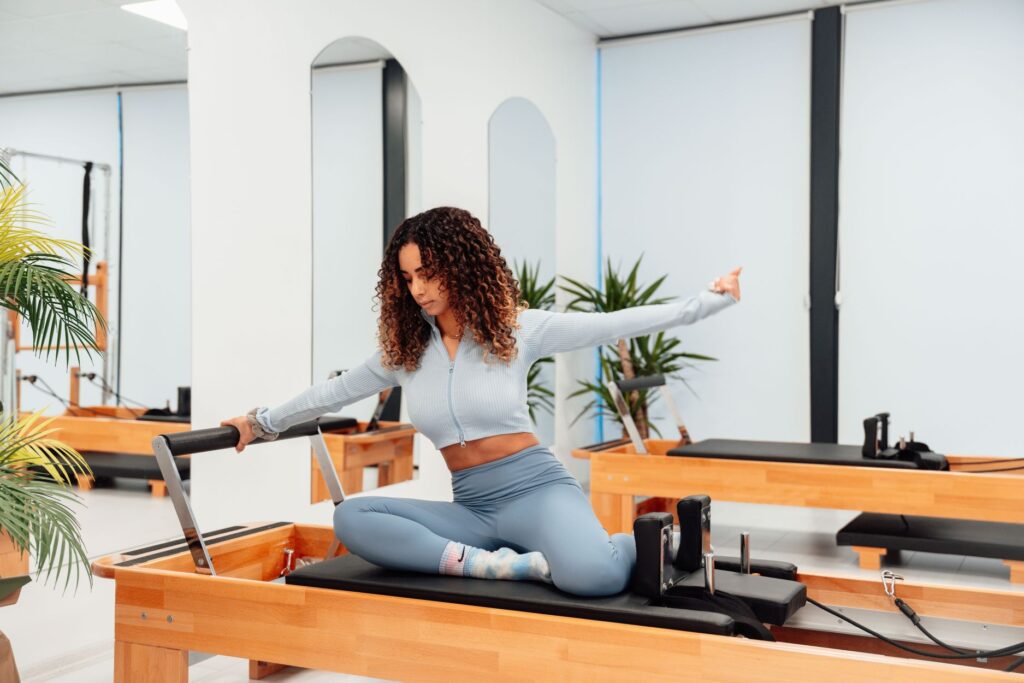
Pilates is a system of low-impact exercises designed to build strength, control, and mobility from the center of your body outward.
It was created by Joseph Pilates in the early 1900s — he originally called it “Contrology,” because the whole point is controlled, precise movement rather than momentum or force.
Every exercise trains your body to move from a strong, stable center. You’re not throwing weight around or grinding out reps. You’re moving slowly and deliberately, with your breath, working the deep muscles that most workouts skip.
There are two main forms you’ll run into:
Mat Pilates uses your own bodyweight and gravity on a mat, sometimes with small props. It’s the most accessible starting point — you can do it almost anywhere.
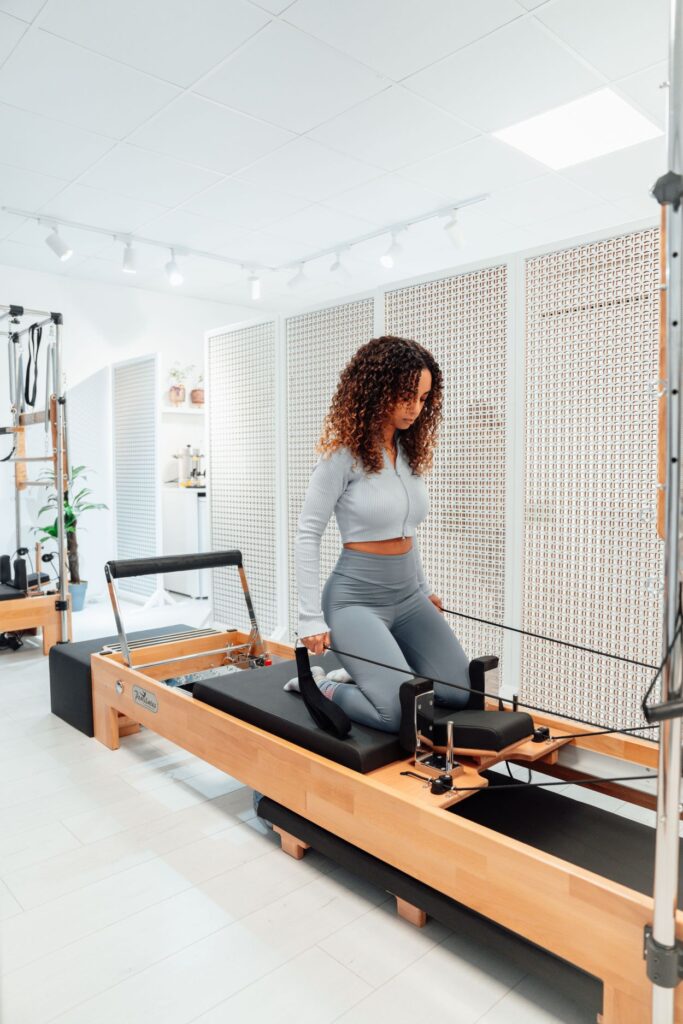
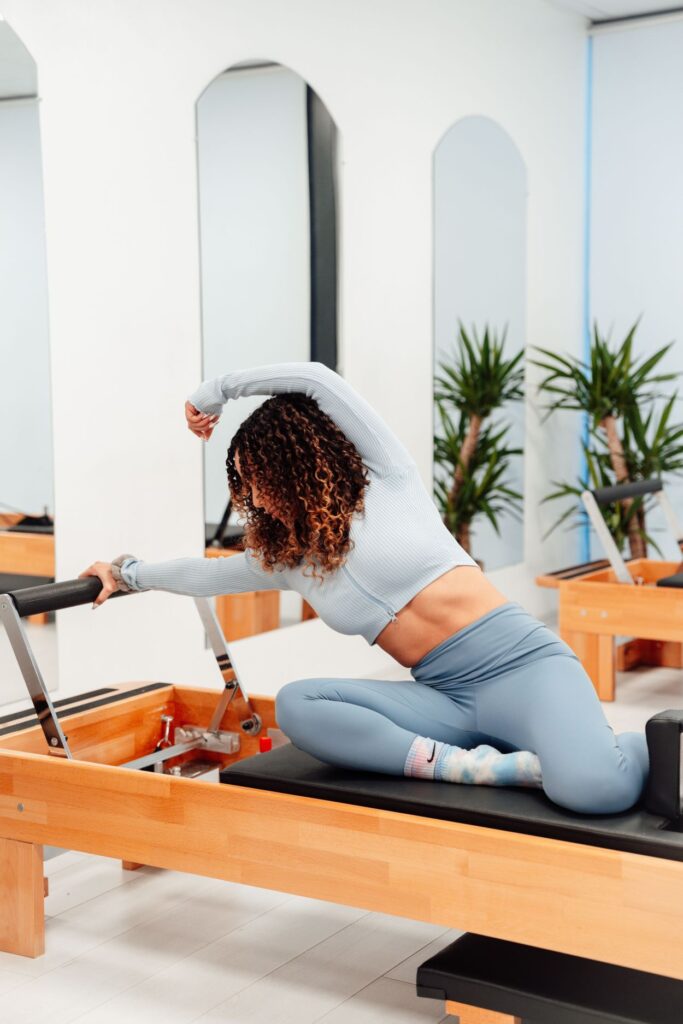
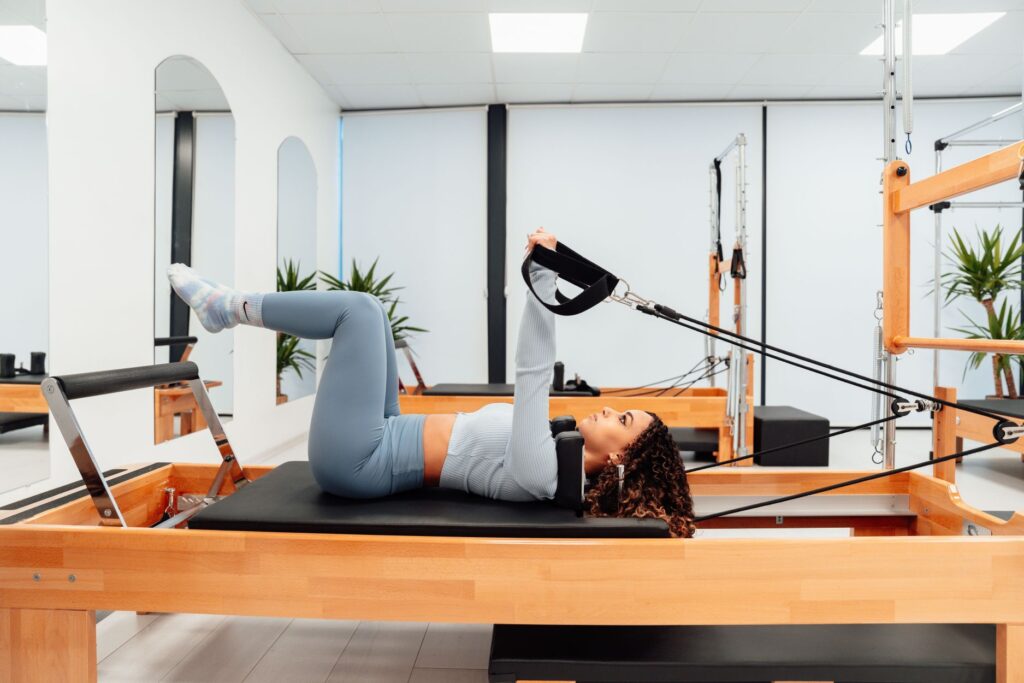
Reformer Pilates uses a spring-loaded machine with a sliding carriage that adds adjustable resistance. It’s what most studio chains (like Club Pilates) are built around, and it’s the version a lot of people picture when they hear “Pilates.”
Same method, same principles — just different tools for loading your muscles.
What Does Pilates Do For Your Body?
This is the real question most people are asking, so here’s the straight answer. Pilates builds a specific kind of strength: deep, stabilizing, controlled. It does a few things especially well.
It strengthens your core — and not just the surface “abs,” but the deep stabilizing muscles around your spine, hips, and pelvis that hold you upright and protect your back. This is the thing Pilates is genuinely known for.
It improves your posture. When those deep muscles get stronger, standing and sitting tall stops being something you have to think about.
It builds flexibility and mobility, because the movements take your joints through their full range instead of the short, repetitive patterns most of us live in.
It sharpens balance and body awareness. The slow pace forces you to actually feel which muscle is working, which carries over into how you move through the rest of your day.
And it does all of this while staying low-impact — no jumping, no pounding on your joints — which is exactly why it holds up for people recovering from injury, returning postpartum, or working around cranky knees and backs.
What it won’t do: build bulk. Pilates creates lean, functional strength, not size. If your goal is maximum muscle mass or heavy-lifting numbers, Pilates is a complement to that work, not a replacement for it — a distinction worth its own conversation.
Read: Pilates vs Strength Training →
The Six Principles Behind Pilates
Every Pilates class, mat or reformer, runs on the same six ideas. Knowing them makes the whole thing click faster:
Centering — every movement initiates from your core.
Concentration — you stay mentally present in each rep instead of zoning out.
Control — no momentum; you own the movement start to finish.
Precision — quality over quantity, always.
Breath — you coordinate your breathing with the movement, which is a bigger deal than it sounds.
Flow — the exercises connect smoothly rather than starting and stopping.
If you’ve ever wondered why Pilates people talk about it almost like a practice rather than a workout, this is why. The mental part isn’t decoration — it’s built into the method.
Mat Pilates Vs. Reformer Pilates
The most common beginner question, so let’s settle it.
Mat Pilates is you, a mat, and gravity. It’s cheaper, more portable, and easy to start at home. The resistance comes from your own bodyweight, which sounds easy until you’re a few minutes into a set and shaking.
Reformer Pilates adds the machine. The spring system creates resistance that adjusts to what your body can actually produce at each point in a movement — which, unlike a fixed
That self-calibrating quality is a big part of why the reformer feels so different, and so effective.
Neither is “real Pilates” and the other a knockoff — they’re the same method on different equipment. Mat is the easiest on-ramp; the reformer is what most studios sell.
If you want the full breakdown of what a reformer class actually costs and feels like, I reviewed the most beginner-friendly chain here → Is Club Pilates Worth It? My Honest Review.
What You Need To Start Pilates At Home
Mat Pilates needs almost nothing to begin. A few basics make it better:
- A good non-slip mat — thicker than a
yoga mat is nicer on your spine. - A Pilates ring (the “magic circle”) for adding gentle resistance.
- A small core ball for stability and inner-thigh work.
- A resistance band or light loop for pulling movements.
- A foam roller, which doubles for recovery and balance work.
You don’t need any of it to try your first mat class. A mat and a free online video will tell you quickly whether you like it.
How Pilates Is Different From Yoga And Barre
People shopping for a low-impact class usually weigh these three against each other, so here’s the quick sort.
Pilates versus yoga:
Yoga centers on flexibility, breath, and holding poses, with a strong mindfulness thread. Pilates borrows the breath and control, but it’s more dynamic and far more focused on building core strength than on stretching or stillness.
If yoga left you wanting something that felt more like it was working your muscles, Pilates is usually the switch people make.
Pilates versus barre:
Barre (and formats like barre3) is ballet-inspired and adds cardio bursts and standing strength work, so it plays more like a full-body class. Pilates is quieter, slower, and more core-and-control focused.
They share a lot of movement vocabulary — bridges, tabletop, tricep work — which is why crossing over from one to the other is easier than it looks.
The short version: if you want strength and control with a strong mind-body element, Pilates. If you want a bit more cardio and energy in the room, barre.
Is Pilates Hard? An Honest Answer
Yes and no, and the honest breakdown matters more than a one-word answer.
The movements are low-impact and modifiable, so nothing is going to wreck you the way a bootcamp might.
But there’s a real learning curve, especially on the reformer — the equipment has settings, the cues are specific, and you will feel uncoordinated your first few classes.
That’s the learning curve, not a verdict on you. Everyone looks a little lost at first, and it fades fast.
You also won’t necessarily leave drenched in sweat. Pilates works differently — you feel it later, in your posture and deep core, in muscles you didn’t know you had. The shaking during a hold is normal. It means it’s working.
If you’re deciding whether it’s worth your time and money as a practice, I get into that honestly in my break down of is Pilates worth it?
Who Pilates Is For
Pilates is for you if you want strength without strain — coming back from an injury or a baby, protecting a temperamental back, building the deep core that keeps you steady, or simply wanting movement that meets your body where it is.
It’s for people who’ve bounced off high-impact workouts, and for anyone who’s tired of exercise that only counts when they go all-out.
You do not need to be flexible, coordinated, or already fit to start. That’s the reputation, and it keeps people out who would benefit most. The method is built to be modified — you start where you are.
How To Try Pilates For the First Time
Two easy on-ramps, no commitment required:
At home, put on a free beginner mat video and a comfortable surface. Fifteen minutes will tell you whether the style clicks.
In a studio, most reformer chains offer a free or cheap intro class — Club Pilates runs a free first class, which makes it the lowest-barrier way to try the reformer specifically. Here’s my full review of that experience.
Either way, give it more than one session before you decide. The first class is about learning the equipment and the language. The second is when you actually feel what it does.
Common Questions
Does Pilates build muscle?
It builds lean, functional strength and real muscle endurance, especially in your core and stabilizers — but it’s not built for size the way heavy lifting is.
Will Pilates help you lose weight?
It supports it, mostly by building the strength and consistency that make an active routine sustainable — but it’s not a high-burn cardio workout on its own. Read more here:
How often should you do Pilates?
Two to three sessions a week is the sweet spot most people see change from.
Is Pilates good for beginners?
Yes — it’s one of the more beginner-friendly methods once you get past the intimidation, precisely because everything is modifiable.
Mat or reformer to start?
Mat if you want to try it free at home first; reformer if you want the full studio experience and don’t mind a short learning curve.
Pilates isn’t really about any single exercise. It’s about building the core strength, joint integrity, and body awareness that hold everything else up — the base layer that keeps you moving well through the rest of your life.
That’s the quiet reason it sticks.

Get the Weekly Wellth Newsletter
Stay up to date & receive the latest posts in your inbox.