



Benefits of Matcha: What Matcha Green Tea Is Actually Good For
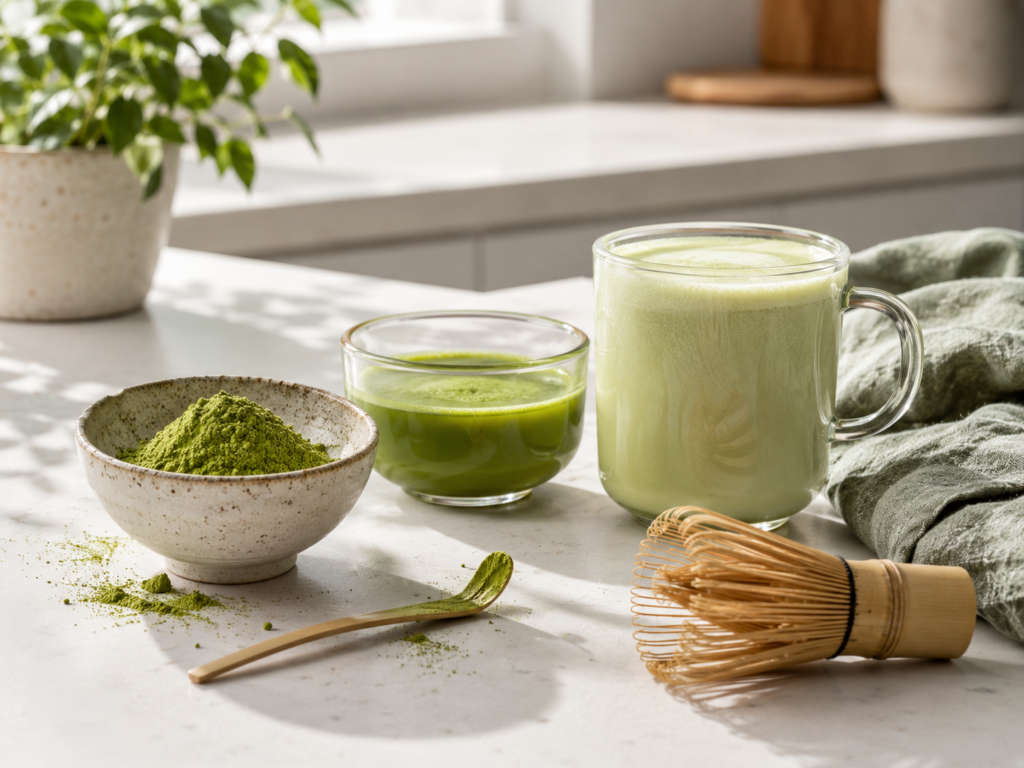
Matcha is one of those wellness things that can either feel genuinely useful or wildly overhyped, depending on who is talking about it.
On one side, you have people acting like matcha is magic green powder that will fix your energy, skin, metabolism, hormones, focus, and entire life by 9 a.m.
On the other side, you have people dismissing it as just another trendy drink.
The truth is somewhere much more useful.
Matcha is not magic. But it is one of the easiest healthy swaps to build into a normal day, especially if you want steady energy, more antioxidants, and a drink
That is why I think matcha is worth talking about in a practical way.
Not from a “this will change your life overnight” place. From a “this might be a really smart daily upgrade” place.
What Is Matcha?
Matcha is a powdered form of green tea made from finely ground tea leaves. Unlike regular green tea, where you steep the leaves and then remove them, matcha is mixed directly into water, milk, smoothies, or lattes.
That means you are consuming the whole tea leaf in powdered form.
This is one reason matcha is often more concentrated than regular steeped green tea. It contains naturally occurring compounds found in green tea, including catechins, polyphenols, chlorophyll, caffeine, and L-theanine.
That combination is what gives matcha its biggest appeal: it can feel energizing without feeling as sharp or jittery as coffee.
And if coffee has started making you feel weird — anxious, shaky, refluxy, wired-but-tired, or like your heart is trying to run a 5K without you — matcha can be a really helpful alternative.
I say that as someone who still appreciates a good coffee moment. This is not anti-coffee. This is pro-having-options.
Matcha vs Green Tea: What’s the Difference?
Matcha and green tea come from the same plant, but they are prepared differently.
Regular green tea is steeped in water, then the leaves are removed. Matcha is ground into a powder and whisked or blended into your drink, so you consume the tea leaf itself.
That difference matters.
Because matcha is made from the whole leaf, it tends to be more concentrated in flavor, caffeine, color, and beneficial plant compounds than a typical cup of green tea.
Here is the simplest way to think about it:
| Matcha | Regular Green Tea |
|---|---|
| Powdered whole tea leaf | Steeped tea leaves |
| Stronger, earthier flavor | Lighter, more delicate flavor |
| Usually higher in caffeine | Usually lower in caffeine |
| Used in lattes, smoothies, and tea | Usually served as hot or iced tea |
| More concentrated | Gentler and more subtle |
So when people search for matcha green tea benefits, they are usually talking about the benefits of green tea in a more concentrated, everyday-drink format.
That is also why quality matters. A good matcha tastes smooth, earthy, and fresh. A bad matcha tastes bitter, muddy, or like lawn clippings in the worst possible way.
If you are new to matcha and trying to figure out what to buy, I shared more of my honest thoughts in my Jade Leaf Matcha Review.
I also have a Matcha Sets for Beginners guide if you want the easiest way to start making matcha at home without overbuying things you do not actually need.
Benefits of Matcha
The main benefits of matcha come from its antioxidants, caffeine, L-theanine, and the simple fact that it can replace less supportive drinks in your routine.
Again, matcha is not a cure-all. But it can be a useful piece of a healthier daily rhythm.
1. Matcha Is Rich in Antioxidants
Matcha contains catechins, a group of antioxidant compounds found in green tea. The one you will hear about most often is EGCG.
Antioxidants help your body deal with oxidative stress, which is a normal part of life but can be influenced by things like stress, poor sleep, pollution, inflammation, and diet.
This does not mean one cup of matcha cancels out a chaotic lifestyle. I wish.
But it does mean matcha can be one small way to add more beneficial plant compounds into your day without making everything complicated.
That is the kind of health habit I like. Low drama. Easy to repeat. Actually enjoyable.
2. Matcha May Support Calm, Steady Energy
This is probably the reason most people fall in love with matcha.
Matcha contains caffeine, but it also contains L-theanine, an amino acid associated with a calmer, more focused feeling. That combination is why many people describe matcha energy as smoother than coffee.
Not sleepy. Not sedated. Just more even.
For me, this is the biggest difference between coffee and matcha. Coffee can feel like a hard push. Matcha feels more like being gently turned on.
That does not mean everyone will tolerate matcha perfectly. It still has caffeine. If you are very caffeine-sensitive, drinking matcha too late in the day can absolutely affect your sleep.
But for a morning or early afternoon drink, matcha can be a really nice option when you want energy without feeling overstimulated.
3. Matcha May Support Focus
Because of the caffeine and L-theanine combination, matcha may also support focus and concentration.
This is where matcha makes the most sense for busy mornings, work blocks, writing sessions, errands, or the hour when you need to be productive but your brain is moving through oatmeal.
It is not a productivity hack in the annoying internet way.
It is just a drink that can help you feel more awake and settled at the same time.
And honestly, that matters.
Especially when you are trying to build a healthier life in real life, not in some imaginary version of your day where you slept nine hours, meal prepped everything, and calmly journaled before sunrise.
4. Matcha May Support Heart Health
Green tea has been studied for potential heart-health benefits, especially because of its catechins and polyphenols.
Matcha is not a replacement for the basics: eating enough real food, moving your body, sleeping, managing stress, and following medical advice.
But as part of an overall healthy pattern, matcha can be a smart drink choice.
Especially if it helps you replace a high-sugar coffee shop drink with something you make at home and control yourself.
That is where the practical benefit really comes in.
Not “drink matcha and your health is handled.”
More like: “drink matcha instead of a giant sugar-loaded drink every morning, and that habit may move things in a better direction over time.”
That is the difference between wellness marketing and actual wellness.
5. Matcha Can Be a Better-For-You Latte Habit
One of the most underrated benefits of matcha is that it makes healthy-ish drinks feel fun.
A plain cup of green tea is fine. But a matcha latte? A smoothie? An iced banana bread matcha latte? That is an actual little
And sometimes the
If your current routine is a daily coffee shop run, matcha can be a way to still have the fun drink without spending $7 every time or accidentally drinking dessert for breakfast.
You can control the milk, sweetness, matcha quality, protein, and flavor.
For something simple, try my Easy Matcha Smoothie Recipe. It is no-whisk, beginner-friendly, and works well when you want matcha to feel more like breakfast.
For something cozy and fun, my Banana Bread Matcha Latte is one of those drinks that sounds slightly extra until you try it and realize it makes complete sense.
And if you want the basic version, I have a Healthy Matcha Green Tea Latte coming shortly.
6. Matcha May Support Skin Health
Matcha gets a lot of attention for skin because of its antioxidants and anti-inflammatory compounds.
This is one of those areas where I think the answer needs to be honest.
Can matcha support skin health as part of an overall healthy lifestyle? Potentially, yes.
Will drinking matcha magically clear your skin, erase wrinkles, replace sunscreen, or fix hormonal acne? No.
Skin is affected by so many things: hormones, stress, sleep, hydration, nutrition, skincare, sun exposure, genetics, and inflammation.
Matcha can be one supportive piece. It is not the whole system.
I wrote a full supporting post on the Benefits of Matcha for Skin because there is enough interest here to separate drinking matcha from topical matcha skincare. They are related, but they are not the same thing.
7. Matcha Can Make Healthy Routines Feel Easier
This is the real-life benefit I care about most.
A lot of healthy habits fail because they are technically good for us but emotionally boring.
Matcha does not feel like punishment. It feels like a small upgrade.
It can be part of a slower morning, a post-workout smoothie, a work-from-home
That matters because consistency is usually built from things you do not hate.
The goal is not to become a perfect wellness person.
The goal is to build routines that support your energy, focus, and health without requiring your entire personality to become “green powder.”
Benefits of Matcha Powder
Matcha powder is useful because it is flexible.
You can whisk it into hot water, shake it with milk, blend it into smoothies, or use it in lattes. That makes it easier to use consistently than some other wellness ingredients that sound great but sit in your pantry forever.
A few ways to use matcha powder:
- whisked with warm water
- iced with milk
- blended into a smoothie
- mixed into a latte
- added to oatmeal or yogurt
- used in baked goods
The easiest place to start is with drinks.
If you are making iced matcha at home, a handheld frother or small whisk can make a huge difference.
Try this easy, 5-minute healthy matcha green tea latte recipe →
How Much Matcha Should You Drink Per Day?
For most people, one serving of matcha a day is a reasonable place to start.
A typical serving is usually around 1/2 to 1 teaspoon of matcha powder, depending on how strong you like it and how much caffeine you tolerate.
If you are switching from coffee, start small. Matcha can feel gentler than coffee, but it still contains caffeine.
Also, be mindful of what you are adding to it. A matcha latte made with milk and a little maple syrup is very different from a giant sweetened coffee shop drink.
Neither is morally bad. But they are not the same daily habit.
If you are pregnant, breastfeeding, taking medications, managing a medical condition, or sensitive to caffeine, it is worth checking with your healthcare provider.
How To Make Matcha Taste Good
If you tried matcha once and hated it, there is a decent chance you either had bad matcha or it was made poorly.
Good matcha should taste earthy, smooth, and slightly grassy. It should not taste aggressively bitter.
A few tips:
- Use warm water, not boiling water. Boiling water can make matcha taste bitter.
- Whisk or froth it first. Do not dump dry matcha powder directly into cold milk and hope for the best. That is how you get clumps.
- Add a little milk. Matcha is strong, and milk softens the flavor.
- Sweeten lightly if needed. A little maple syrup, honey, brown sugar, vanilla, or date milk can make matcha much more enjoyable.
- Pair it with flavors that work. Banana, vanilla, strawberry, coconut, cinnamon, and creamy milks all pair well with matcha.
If you are new, start with an iced latte or smoothie instead of drinking it straight. There is no prize for forcing yourself to like plain matcha on day one.
Matcha FAQs
What are the benefits of matcha?
Matcha may support steady energy, focus, antioxidant intake, heart health, and skin health. It is especially useful as a better-for-you drink habit when it replaces higher-sugar drinks or overly stimulating coffee.
Is matcha good for you?
For many people, yes. Matcha can be a healthy part of your routine when consumed in reasonable amounts and prepared without excessive added sugar.
Is matcha better than green tea?
Matcha is more concentrated because you consume the powdered tea leaf. Green tea is lighter and usually lower in caffeine. One is not automatically better for everyone. Matcha is a better fit if you want stronger flavor, more caffeine, and more versatility in lattes and smoothies.
Does matcha have caffeine?
Yes. Matcha contains caffeine, usually more than regular green tea but less than coffee. If caffeine affects your sleep, anxiety, reflux, or heart rate, pay attention to timing and serving size.
Is matcha good for skin?
Matcha may support skin health because it contains antioxidants and anti-inflammatory compounds, but it is not a replacement for sunscreen, skincare, or acne treatment. I cover this more in my full article on matcha benefits for skin.
Can you drink matcha every day?
Many people can drink matcha daily, but tolerance depends on caffeine sensitivity, health conditions, medications, and how much matcha you consume. One serving a day is a reasonable starting point for most people.
What is the best way to try matcha?
Start with a simple iced matcha latte, a matcha smoothie, or my banana bread matcha latte if you want something that tastes more like a coffee shop drink.
The Bottom Line
Matcha is not magic, but it is useful.
It gives you antioxidants, a smoother caffeine option, a flexible drink base, and a small daily
That is the kind of habit that actually has a chance of sticking.
Start simple. Buy a good matcha. Make it taste good. Pay attention to how your body feels.
That is usually where the best routines begin.



Get the Weekly Wellth Newsletter
Stay up to date & receive the latest posts in your inbox.