



Jade Leaf Matcha Review: Is It Worth It? (Honest Take)
If you’ve been thinking about making matcha part of your daily routine, you’ve probably already heard the wellness pitch — calmer energy than coffee, no jitters, no crash, an antioxidant boost that supports your metabolism and your skin.
The pitch is real. The science actually backs most of it.
But somewhere between the science and your kitchen counter, most people get stuck. There are too many brands, too many “grades,” and no clear answer on which one to actually buy.
So they either spend $40 on a tin of ceremonial matcha that intimidates them into never opening it — or they keep paying $7 a cup at the coffee shop and never build the habit at all.
After using Jade Leaf Matcha consistently, I’ve landed on it as the brand I’d actually recommend if you want matcha to become a real, sustainable part of your wellness routine — not a luxury you ration or an aesthetic you abandon after two weeks.
This is the honest review of what it tastes like, which version to buy, and how to use it in a way that actually sticks.
First time ordering? Use code MATCHA15 for 15% off your first order at JadeLeafMatcha.com →
Quick links:
- What it is
- Why matcha
- Honest review
- Teahouse vs Barista
- Other Jade Leaf products
- Iced matcha recipe
- Easy upgrades
- What most people get wrong
- Where to buy
What Is Jade Leaf Matcha?
Jade Leaf Matcha is one of the most widely available matcha brands you’ll find online and in stores like Amazon, Whole Foods, Target, and Walmart.
They’re known for offering Japanese-sourced, organic matcha at an accessible price point — which already puts them in a different category than the $40-a-tin ceremonial brands flooding TikTok.
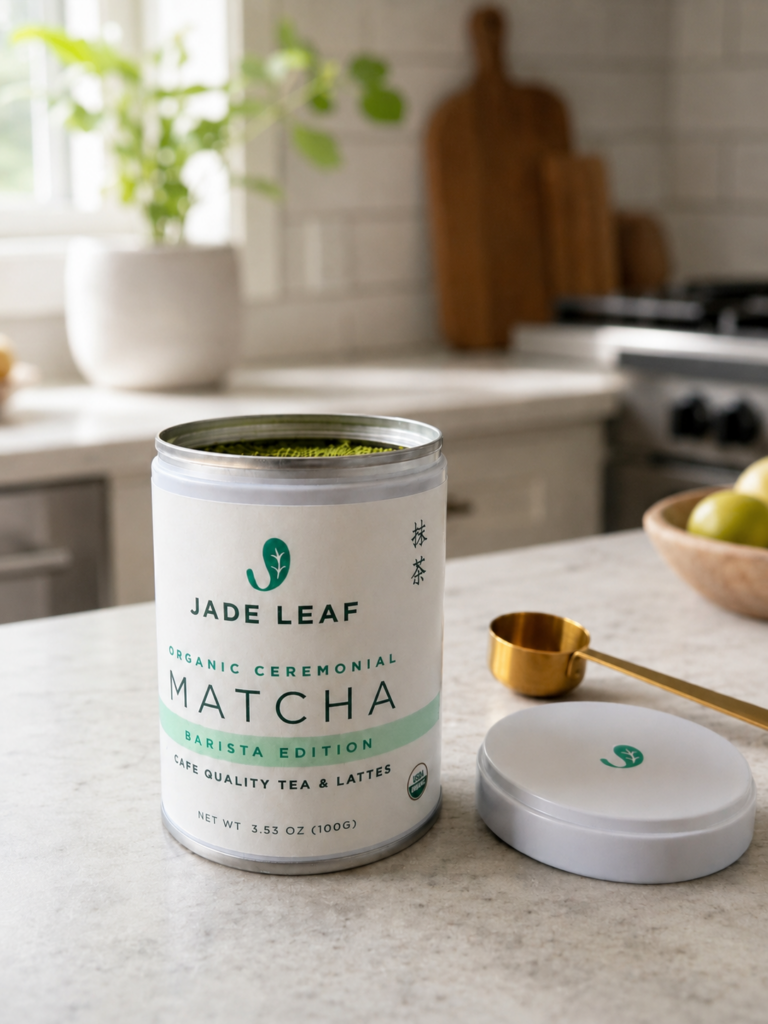
The version most people start with (and the one I’d recommend you start with too) is the Barista Edition — designed specifically for lattes, iced matcha, and smoothies.
This matters because not all matcha is meant to be used the same way. Some are meant to be whisked with hot water and sipped plain. Others — like this one — are made to hold up against milk and ice without disappearing.
If your goal is to recreate a coffee shop drink at home (which, let’s be honest, is most of us), you’re in the right category.
Why Matcha Earns a Spot in a Real Wellness Routine
Before we get into which Jade Leaf to buy, let’s name why matcha is actually worth committing to in the first place — because if you don’t believe in the why, no brand recommendation is going to make the habit stick.
Matcha isn’t just a prettier version of coffee. It’s a different category of caffeinated drink, and the differences are what make it worth the switch:
L-theanine. This is the amino acid responsible for matcha’s signature “calm focus” effect. It works alongside the caffeine to give you sustained, even energy — without the jitters, the racing heart, or the 2pm crash that coffee can deliver. For ambitious women who already feel wired most of the day, this alone is worth the swap.
Slower caffeine release. Coffee hits hard and fades fast. Matcha gives you 3–4 hours of steady, useful energy. You feel awake, not amped.
Antioxidants (specifically EGCG). Matcha contains roughly 137 times more EGCG than regular green tea. EGCG is associated with metabolism support, skin health, and cellular protection — all of which matter more, not less, in your 30s and 40s.
Easier on cortisol and your stomach. Coffee on an empty stomach spikes cortisol and irritates the gut for a lot of women. Matcha is gentler, especially first thing in the morning.
If you’ve been feeling like coffee isn’t agreeing with you the way it used to — wired-but-tired, sleep getting weirder, anxiety running higher — switching out even one cup a day for matcha is one of the easiest, most evidence-backed swaps you can make.
That’s the foundation. Now let’s talk about which matcha to actually buy.
Read more about my morning coffee ritual, and How I adapted when coffee starting affecting my health →
My Honest Jade Leaf Matcha Review
Let me keep this simple and grounded in real use.
Jade Leaf sits in a really specific lane: accessible, good quality, and actually usable day-to-day. Not the cheapest option out there. Not the most premium. But very clearly built for people who want matcha to be part of their routine without overthinking it.
Taste
In general, Jade Leaf matcha is smooth, slightly earthy, and not overly bitter. It’s balanced in a way that works really well for beginners — especially if you’re not drinking it straight. If you’ve ever tried a cheap matcha that tasted like grass clippings, this is the opposite of that experience.
Quality
It’s sourced from Japan, USDA Organic, and consistently bright green (which is what you actually want — dull, brownish-green matcha is a sign of low quality or oxidation). It blends well, doesn’t clump if you shake or blend properly, and the texture is consistent bag to bag.
Value
This is where Jade Leaf really stands out for me. It hits the middle ground where the taste is actually good, it’s easy to use, and it doesn’t feel like a luxury splurge every time you reach for it. And that’s what makes it realistic to actually stick with — because a $40 tin of ceremonial matcha that you ration like saffron isn’t a daily habit. It’s a guilt trip.
Jade Leaf Teahouse vs Barista Edition: Which One to Buy
This is where most people get confused — and where Jade Leaf actually does a good job of making things clearer once you know what to look for.
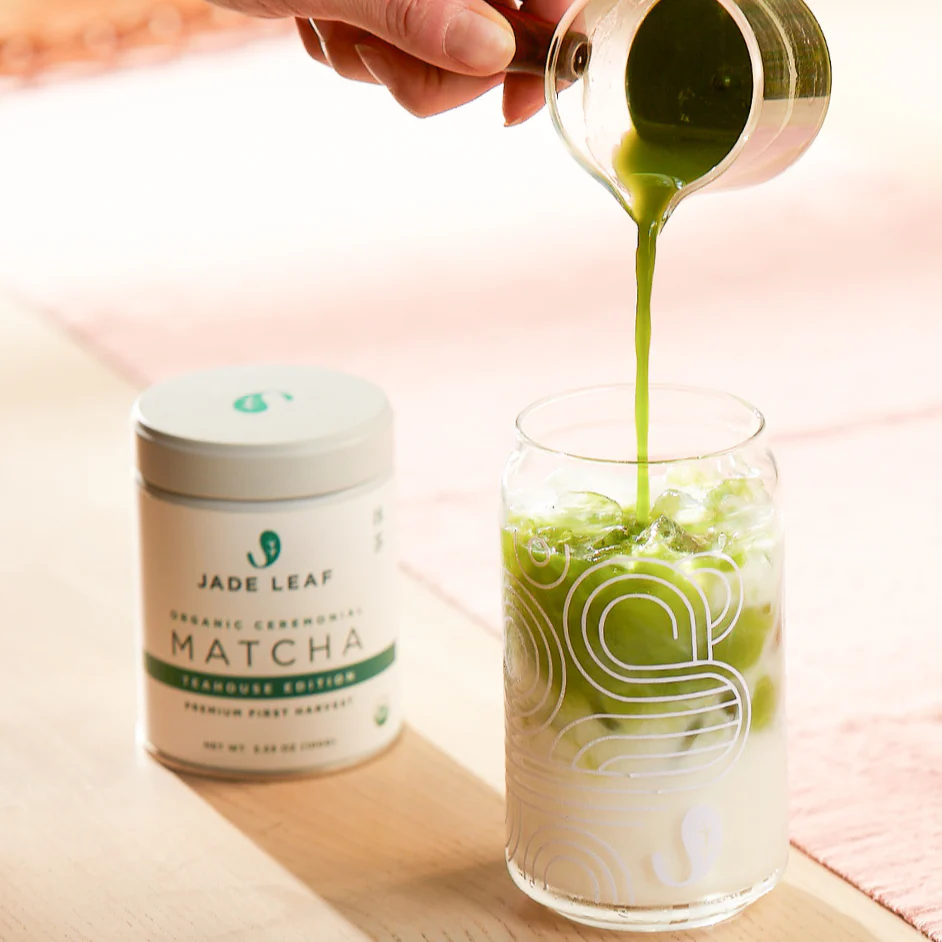
Both Teahouse Edition and Barista Edition are ceremonial grade — meaning both are made from first-harvest tea leaves, both are top-tier quality. The difference is what they’re built for.
Jade Leaf Teahouse Edition (Ceremonial)
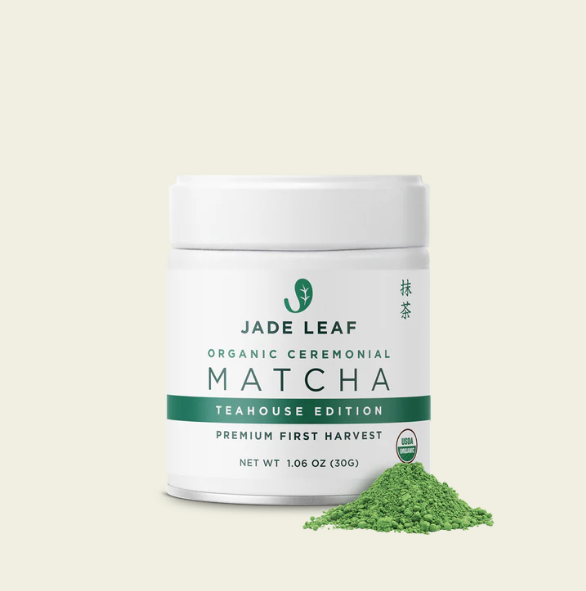
- Smoother, sweeter, slightly nuttier flavor
- Designed for traditional whisked matcha — hot or iced, sipped straight
- Best if you genuinely enjoy the tea
ritual or want unsweetened lattes that let the matcha shine - The pick for matcha purists
Shop: Jade Leaf Teahouse Edition Matcha
Jade Leaf Barista Edition
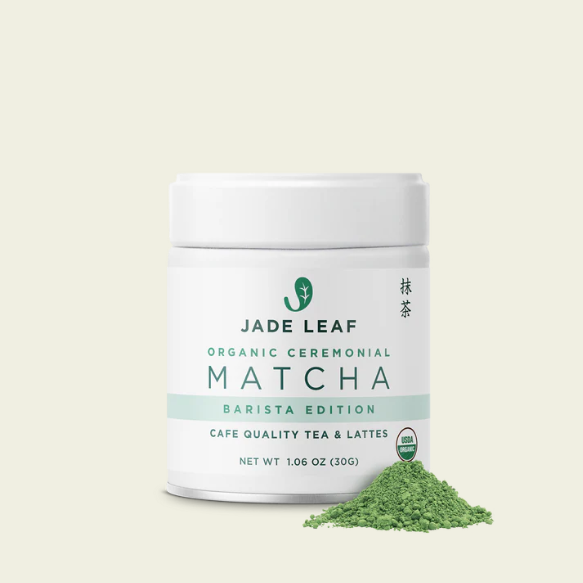
- Slightly stronger, more umami flavor that holds up against milk and ice
- Designed for lattes, iced matcha, and blended drinks
- More forgiving — you don’t need perfect technique
- Doesn’t disappear in milk the way Teahouse can
Shop: Jade Leaf Barista Edition Matcha
My pick for most people: Barista Edition
If your goal is to actually drink matcha regularly — replacing your coffee shop habit and building a real daily wellness practice — the Barista Edition is the easiest way to do it. It’s the one I keep coming back to, and it’s the one I’d recommend if you’re buying your first bag.
The Teahouse is genuinely beautiful matcha if you love the traditional
Two Other Jade Leaf Products Worth Knowing About
Outside the two ceremonial editions, there are two more Jade Leaf products that are genuinely worth knowing about depending on how you want matcha to fit into your life.
Jade Leaf Café-Style Matcha Latte Mix
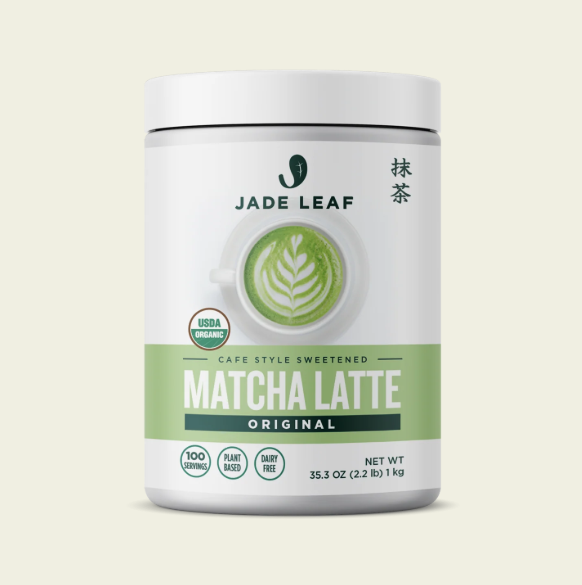
If you’re matcha-curious but the idea of measuring powder and getting the ratios right is the thing keeping you from actually starting, the Café-Style Latte Mix is the lowest-friction entry point Jade Leaf makes.
It’s pre-sweetened with organic cane sugar and crafted by baristas to taste like the matcha latte you’d order at a café — just add water and milk. No whisk, no measuring, no “wait, how much should I use?” hesitation. It’s also the version that tastes the most like a Starbucks-style matcha latte if that’s the flavor profile you’re chasing.
This is the one I’d recommend if you’ve been wanting to try matcha but keep getting stuck on how. Start here, fall in love with it, then move up to Barista Edition when you’re ready to customize sweetness and flavor.
Jade Leaf Classic Culinary Matcha
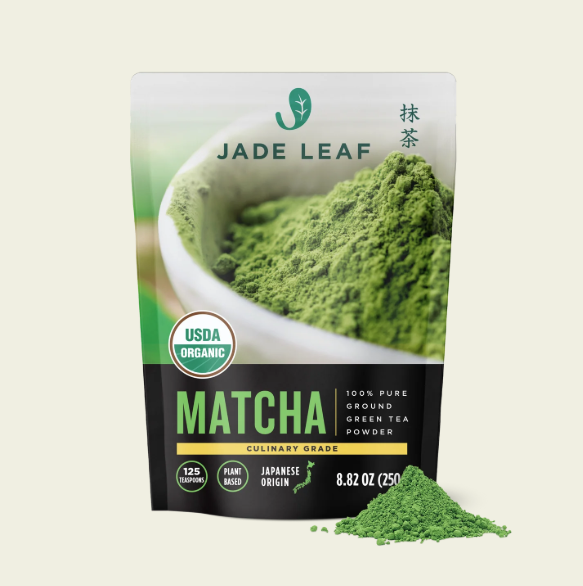
If you want to add matcha to smoothies, oatmeal, baked goods, or chia pudding — basically anywhere you’re not drinking it straight — Classic Culinary is the version designed for it.
Culinary grade uses later-harvest leaves, which gives it a slightly stronger flavor that doesn’t get lost when mixed into other ingredients.
It’s also significantly more affordable per gram than the ceremonial editions, which makes it the smart pick for recipe use. You wouldn’t sip it straight, but for green smoothies, matcha energy bites, or matcha-banana muffins, it’s perfect.
A lot of women I know keep both: Barista Edition for their daily latte, Culinary for everything else.
My pick if you’re starting from scratch: the Modern Matcha Starter Set
If you don’t already own a frother and a sifter, this is the easiest way to get everything you need in one shot.
It comes with the electric frother (which doubles as a cold foam maker for iced lattes — bonus), a stainless steel sifter, a scoop, and a step-by-step matcha handbook.
You add your own matcha — I’d pair it with the Barista Edition I just mentioned above.
It’s the kit I’d hand a friend who said “I want to start drinking matcha at home and I don’t want to overthink it.”

The Easiest Iced Matcha Recipe
Here’s the version I actually make most mornings — no whisk, no ceremony, no special equipment. This is the foundational recipe everything else builds from.
What you need:
- 1 teaspoon Jade Leaf Barista Edition matcha
- 2 ounces hot water (just under boiling — around 175°F)
- 1 cup cold milk of choice (almond, oat, whole, whatever you like)
- A handful of ice
- Optional: small drizzle of honey, maple syrup, or a pump of vanilla syrup
How to make it:
- Add matcha to a mason jar or shaker. A tall glass with a lid works fine.
- Pour in 2 ounces of hot water. Hot water dissolves the matcha properly so you don’t get clumps. This is the step most people skip — and it’s why their matcha tastes gritty.
- Seal and shake hard for 15 seconds. This is your replacement for the bamboo whisk. The matcha should be smooth, frothy, and fully dissolved.
- Add ice and your cold milk. Sweetener too if you want it.
- Shake again, briefly. Or pour over ice in a glass if you want the layered look.
You just made a coffee shop iced matcha latte in under two minutes. The Barista Edition’s flavor is strong enough to stand up to the milk and ice, the hot-water-first technique solves the clumping problem, and a shaker jar replaces every fancy tool you’d otherwise feel like you needed.
This is the version that turns matcha from a “sometimes drink” into a real morning
Easy Matcha Drink Upgrades
Once you have the basic version down, you can elevate it slightly without turning it into a full recipe project.
Vanilla Iced Matcha Latte
Add a splash of vanilla extract or a pump of vanilla syrup to the basic recipe. This is the version that tastes the most like the coffee shop one you’re trying to replace — for a fraction of the cost.
Honey Cinnamon Matcha
Drizzle of honey + a pinch of cinnamon blended in. Cozy and warming even when it’s iced, and the cinnamon adds a subtle blood-sugar-friendly twist.
Iced Strawberry Matcha (the TikTok-famous one)
This is the upgrade that took over your feed last summer for a reason — it’s genuinely good.
- 1 teaspoon Jade Leaf Barista Edition matcha
- 1 cup almond milk
- A handful of ice
- ¼ cup fresh or frozen strawberries (or a spoonful of strawberry purée)
- Top with strawberry cold foam
- Optional: drizzle of honey or maple
Blend the strawberries with a splash of milk and a touch of sweetener, layer in the bottom of your glass, then pour your matcha + milk + ice over the top. Finish the drink with a layer of pink strawberry cold foam.
The contrast of pink and green is gorgeous, and the flavor is genuinely better than the coffee shop version.
This is the one I make when I want my morning matcha to feel a little more like a
Matcha Smoothie
When I want matcha as breakfast for a boost of energy, I’ll throw the matcha + almond milk + ice into a blender with a frozen banana and a scoop of protein powder. It’s the version that doubles as a meal and keeps me full until lunch.
What Most People Get Wrong About Matcha
This is where things get confusing fast, mostly because of how matcha is marketed.
“Ceremonial grade” is mostly marketing. There’s no regulated definition for ceremonial grade matcha in the U.S. — any brand can slap that label on. What actually matters when buying matcha:
- Bright green color (not yellow, brown, or dull)
- Smooth taste (not aggressively bitter)
- Sourced from Japan (not just “Asian-grown”)
- USDA Organic if you can swing it
That’s it. There are absolutely higher-end matcha options out there — and if you’re a serious tea person, by all means, explore them. But for everyday use, especially in lattes and smoothies, you don’t need to overpay or overcomplicate it.
Most people get stuck trying to find the “perfect” matcha instead of finding one that actually fits their life. And the perfect one you don’t drink is worse than the good-enough one you actually use.
Where to Buy Jade Leaf Matcha
You can find Jade Leaf in a few places, depending on what’s easiest for you:
- Direct from JadeLeafMatcha.com— best for bundles, subscriptions, exclusive flavors, and free shipping over $40. First-time buyer? Use code MATCHA15 for 15% off your first order. (You can also stack Rakuten cash back — more below.)
- Amazon— fast shipping with Prime, plus a Subscribe & Save option that takes the guesswork out of running out
- Walmart — usually the lowest sticker price if you’re picking up in store
- Target / Whole Foods — most grocery store locations carry the basics
Notes On Making Matcha A Wellness Habit
If matcha is going to become a real wellness habit for you, the way you buy it matters more than the per-bag price. A few tips that have helped me:
Stack with Rakuten cashback when buying direct. It’s not life-changing money, but if you’re going to drink this daily, small percentages add up over a year. Sign up for Rakuten here if you don’t already use it.
Subscribe & Save (on Amazon or directly on Jade Leaf’s site) takes 5–15% off and removes the “did I run out?” friction. The habit is more likely to stick when the matcha is just there in your cabinet.
Buy the size you’ll actually use. Matcha loses freshness once it’s open — a giant bag that takes you four months to finish isn’t a deal. Start with a smaller size, see how often you reach for it, and size up from there.
Final Take: The Best Matcha Is the One You’ll Actually Drink
The wellness benefits of matcha — calmer energy, sustained focus, gut and hormone-friendly, antioxidant support — only show up if it’s a habit. Not an occasional purchase. Not a $40 tin you ration like saffron.
That’s why the brand you choose matters less than people think.
What matters is choosing one that fits seamlessly into your real life so you’ll actually reach for it.
For me, that’s Jade Leaf. The taste is good enough that I genuinely want it, the price point doesn’t make me hesitate, and the Barista Edition is forgiving enough that even a quick shake-in-a-mason-jar version tastes great.
It’s the matcha that took me from “I should drink more matcha” to actually drinking it almost every week.
If you’ve been waiting for permission to commit, this is it.
Pick up a bag, give it two weeks of daily use, and pay attention to how your energy, focus, and afternoon crashes shift. That’s the version of this experiment that actually tells you something.
Have a favorite Jade Leaf flavor or matcha recipe? I’d love to hear it!
This post contains affiliate links, which means Reach Wellth may earn a small commission if you purchase through them — at no additional cost to you. I only recommend products I actually use and would tell a friend about. Affiliate income is what makes this publication possible.


Get the Weekly Wellth Newsletter
Stay up to date & receive the latest posts in your inbox.