



5 Weight Loss Tips That Actually Work (and Last for the Long Haul)
If you’ve been searching for weight loss tips that actually work, you already know how overwhelming all the advice out there can be.
I’ve spent years trying every approach, and what I learned is simple—weight loss doesn’t have to be complicated or miserable.
There are just five eating strategies that have made the biggest difference for me when it comes to losing weight and keeping it off long-term.
Everything else? Mostly noise and marketing.
I’m giving you permission to forget the gimmicks and focus on these five foundational habits instead. No calorie counting. No meal plans. No suffering.
Just simple, sustainable strategies that work.
1. Eat Less Than You Think You Need
Here’s the truth nobody wants to hear: your body needs way less food than you’ve been conditioned to believe.
We live in a culture of supersized portions, endless snacking, and the idea that we need three massive meals a day plus snacks. But if weight loss is your goal, portion awareness matters.
This doesn’t mean starving yourself or obsessively tracking every bite. It means tuning into your actual hunger signals versus eating out of boredom, habit, or because “it’s time to eat.”
Try this:
- Eat until you’re satisfied, not stuffed
- Use smaller plates to naturally reduce portions
- Ask yourself: “Am I actually hungry, or am I eating for another reason?”
The more you practice this, the more natural it becomes. Your body is incredibly smart—it will tell you what it needs if you listen.
2. Follow the Healthy Eating Formula: Protein + Veggie + Healthy Fat + Small Carb
One of the biggest reasons people struggle with weight loss is they overcomplicate “healthy eating.”
Here’s the simple formula I use for every meal and snack: lean protein + vegetable + healthy fat + small portion of carbs.
That’s it. No counting macros. No complicated meal plans. Just a simple plate template.
What this looks like in real life:
- Breakfast: Scrambled eggs (protein) + spinach (veggie) + avocado (fat) + small piece of toast (carb)
- Lunch: Grilled chicken (protein) + mixed greens salad (veggie) + olive oil dressing (fat) + quinoa (carb)
- Snack: Greek yogurt (protein) + cucumber slices (veggie) + almonds (fat) + berries (carb)
- Dinner: Salmon (protein) + roasted broccoli (veggie) + butter (fat) + sweet potato (carb)
This formula keeps you full, stabilizes your blood sugar, and makes it nearly impossible to overeat processed junk because you’re actually nourished.
Bonus: Focus on whole foods over processed ones. The less ingredients on the label, the better.
3. Time Your Eating Right: Stop 4 Hours Before Bed, Wake Up Hungry
When you eat matters almost as much as what you eat.
Here’s a game-changing rule: stop eating at least 4 hours before bed.
Why? Because research from Harvard shows that eating later in the day increased hunger, decreased calories burned, and promoted fat storage. Vanderbilt researchers confirmed that “any food ingested prior to bedtime will delay the burning of fat during sleep.” Your body’s circadian rhythm naturally regulates fat burning, and late-night eating works against this process.
The real test: You should wake up actually hungry.
If you wake up and you’re not hungry for breakfast, that’s a sign you ate too late or too much the night before. Your body is still processing yesterday’s food.
Try this:
- If you go to bed at 10 PM, finish eating by 6 PM
- Eat breakfast within an hour of waking up (your metabolism needs fuel to start)
- Notice how much better you sleep when your stomach isn’t working overtime
This one habit alone can make a massive difference in weight loss without changing anything else.
4. Eat Small and Often: 5-6 Mini Meals/Snacks Per Day
Forget three huge meals a day. That approach leaves you starving between meals and more likely to overeat when you finally sit down to eat.
Instead, think in small, frequent meals and snacks—about 5-6 times per day.
This keeps your metabolism humming, prevents extreme hunger, and makes it way easier to stick to the protein + veggie + fat + carb formula because you’re never desperate or hangry.
What this looks like:
- 7 AM: Breakfast
- 10 AM: Small snack
- 1 PM: Lunch
- 3:30 PM: Small snack
- 6 PM: Dinner (remember, 4 hours before bed!)
- Optional: Light snack if needed
Each “meal” or snack should include protein, a veggie, healthy fat, and a small carb. You’re not grazing all day—you’re strategically fueling your body so it never goes into panic mode.
Pro tip: Prep easy grab-and-go snacks like hard-boiled eggs, veggie sticks with hummus, or Greek yogurt with berries so you’re never stuck without a healthy option.
5. Crowd Out the Junk (Add Vegetables First)
This is one of my favorite strategies, and it comes from the Institute for Integrative Nutrition. It’s called “crowding out.”
This is one of my favorite strategies, and it comes from the <a href=”https://www.integrativenutrition.com/blog/2016/10/why-crowding-out-is-the-healthiest-way-to-diet” target=”_blank”>Institute for Integrative Nutrition</a>. It’s called “crowding out.”
Instead of focusing on what you can’t eat (restriction mindset = misery), focus on what you’re adding in—specifically, vegetables.
Here’s how it works:
The more nutrient-dense, whole foods you eat, the less room you have for junk. Your body gets what it actually needs, so cravings naturally decrease.
The secret weapon: Eat a massive amount of vegetables BEFORE your main meal.
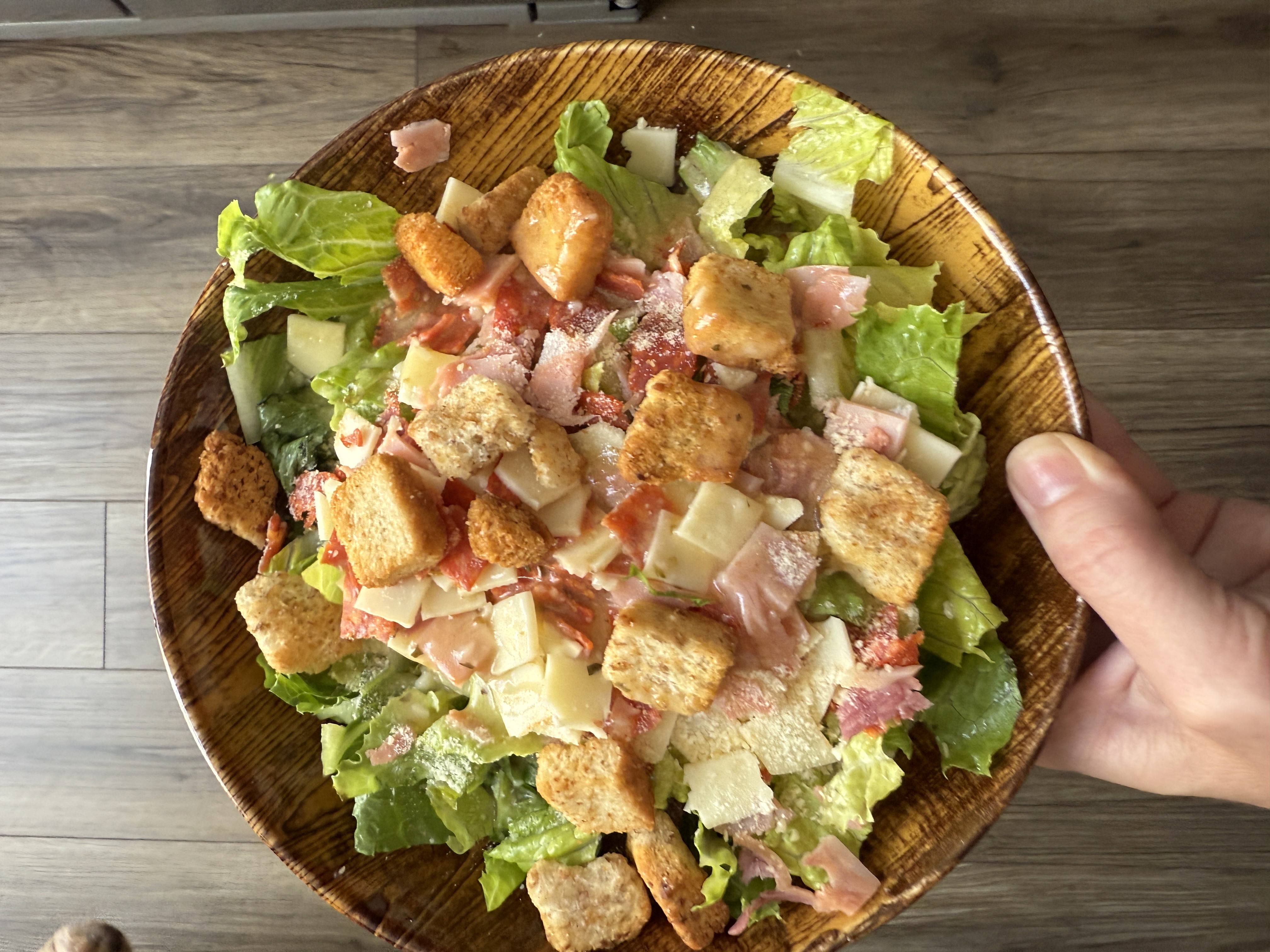
- Want pizza? Eat a huge salad first, then have the pizza.
- Craving a burger? Load up on roasted veggies first, then enjoy the burger.
- Love pasta? Start with a big bowl of sautéed greens, then have your pasta.
You’ll be amazed at how much less of the “junk” you want when you’ve already filled up on the good stuff. And bonus—you still get to eat what you love, just in smaller, more reasonable portions.
Why this works: Your palette becomes more sensitive to nutrient-rich foods over time. The more vegetables you eat, the more you’ll actually crave them. And the less appealing ultra-processed foods become.
Losing Weight Is Much Simpler Than You Think
You don’t need to count calories, ban entire food groups, or live on chicken and broccoli to lose weight.
You just need these five sustainable eating strategies:
- Eat less than you think you need
- Follow the simple formula: protein + veggie + fat + small carb
- Time your eating: stop 4 hours before bed, wake up hungry
- Eat small and often: 5-6 times per day
- Crowd out junk by adding vegetables first
These are the weight loss tips that actually work because they’re based on how your body actually functions—not some fad diet that leaves you miserable.
Start with one strategy this week. Master it. Then add another.
You don’t have to do everything perfectly. You just have to do it consistently.



Get the Weekly Wellth Newsletter
Stay up to date & receive the latest posts in your inbox.