



First Watch Kale Tonic Recipe
Kale juice has a bit of a branding problem. It sounds like something you drink because you’re trying very hard, not because you actually want it — and a lot of green juice does taste like liquefied salad.
The First Watch Kale Tonic is the exception, and it’s the exact reason people keep ordering it: kale isn’t doing the work alone.
Sweet Fuji apple takes the edge off, cucumber keeps it light and fresh, and lemon brightens the whole thing. It’s a green juice you’d actually drink for the taste.
First Watch keeps it to four ingredients — kale, Fuji apple, English cucumber, and lemon — at 130 calories with no added sugar.
This copycat uses those same four, in proportions that stay fresh and lightly sweet without burying the kale.
I’ve also included a little optional agave, because produce is inconsistent: a sweet apple one week can turn tart the next, and a teaspoon can rescue a batch that came out sharper than you planned.
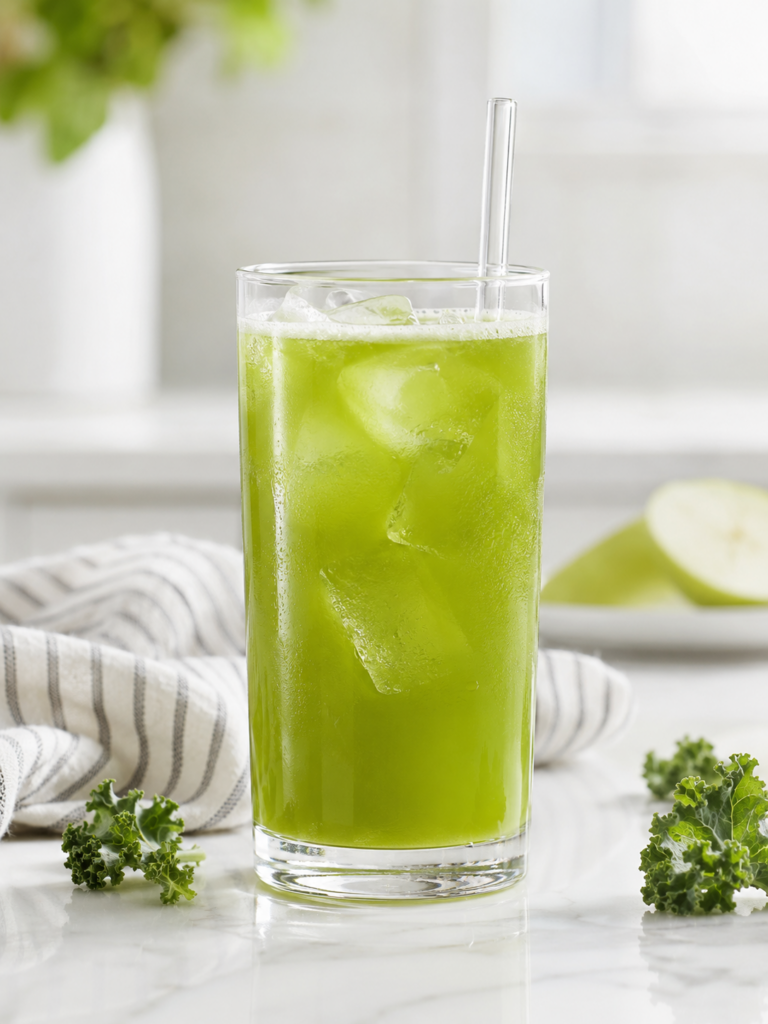
This recipe is inspired by the First Watch Kale Tonic. It isn’t the restaurant’s proprietary formula and isn’t affiliated with or endorsed by First Watch.
What’s In the First Watch Kale Tonic?
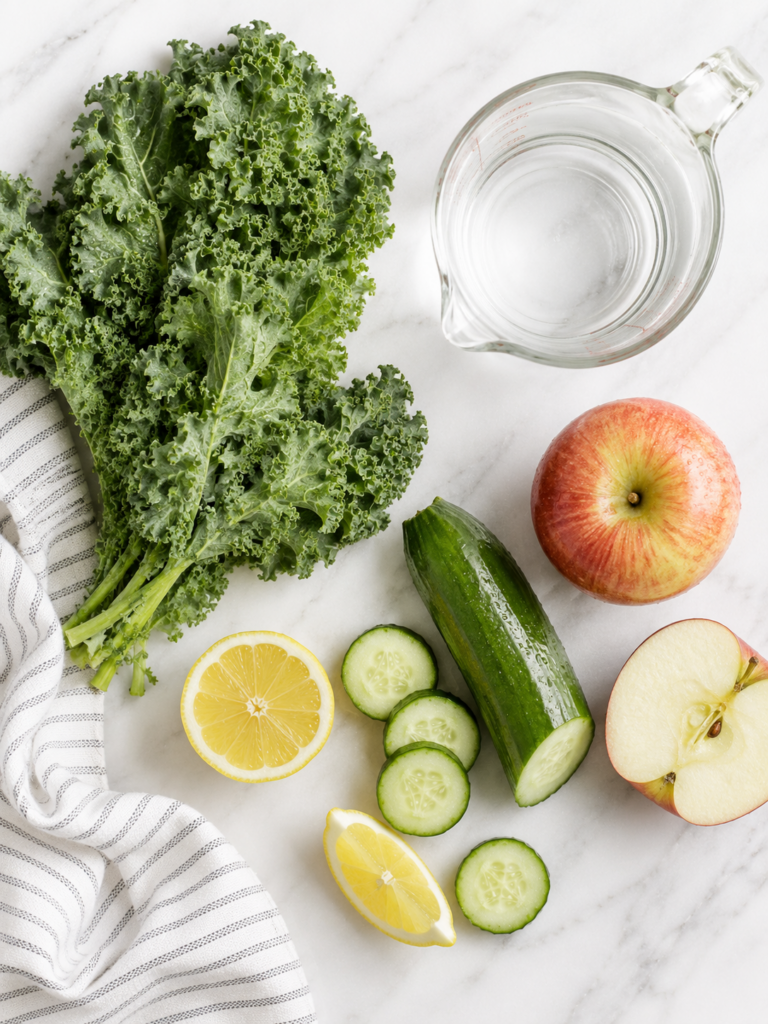
First Watch lists four ingredients in the Kale Tonic: kale, Fuji apple, English cucumber, and lemon. This copycat uses the same four, plus a little optional agave for the days your apple isn’t pulling its weight.
Here’s what each one does.
Kale
Kale gives the tonic its deep green color and that fresh, green flavor. Pull the thick center stems before juicing — they’re edible, but they add a tougher, more bitter note, and skipping them gives you a smoother juice.
Curly kale is easy to find and works well; Lacinato (dinosaur) kale is a little milder if you have it.
You want about two firmly packed cups of chopped leaves — enough to taste like a real green juice without steamrolling the apple and cucumber.
Fuji apple
One large Fuji. This is the one ingredient I wouldn’t swap on autopilot — First Watch specifically uses Fuji, and its natural sweetness is what makes the kale approachable without any added sugar.
Wash it well, leave the peel on, and remove the core and seeds.
English cucumber
About half of one large English cucumber. It brings most of the fresh, watery volume without much sweetness, which keeps the juice from tipping into apple-juice territory.
No need to peel unless the skin is thick or waxed. A regular cucumber works too — just scoop out the seedy center if it’s a big one.
Lemon
Half a medium lemon keeps the juice from tasting flat and balances the apple’s sweetness against the kale.
Peel it and pull any visible seeds — too much peel and white pith turns it bitter. Start with half; you can add another squeeze at the end if you like it tart.
Optional agave
Agave isn’t in the First Watch version, so make it without first, then taste.
If your kale is especially bitter or your apple was a dud, stir in a teaspoon — two at most. The point isn’t to make apple juice; it’s to take the rough edge off so the fresh flavors still come through.
Worth noting: agave adds sugar and calories, so it’ll drift from the restaurant’s nutrition. This agave is the one I keep on hand.
Why You’ll Love This Kale Tonic
This is a practical green juice, not an endurance test disguised as breakfast.
The apple does the sweetening. A good Fuji makes the kale approachable with no added sugar, the way the original does it.
It’s genuinely refreshing. Cucumber keeps it light and lemon gives it that bright finish that makes you want the next sip.
It flexes to your kitchen. Four basic produce items, naturally dairy-free and gluten-free, and you can make it with a juicer or a blender.
It’s honest to the original. No ginger, banana, or orange sneaking in — just the four things First Watch actually uses.
Is the First Watch Kale Tonic Healthy? (Calories And Nutrition)
The short version: yes, as far as juice goes. First Watch lists the Kale Tonic at 130 calories, 4 grams of protein, 0 grams of fat, 32 grams of carbohydrates, 2 grams of fiber, and 20 grams of naturally occurring sugar — with no added sugar.
Here’s the honest caveat: juicing strips out most of the fiber you’d get from eating the kale, apple, and cucumber whole, so it won’t fill you up the way the produce would on its own.
It’s a good way to get a variety of produce in, and it tastes great — it’s just not a meal.
If you’re having it with breakfast, pair it with some protein and fat, like scrambled eggs, Greek yogurt, cottage cheese, or avocado toast, so it actually holds you.
The most useful test is whether it fits your day and you like it enough to keep drinking it.
Which Juicer Is Best For Kale Tonic?
For a green juice like this, a slow masticating juicer — the kind sold as a cold press — is the best tool.
Instead of shredding and spinning, it slowly crushes and presses the produce through a strainer, which matters a lot when you’re running leafy greens next to firmer fruit. You get more juice out of the kale and a smoother result. The Nama is the one I reach for.
When you’re shopping for a green-juice juicer, the things that actually matter: a slow or masticating system, a chute wide enough to skip most of the chopping, parts that come apart and wash easily, a reverse function for clogs, and a cleaning brush in the box.
Can you use a centrifugal juicer? Absolutely — don’t buy a new machine just for this. A centrifugal juicer (like the Breville) handles kale, cucumber, and apple fine; you’ll just get a little less juice out of the greens. Bundle the kale tightly and feed it between pieces of cucumber and apple so everything moves through. The best juicer is the one you’ll actually use and clean.
How To Make First Watch Kale Tonic
This makes about 10 to 12 oz and takes around 10 minutes. Full amounts are in the recipe card below.
Step 1: Wash and prep everything
Wash all the produce well. Pull the thick stems from the kale and tear the leaves into juicer-sized pieces, core the apple, cut the cucumber to fit, and peel and seed the lemon.
Step 2: Juice, alternating the kale
Turn on the juicer and start with a piece of cucumber. Feed the kale in a little at a time, following each bit with apple or more cucumber rather than dumping all the greens in at once. Finish with cucumber or apple to push the last of the kale through.
Step 3: Stir and taste
Green juice separates fast, so stir it well to bring the lighter liquid back together with the thicker green part — then taste before you add anything.
Step 4: Adjust and serve
Too bitter? A teaspoon of agave. Too sweet or flat? Another squeeze of lemon. Kale too loud? A little more cucumber softens it without adding sweetness. Pour over ice and drink it fresh.
How To Make Kale Tonic Without a Juicer
No juicer? A high-powered blender gets you most of the way there — you’ll just add a little water and strain out the pulp.
Blend it. Add the kale, apple, cucumber, peeled lemon, and ⅓ cup cold water to the blender. Start low, work up to high, and blend until it’s completely broken down, adding a splash more water if it isn’t moving.
Strain it. Pour the mix through a nut milk bag, cheesecloth, or a very fine mesh strainer set over a bowl, and press or squeeze until you’ve gotten as much liquid as you can.
Taste and serve. Stir, add the optional agave only if it needs it, and serve over ice. A blender version runs a touch thicker and slightly more diluted from the water, but it’s a completely reasonable way to make this if you don’t juice often.
You can also skip straining and drink it as a green smoothie — more texture, more fiber, and less like the First Watch original.
How To Make Kale Juice Taste Better
The single biggest lever is a sweet, flavorful apple. Kale swings a lot on bitterness, apples swing on sweetness, and lemons swing on size — so even with the same measurements, your juice will taste a little different each time. Before you reach for agave, try adjusting:
Too bitter? More Fuji apple, or a teaspoon of agave.
Too earthy? A little more cucumber and lemon.
Too tart? Another piece of apple.
Tastes like apple juice? A small extra handful of kale.
Just kind of dull? Serve it colder — chilled produce and ice make green juice taste noticeably brighter.
And don’t add all the agave before tasting. You can always add sweetness; you can’t pull it back out once it tastes like syrup.
Can You Make Kale Tonic Ahead of Time?
Fresh is best — but if you need to, store it in a tightly sealed glass bottles in the fridge for up to 24 hours. Fill it close to the top, chill it fast, and shake or stir before drinking.
It’ll separate as it sits, which isn’t spoilage, but the color and flavor are best the day you make it. Don’t add ice before storing, since it’ll water the drink down as it melts.
PrintFirst Watch Kale Tonic (Copycat Recipe)
A copycat of the First Watch Kale Tonic — a fresh green juice made with kale, Fuji apple, English cucumber, and lemon. Naturally sweetened by the apple, with juicer and blender directions and an optional splash of agave.
Ingredients
- 2 packed cups chopped kale leaves, thick stems removed
- 1 large Fuji apple, cored and cut as needed
- ½ large English cucumber
- ½ medium lemon, peeled and seeded
- 1–2 teaspoons agave, optional
- Ice for serving, optional
Instructions
Juicer instructions:
- Wash all the produce thoroughly.
- Remove the thick stems from the kale. Core the apple and peel and seed the lemon.
- Cut everything to fit your juicer’s feed chute.
- Juice the cucumber, kale, apple, and lemon, alternating the leafy kale with pieces of apple and cucumber.
- Stir the finished juice well.
- Taste and add a teaspoon of agave if needed, then more only to taste.
- Pour over ice and serve immediately.
Blender instructions:
- Add the prepared kale, apple, cucumber, lemon, and ⅓ cup cold water to a high-powered blender.
- Blend until completely smooth, adding a little more water only if needed.
- Pour through a nut milk bag, cheesecloth, or very fine mesh strainer.
- Squeeze or press to extract as much juice as possible.
- Stir, taste, and add the optional agave if needed.
- Serve immediately over ice.
Notes
- Exact yield depends on the size and moisture of your produce and the type of juicer.
- For the closest copycat flavor, use a Fuji apple rather than a tart green apple.
- Make it without agave first — a sweet enough apple may be all you need, and the restaurant version has no added sugar.
- Centrifugal juicer? Bundle the kale tightly and feed it between cucumber and apple for better extraction.
- Best served immediately; keeps up to 24 hours in a tightly sealed container.
Common Questions About the First Watch Kale Tonic
What’s in the First Watch Kale Tonic?
Four ingredients: kale, Fuji apple, English cucumber, and lemon. This copycat uses the same four, with a little optional agave for balance.
How many calories are in the First Watch Kale Tonic?
First Watch lists it at 130 calories, with 32 grams of carbohydrates, 20 grams of naturally occurring sugar, and no added sugar. Stirring in agave will nudge those numbers up.
Is the First Watch Kale Tonic healthy?
It’s made entirely of produce with no added sugar, so it’s a genuinely good drink — just not a full meal, since juicing removes most of the fiber. Pair it with protein and fat if it’s your breakfast.
How is the Kale Tonic different from the Morning Meditation?
Both are First Watch juices, but they’re opposites. The Kale Tonic is a green juice — kale, apple, cucumber, and lemon — while the Morning Meditation is a citrus-and-beet juice with ginger and turmeric. Green and grassy versus bright and gingery, depending on the morning you’re having.
Can I make it without a juicer?
Yes. Blend it with a little water and strain through a nut milk bag or fine sieve — full directions are above.
How long does it last?
Up to 24 hours in a sealed glass jar in the fridge, though it’s best the day you make it.
More First Watch Copycats And Juice Recipes To Try
Keep the First Watch streak going with the Morning Meditation juice — the citrus-and-beet counterpart to this green one — or the savory First Watch Pesto Chicken Quinoa Bowl.
Newer to juicing? Start with green juice for beginners or the benefits of green juice, then branch into more green juice recipes.
And since kale sits near the top of the Dirty Dozen, it’s worth knowing how to choose organic produce on a budget so you spend where it counts.
Make This Kale Tonic Your Green-Juice Default
Most green juice asks you to tolerate it. This one doesn’t — the apple and cucumber do enough that you’ll actually reach for it, which is the whole point. A green juice you like is one you’ll keep making.
You don’t have to overhaul anything to feel a little better.
Sometimes it’s just one bright, green thing in the morning, made often enough to become a habit.
This is a good one to start with.




Get the Weekly Wellth Newsletter
Stay up to date & receive the latest posts in your inbox.