



How To Make Taco Seasoning (Homemade, No Fillers)
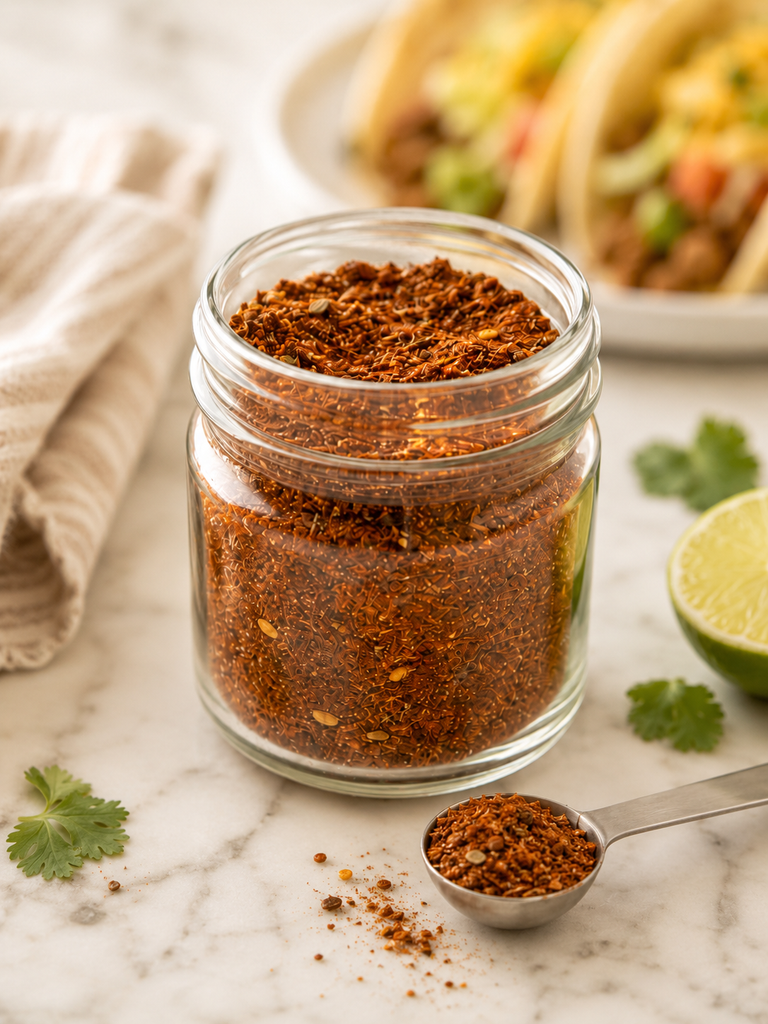
You already have every ingredient in a taco seasoning packet. All nine of them are sitting in your cabinet right now.
The packet costs about a dollar, which isn’t the problem. The problem is that roughly a third of what’s in it isn’t seasoning — it’s salt, cornstarch, and anti-caking agents — and you have no way to adjust any of it.
Five minutes and one jar gets you eight packets’ worth, with the heat where you want it and the salt where you want it. This is the version I keep in the cabinet and reach for two or three times a week.
This post contains affiliate links. If you buy through them, Reach Wellth may earn a small commission, at no extra cost to you. I only link to things I actually use.
What Are the Ingredients in Taco Seasoning?
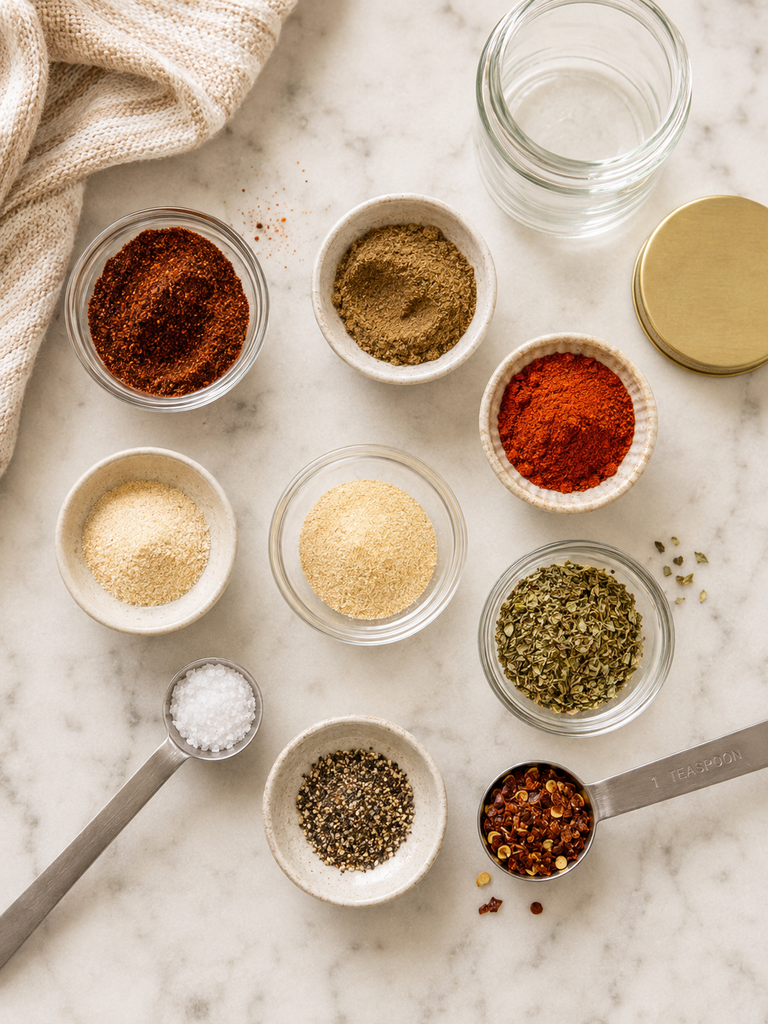
Real taco seasoning is nine things: chili powder, cumin, paprika, garlic powder, onion powder, oregano, salt, black pepper, and cayenne or red pepper flakes. That’s the whole list, and it’s the recipe below.
A store-bought packet is those spices plus filler. Flip one over and it usually runs: chili pepper, salt, maltodextrin, cornstarch, onion powder, cumin, garlic powder, anti-caking agent, sometimes sugar, sometimes MSG, sometimes “natural flavor.”
Nothing there is dangerous. But salt is often the first or second ingredient, and maltodextrin and cornstarch are there to bulk it out and thicken the sauce — not to make it taste like anything.
So you’re buying a spice blend that’s part spice, part filler, at a fixed heat level someone else chose. Which is fine, until you realize the actual spices cost pennies and you own all of them.
Why Make Your Own
- You control the salt. This is the big one. Most packets are built for shelf appeal, not for someone watching sodium.
- You control the heat. Mild for kids, hot for you, same jar different pinch.
- No fillers. No cornstarch, no maltodextrin, no anti-caking agents.
- It’s cheaper. Not dramatically, but a batch costs less than two packets and makes eight.
- You’ll always have it. No more starting dinner and finding an empty box.
It also tastes better, and not in a subtle way. Freshly measured spices have more going on than a packet that’s been sitting on a shelf since last year.
Taco Seasoning Ingredients
Chili powder
The backbone and the biggest quantity. American chili powder is itself a blend — mild ground chiles plus cumin and oregano — so this is doing a lot of work on its own. Buy a decent one; it’s most of the flavor.
Ground cumin
The warm, earthy, slightly smoky note that makes food taste Mexican-adjacent. Along with chili powder, it’s what your brain actually recognizes as “taco.”
Paprika
Color and a mild sweetness that rounds out the chili powder. Regular sweet paprika — smoked paprika is good but it takes over and makes everything taste like barbecue.
Garlic powder
Powder, not fresh or granulated. It distributes evenly through a dry blend in a way fresh garlic can’t.
Onion powder
Same reasoning. It fills in the savory base underneath the chile.
Dried oregano
The one people leave out, and it’s a mistake. Oregano is the slightly bitter, herbal edge that keeps the blend from tasting flat and one-note. Mexican oregano is more citrusy and traditional if your store has it; Mediterranean works fine.
Salt
Where you take control. I use ½ teaspoon per batch, which is well under a packet. Start low — you can always salt the pan, you can’t unsalt it.
Black pepper
A quarter teaspoon. Small but you’d notice it missing.
Red pepper flakes or cayenne
Optional and adjustable. This is the entire heat dial. Leave it out for a mild family batch and add cayenne to individual dishes instead.
The Best Homemade Taco Seasoning Recipe
Single batch — equals one store-bought packet, seasons 1 pound of meat:
- 1 tablespoon chili powder
- 1½ teaspoons ground cumin
- 1 teaspoon paprika
- ½ teaspoon garlic powder
- ½ teaspoon onion powder
- ½ teaspoon dried oregano
- ½ teaspoon salt
- ¼ teaspoon black pepper
- ¼ teaspoon red pepper flakes or cayenne (optional)
Big batch — makes about 1 cup, roughly 8 packets:
- ½ cup chili powder
- ¼ cup ground cumin
- 2½ tablespoons paprika
- 1½ tablespoons garlic powder
- 1½ tablespoons onion powder
- 1½ tablespoons dried oregano
- 1½ tablespoons salt
- 2 teaspoons black pepper
- 2 teaspoons red pepper flakes or cayenne (optional)
Make the big batch. It’s the same five minutes.
How To Make Taco Seasoning
- Measure everything into a bowl or straight into the jar you’re storing it in.
- Whisk or shake until the color is completely uniform — no streaks of paprika or pockets of pale garlic powder.
- Transfer to an airtight jar and label it with the date.
- Shake before each use. Spices settle by weight and the heavier ones sink.
That’s the whole recipe. The only thing worth being careful about is the mixing — an unevenly blended batch means one dinner is bland and the next one is all cumin.
I keep mine in a 4-ounce spice jar with a shaker lid, right at the front of the cabinet.
How Much Taco Seasoning Per Pound of Meat
2 tablespoons per pound. That’s the answer, and it’s the same as one packet.
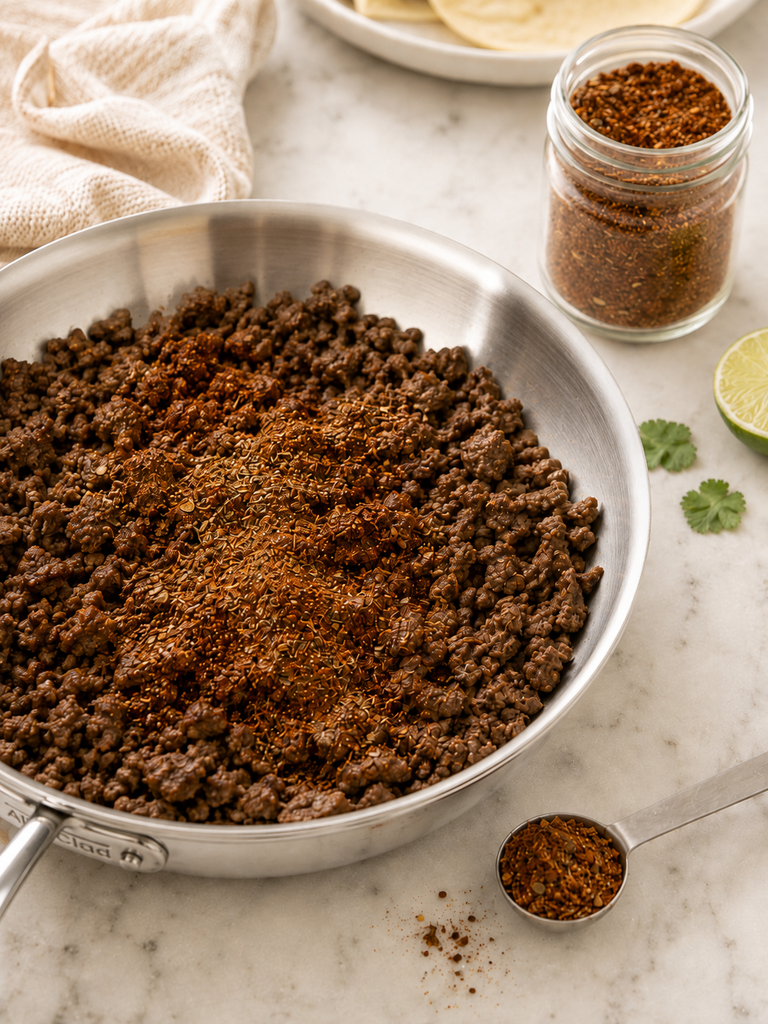
For a pound of ground beef, turkey, or chicken: brown the meat, drain it, add 2 tablespoons of seasoning and about ⅓ cup of water, then simmer 3 to 5 minutes until it thickens and coats.
A few adjustments worth knowing:
- Leaner meat needs slightly more — fat carries flavor, so ground turkey and chicken take a little extra
- Shredded chicken takes about 1 tablespoon per 2 cups, tossed with a teaspoon of oil so it actually sticks
- Beans and vegetables need less — start with 1 tablespoon and taste
Without the packet’s cornstarch your sauce will be slightly thinner. That’s the trade, and it’s an easy one to fix — see below.
Do You Need Cornstarch or Flour?
No, but here’s what it was doing.
The cornstarch in a packet thickens the water you add so the meat gets a glossy coating instead of sitting in liquid. Leave it out and the sauce is looser.
If you want that thicker texture, add ½ teaspoon of cornstarch per batch, or just simmer it a minute longer and let more water cook off. I usually simmer longer — one less ingredient, same result.
Leaving it out also means the blend is naturally gluten-free, as long as your chili powder is.
Low Sodium Taco Seasoning
This is the real reason to make your own.
A packet typically carries a few hundred milligrams of sodium per serving, and salt is often the second ingredient. My batch above uses ½ teaspoon per packet-equivalent, and you can go lower or leave it out entirely.
My suggestion: make the batch salt-free, then salt the actual dish to taste while it cooks. You’ll almost always use less than the packet would have, and the seasoning itself becomes more versatile — you can be heavy-handed with it on vegetables without over-salting them.
If you’re working on sodium generally, it pairs with the approach in how to eat healthy — the fastest wins are usually the packaged shortcuts you’d never think to question.
Mild, Medium or Spicy
Same blend, one variable:
- Mild: leave out the red pepper flakes and cayenne entirely
- Medium: ¼ teaspoon cayenne per batch
- Spicy: ½ teaspoon cayenne, or ¾ teaspoon if you mean it
Make the base mild and keep cayenne next to it. That way one jar feeds everyone and people adjust their own plate — much easier than making two batches.
Ways To Use Taco Seasoning
It’s not just for tacos, and this is where a big batch earns its shelf space:
- Ground beef, turkey or chicken — the standard, 2 tablespoons per pound
- Shredded chicken — toss Instant Pot shredded chicken or crockpot shredded chicken with a tablespoon and a teaspoon of oil, then crisp it in a pan
- Quesadillas — it’s the seasoning in my Taco Bell chicken quesadilla
- Black beans — a teaspoon while they warm turns a can into a side dish
- Roasted vegetables — sweet potatoes, cauliflower and corn especially
- Rice — a teaspoon in the cooking water
- Eggs and breakfast scrambles
- Popcorn — try it once
- Sour cream or Greek yogurt — a pinch stirred in makes an instant dip
It’s one of the things that makes weeknight cooking faster, which is most of the battle on the nights covered in easy meals when you’re overwhelmed.
For the full list, here are 25 recipes with taco seasoning — well past tacos.
Is Homemade Taco Seasoning Healthier?
Somewhat, and honestly for narrower reasons than most posts claim.
Spices are spices — the chili powder and cumin are the same either way. What actually changes:
- Sodium, which you now control completely
- No maltodextrin or cornstarch, if you’re avoiding refined starches
- No anti-caking agents or MSG, if those bother you
- No added sugar, which some packets have
It isn’t a health food and I wouldn’t sell it as one. It’s a small, permanent upgrade to something you were going to eat anyway — which is usually the kind of change that sticks.
How Much Is in a Taco Seasoning Packet?
About 1 ounce, which is roughly 2 tablespoons. Some brands run to 1.25 ounces, and the “family size” packets are closer to 2 ounces.
So one batch of the single recipe above equals one packet, and the big batch makes about eight. If a recipe calls for “one packet of taco seasoning,” use 2 tablespoons of this and you’re matched.
How Much Water Do You Add to Taco Seasoning?
⅓ cup per pound of meat, added after you’ve browned and drained it.
The packet directions usually say ¾ cup, but that’s compensating for the cornstarch — more water to thicken. Without filler you need less, or you’ll be simmering a long time to cook it back off. Start with ⅓ cup and add a splash if it tightens up too fast.
Does Taco Seasoning Go Bad?
Not in the way that makes you sick. Dried spices don’t spoil — they fade.
A jar of homemade taco seasoning is at full strength for about six months and perfectly safe long after that. What happens is the volatile oils in the cumin and chili powder dissipate, and one day you use your usual 2 tablespoons and the food tastes like nothing.
The test is your nose. Open the jar — if it smells sharp and warm, it’s fine. If it smells like dust or like nothing at all, the fix is a fresh batch, not more of the old one.
Store-bought packets last longer on paper because of the anti-caking agents, but the same fade applies.
How To Store Taco Seasoning
- Airtight jar, cool dark cabinet, away from the stove
- Best within 6 months, still safe well past that
- Label it with the date — you will not remember
- Shake before every use
Keep it away from the stove — heat and steam are what kill a spice jar fastest, and the cabinet directly above the range is the worst place in the kitchen for it.
What Can I Use Instead of Taco Seasoning?
If you have no seasoning and no packet, the shortest usable version is chili powder, cumin, garlic powder and salt — four things, roughly 2:1:1:1. It won’t be as layered but it’ll taste like tacos.
Missing just one ingredient from the full blend:
- No chili powder? 1 tablespoon paprika plus ¼ teaspoon cayenne gets you close, though you’ll miss some depth.
- No cumin? There’s no real substitute — cumin is the signature. Make something else tonight.
- No oregano? Skip it. Slightly flatter, still good.
- No paprika? A little extra chili powder.
- Out of onion or garlic powder? Use the other one at 1½ times the amount.
- Nothing but chili powder? Use it alone with salt. It’s already a blend — that’s why it works better than you’d expect.
Taco Seasoning FAQ
How much homemade taco seasoning equals one packet?
2 tablespoons. Standard packets are 1 to 1.25 ounces, which works out to about 2 tablespoons.
Is taco seasoning gluten free?
Homemade is, as long as your chili powder is — some blends use wheat as an anti-caking agent. Store-bought packets vary, so check the label.
Can I make it without salt?
Yes, and I’d recommend it. Leave the salt out and season the dish itself. The blend becomes more flexible that way.
How long does homemade taco seasoning last?
Six months at full strength in an airtight jar, longer before it’s actually bad. It fades rather than spoils.
Why is my taco meat watery?
Not enough simmering, or too much water. Add ⅓ cup water per pound and let it cook down 3 to 5 minutes. Without the packet’s cornstarch it needs a little more time.
Can I use it as a dry rub?
Yes — it’s good on chicken thighs, pork, and shrimp. Add a little oil so it adheres and don’t let the chili powder burn over high heat.
Is this the same as fajita seasoning?
Close but not identical. Fajita seasoning usually goes heavier on cumin and lighter on chili powder, often with lime. You can use this for fajitas and nobody will notice.
Can I double or triple it?
Yes, it scales perfectly. Just mix thoroughly — bigger batches are easier to under-mix.
PrintHomemade Taco Seasoning Recipe
A five-minute homemade taco seasoning with no fillers, no anti-caking agents, and adjustable salt and heat. One batch replaces about eight store-bought packets.
- Prep Time: 5 minutes
- Total Time: 5 minutes
- Yield: about 1 cup (8 packet-equivalents)
Ingredients
- ½ cup chili powder
- ¼ cup ground cumin
- 2½ tablespoons paprika
- 1½ tablespoons garlic powder
- 1½ tablespoons onion powder
- 1½ tablespoons dried oregano
- 1½ tablespoons salt (or omit and salt to taste when cooking)
- 2 teaspoons black pepper
- 2 teaspoons red pepper flakes or cayenne (optional)
Instructions
- Measure all ingredients into a bowl or directly into a jar.
- Whisk or shake until the color is completely uniform.
- Store in an airtight jar, labeled with the date.
- Use 2 tablespoons per pound of meat, with ⅓ cup water, simmered 3–5 minutes.
Notes
- Leave out the salt and season the dish instead — more flexible, and you’ll use less overall.
- No cornstarch, so the sauce is thinner. Simmer a minute longer, or add ½ teaspoon cornstarch per 2 tablespoons.
- Naturally gluten-free as long as your chili powder is.
- Best within 6 months. It fades rather than spoils.


Get the Weekly Wellth Newsletter
Stay up to date & receive the latest posts in your inbox.