



Barre3 Results After 200 Classes: What Actually Changed
This post contains affiliate links, meaning I may earn a commission if you make a purchase—at no additional cost to you. As an Amazon Associate I earn from qualifying purchases. When this article was published, Trideer offered me a higher commission on purchases made through its Amazon links. All opinions are genuinely my own.
After 200+ barre3 classes over a year and a half, I can give you a real picture of what results barre3 actually delivers — and what it doesn’t.
This isn’t a 30-day experiment or a sponsored sprint. These are the actual results from showing up consistently through hard seasons, schedule chaos, and the kind of life upheaval that makes most people cancel their gym memberships.
Here’s the part that took me 200 classes to actually believe: the workout that builds your body without depleting you is the one that wins long-term. Exhaustion isn’t the proof that something worked.
If you’re here, you’re probably trying to answer the same question I was: does barre3 actually work, and is it worth sticking with long-term?
The short answer: yes — but probably not in the way you expect.
If you’re earlier and still figuring out what barre3 even is, start with the explainer; if you’re weighing whether it’s worth it, my full review covers that. This post is for the question that comes after both: does it actually work?
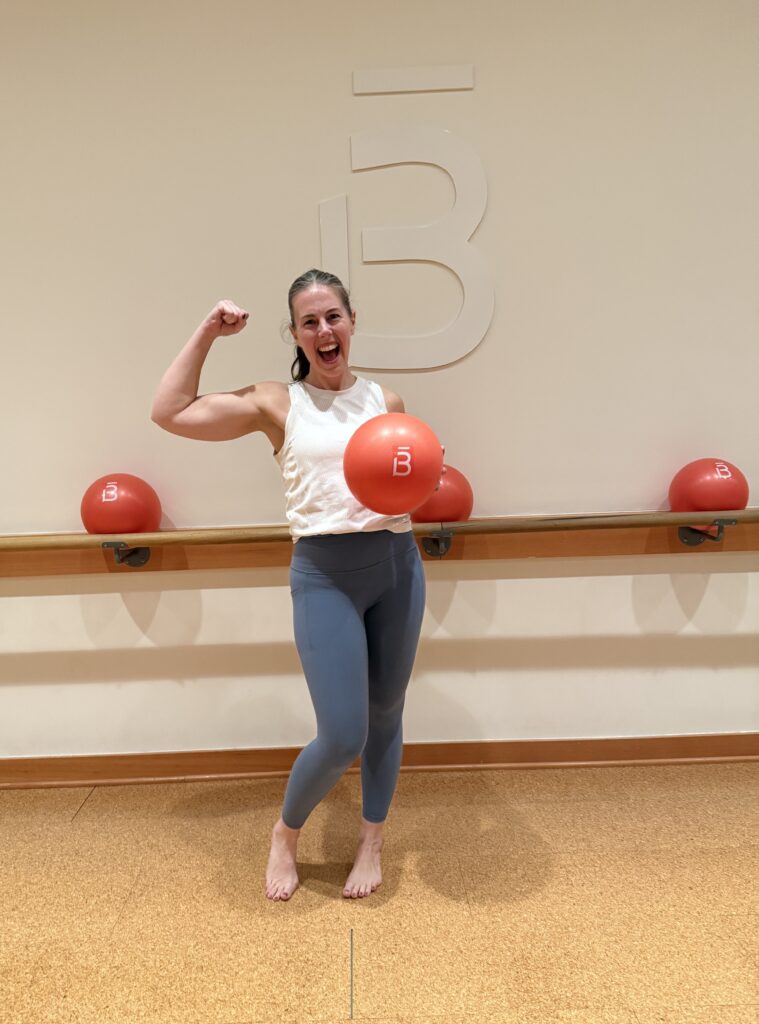
How I Got Here
Years before I committed to barre3, I tried a class to support a friend who was an instructor. Free class, why not.
At the time, I was working with a personal trainer twice a week, lifting heavy, and chasing PRs. Barre felt slow. Choreographed. Not “hard” in the way I’d been trained to associate with a real workout.
I didn’t love it.
Years later, I came back to barre3 in a completely different season — postpartum, exhausted, burned out. The kind of tired where another high-intensity workout would have made things worse, not better.
That’s when it clicked. Not because my mindset changed. Because my capacity did.
200 classes later, I’m a different person than the one who walked in for her first class.
My Barre3 Results: The Quick Version
The biggest shift wasn’t physical — it was learning my body doesn’t need to feel destroyed to get stronger.
If you want the overview before the breakdown:
- Strength: Maintained and improved in specific areas, but I’m honestly less strong overall than I was during heavy weight training with a personal trainer
- Muscle tone: Noticeably more defined — even with some weight gain, my body still looks toned
- Endurance: Significantly improved; classes that wrecked me at first now feel manageable
- Weight loss: Minimal, and that’s not what barre3 is built for
- Body composition: A leaner, more “feminine” build vs. the more muscular look I had from heavy lifting
- Consistency: This is where barre3 genuinely stands out
- Nervous system: The biggest unexpected change
Barre3 works if your goal is to feel better, stay consistent, and maintain a toned physique.
It’s not the fastest path to a dramatic transformation. But it’s one of the most realistic ways to keep showing up — especially when life is complicated.
How I Reached 200 Classes
It took just under 18 months. That math works out to roughly two to four classes per week, averaging right around three.
The reason I got there isn’t motivation. It’s logistics.
I book my classes one to two weeks in advance based on my upcoming schedule, which removes the daily decision of whether to go.
The studio is close to home — close enough that the friction of going is genuinely low. The instructors are people I actually want to be around. The format is something I look forward to instead of dread.
Stack all of that, and showing up stops feeling like a decision and just becomes something you do.
That’s the part most fitness content gets wrong. They sell motivation. What actually keeps people consistent is removing friction. I broke down the bigger system in this post on how to work out consistently →
Strength: What Actually Changed
The honest truth: I’m not as strong as I was when I was lifting heavy twice a week with a trainer.
That’s not a surprise. Barre3 and heavy strength training are two different things. But it’s worth naming, because if raw strength is your metric, you should know.
Things that used to feel easy — like lifting my toddler without thinking — now require more effort than they did during my heavy lifting days. My legs in particular have lost some of the strength I built with targeted weight work.
What barre3 has done well: maintain a baseline of functional strength and dramatically improve my endurance under sustained tension. My core is more stable. My shoulder endurance is better. The strength here is quiet — it doesn’t come with a heavier barbell as a benchmark, but it shows up in how I move through the rest of my life.
What I had to unlearn: my old definition of strong was “what can I lift?” Barre3’s definition is “what can I do, repeatedly, without falling apart?” Those are different muscles. They’re also different lives. The first one peaked in my early 30s. The second one is still building.
If you’re coming to barre3 from heavy lifting, set expectations accordingly. If you’re coming from sedentary or light fitness, you’ll feel measurably stronger.
Muscle Tone: Where Barre3 Genuinely Delivers
This is where the visible results show up.
Even during months when my attendance dipped and my eating wasn’t dialed in, I held visible muscle definition.
My body looks leaner and more “feminine” compared to the more muscular build I had from heavy lifting. Neither is better. They’re different aesthetics that come from different training styles.
If you want to maintain tone and look fit without committing to a heavy lifting program, barre3 is remarkably effective for that.
If I locked in my nutrition, I think the visible results would be significant. That part is on me, not the workout.
Endurance: The Unexpected Win
This improved more than I expected, in ways that sneak up on you.
Early on, anything core-intensive or balance-heavy wrecked me. I’d have to step out of positions. The shake set in within seconds. Now I can move through a full class with almost no resets, and the shake takes much longer to show up.
The biggest unexpected gain: nose breathing through intensity. I know that sounds small, but it’s changed how I move through hard moments — in class and outside it — in ways that are hard to describe until you’ve felt the shift.
Barre3 for Weight Loss: The Honest Answer
Barre3 alone did not drive weight loss for me.
I want to be specific about why. During the months I was going less than twice a week, I actually gained weight. That weight gain is attributable to my eating and hormones, not to barre3 itself.
Barre3 is low-impact and not heavily cardio-driven, so if weight loss is your primary goal, you’ll need to pair it with nutritional changes, strength training, and probably some additional cardio.
What barre3 did do: held my tone steady through weight fluctuations that would have otherwise been more visible.
If you’re researching barre3 specifically for weight loss, the class isn’t a calorie-burning machine. It’s a tone-and-strength workout that will make you look and feel better at any weight, but it’s not going to drop pounds without nutritional changes alongside it.
Body Composition: Before and After
Visible changes after 200 classes:
- Defined shoulders and arms (using only 5 or 6 lb weights)
- Stronger-looking core
- Leaner legs (less bulky than during heavy lifting days)
- Better posture — the biggest change people comment on
- Less visible weight fluctuation
What didn’t change:
- Overall scale weight (steady within a 5–10 lb range)
- Cellulite (some, mostly unchanged)
- Lower body strength compared to my heavy lifting peak
What Barre3 Did for My Nervous System
This section matters, even though it sounds less like a fitness review and more like something else.
The last 18 months included some of the hardest months of my life. Without going into specifics, there were stretches where I was carrying a lot — and the last thing I needed was a workout that demanded more from me than I had to give.
Barre3 was the one thing I kept doing.
Not because it was easy. Because it was steady. The format is consistent. The effort scales to where you are that day. For 55 minutes, I’m in a room with people focused on the same thing.
That’s not a small thing when your nervous system is running hot.
Showing up to barre3 during those months — even imperfectly — was the part of my routine I could actually rely on. The physical results almost became secondary.
Barre3’s CEO Sadie Lincoln said this directly in a recent campaign: “the body doesn’t need more stress to get stronger — it needs a different approach.” 200 classes in, that’s the thesis I keep landing back on.
This is the part most barre3 reviews don’t capture. It’s also the part that explains why I renewed.
What I’d Buy Again
If I were starting over from class one, here’s what I’d actually invest in:
- A barre3 online subscription for travel days, sick days, and at-home class access. About $30/month, unlimited streaming, same instructors and format. This is the single best add-on if you want to stay consistent when you can’t make it to the studio. (PS – the online subscription is included in an unlimited membership.)
- Weights for home workouts — anywhere from 3 lb to 12 lb
dumbbells (I frequently use the 5lb, 6lb, 8lb, 10 and 12lb weights.) - Resistance bands for home practice. These get used in almost every class for glutes, arms, and core sequences. A small loop band set is the right starting investment.
- A core ball for mat work. Barre3 uses these constantly in core sequences and they make a real difference in how the work lands. One of the highest-leverage pieces of equipment for the price.
- Core sliders — little discs for your hands or feet that add control and challenge during ab and leg work.
- A standard yoga mat — necessary if you do barre3 online. The studio provides them in-class
- A solid water bottle — you’ll drink more than you think during class.
- Grip socks if you prefer or your studio requires them. Two or three pairs is the right starting amount.
- Quality leggings + matching tops — I wear athleta and CRZ Yoga’s Butterluxe line interchangeably. The Butterluxe matches the buttery-soft Athleta Powervita feel at a fraction of the price, and the leggings + longline sports bra come in matching colors if you want the put-together look.
- Barre3 branded apparel if you want it. Well-reviewed, fit consistent with sizing, holds up over time. Not necessary — regular workout clothes work fine for class — but the brand makes good gear for the people who want it.
Should I Renew My Membership?
This is the question 200 classes in. Different from the “should I start” question — that one’s covered in the review post.
I renewed this year, and the decision wasn’t automatic.
The annual commitment is real money. I had a genuine moment of weighing whether it made sense. I renewed because in a season with a lot of competing priorities, removing barre3 would have meant finding and starting something new on top of everything else. The cost of that friction — financial and mental — is higher than the membership fee.
The results from 200 classes are real. The stability of a routine I actually trust matters more right now than optimizing for cost.
If you’re at a renewal decision and the format is working for you, the math is usually clear: keep going. The compounding effect of consistency is worth more than the dollars saved by switching to drop-ins or class packs.
Would I Keep Doing Barre3?
Already answered that when I renewed. Yes.
Not because it’s perfect for every goal I have. Because it’s consistent, sustainable, and has become part of how I take care of myself in the seasons when taking care of myself is the hardest thing on the list.
200 classes in, I’m a different person than the one who walked in for her first class. Barre3 is part of why.
Barre3 Results FAQs
How long does it take to see barre3 results?
Most people notice tone and posture changes within 4 to 6 weeks of consistent attendance (3+ classes per week). Strength and endurance show up around 8 to 12 weeks. Significant body composition changes take 3 to 6 months and require nutritional alignment alongside the workout.
Can you lose weight with barre3?
Barre3 alone usually won’t drive significant weight loss because it’s low-impact and not heavily cardio-driven. It will support weight loss when paired with nutritional changes. What barre3 reliably does is maintain or build tone, which often makes weight loss visible faster than the scale shows.
What does barre3 do for your body after 6 months?
Most members at 6 months report noticeably better posture, more visible muscle tone (especially shoulders and arms), stronger core stability, improved balance, and better mobility. Strength gains continue but plateau after the first few months unless you progressively add to the workout.
Will barre3 give me a “barre body”?
It’ll give you a leaner, more defined build than heavy lifting typically produces. Whether that matches the marketing aesthetic depends on your starting point, your nutrition, and your genetics. The “barre body” look is real, but it’s a combination of training and nutrition, not just class attendance.
Is barre3 good for over 40?
Yes — arguably one of the best options for women over 40. The low-impact format protects joints, the focus on functional strength supports longevity, and the mobility work counters the stiffness that builds with age. It fits cleanly into the healthy habits worth building by 40 — low-impact, sustainable, joint-friendly.
How many barre3 classes per week is best for results?
Three classes per week is the sweet spot for visible results without burnout. Two classes maintain. Four to five accelerate results. More than that and you’re better off cross-training with another modality.
Did your body change after barre3?
Yes — most visibly in muscle tone, posture, and a leaner overall build. Less visibly in scale weight, which barre3 alone doesn’t move significantly.
If you’re earlier in your barre3 decision, read the full barre3 review for what the workout is, who it’s for, what it costs, and how it compares to other options.
This post contains affiliate links. I may earn a small commission for purchases made through these links at no extra cost to you.





Get the Weekly Wellth Newsletter
Stay up to date & receive the latest posts in your inbox.