



Why Self-Care Isn’t Selfish (And How to Stop Feeling Guilty About It)
If you’ve ever felt guilty for taking time for yourself, you’re not alone.
Guilt is the default setting for most women when it comes to self-care. We feel selfish for sleeping in. We apologize for taking a walk alone. We justify a therapy appointment like we’re defending a criminal case.
Meanwhile, we show up for everyone else—our jobs, our families, our friends—running on fumes and wondering why we’re so exhausted.
Here’s what nobody tells you: self-care isn’t selfish. It’s strategic.
And the sooner you stop treating it like an indulgence and start treating it like a necessity, the better off everyone around you will be.
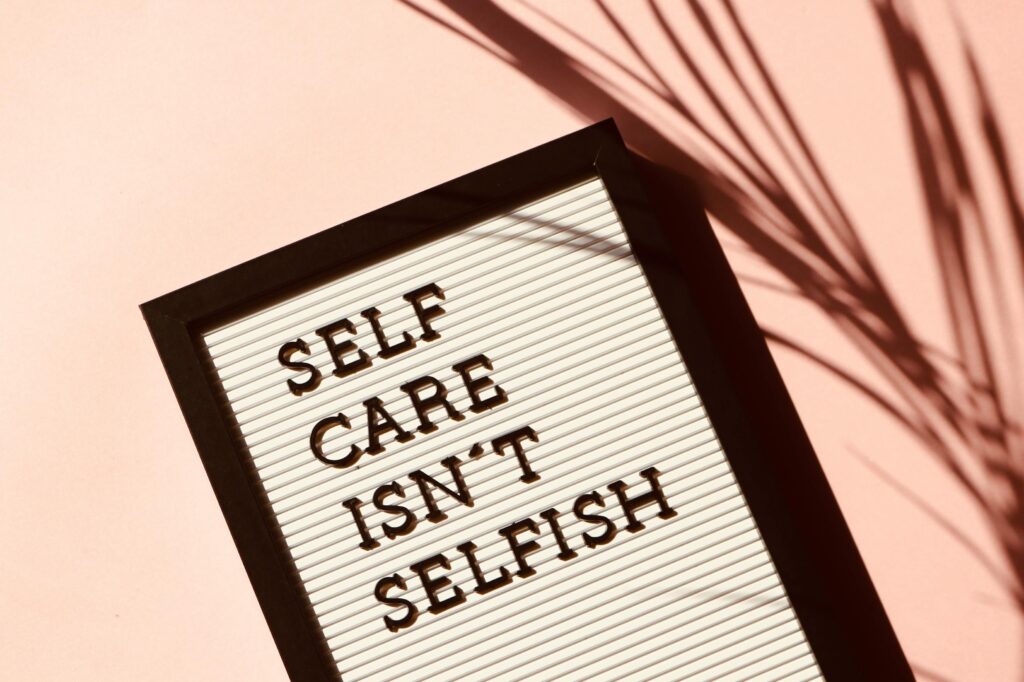
The Myth That Self-Care Is Selfish
Somewhere along the way, we internalized the message that putting ourselves first is wrong. That taking care of our own needs means we’re neglecting everyone else. That rest is laziness and boundaries are mean.
This is especially true for women, who are conditioned from a young age to be caregivers, people-pleasers, and self-sacrificers. We’re taught that our value comes from how much we give to others—not from how well we take care of ourselves.
But here’s the truth: you cannot pour from an empty cup.
When you neglect your own health—your sleep, your nutrition, your mental wellbeing, your relationships—you’re not showing up fully for anyone. Not your family. Not your work. Not even yourself.
You’re operating at half capacity, resentful, exhausted, and one bad day away from completely burning out.
What Self-Care Actually Is
Self-care isn’t bubble baths and face masks (though those can be nice).
Self-care is:
- Getting enough sleep so you can think clearly and regulate your emotions
- Eating food that fuels your body instead of running on caffeine and willpower
- Moving your body in ways that feel good, not punishing
- Setting boundaries with people who drain you
- Saying no to commitments that don’t align with your priorities
- Taking time to process your emotions instead of numbing them
- Asking for help when you need it
Self-care is the daily, unsexy work of maintaining your most valuable asset: you.
It’s not indulgent. It’s not optional. It’s the foundation everything else is built on.
Read: How to Prioritize Your Health: Why Health Is Your Most Valuable Asset →
Why Prioritizing Yourself Benefits Everyone
Here’s the part people don’t talk about enough: when you take care of yourself, everyone around you benefits.
When you’re well-rested, you have patience for your kids and colleagues instead of snapping at them.
When you’re mentally healthy, you can be present in your relationships instead of checked out.
When you’re physically strong, you have energy to show up for your work and your life instead of just surviving.
When you set boundaries, you teach the people around you how to treat you—and model healthy behavior for them.
Self-care isn’t selfish. Burning yourself out and resenting everyone around you is.
The Permission You’ve Been Waiting For
If you’ve been waiting for someone to tell you it’s okay to prioritize yourself—here it is.
You have permission to rest.
You have permission to say no.
You have permission to choose yourself without apology.
You don’t need to justify taking care of your health. You don’t need to earn the right to basic self-care. And you certainly don’t need to wait until you’ve done “enough” for everyone else.
Your health matters. Your wellbeing matters. You matter.
And the people who truly care about you? They are the ones who want you to take care of yourself. They don’t want you running on empty, resentful, and exhausted.
How to Stop Feeling Guilty About Self-Care
Knowing self-care isn’t selfish and actually believing it are two different things.
Here’s how to shift the guilt:
Reframe Self-Care as Responsibility, Not Indulgence
You’re not “treating yourself” by getting enough sleep. You’re maintaining your ability to function.
You’re not being “selfish” by setting boundaries. You’re protecting your energy so you can show up where it matters.
Self-care isn’t a luxury. It’s a responsibility—to yourself and to the people who depend on you.
Start Small and Build Evidence
If big acts of self-care feel too guilty, start small. Go to bed 30 minutes earlier. Take a 10-minute walk alone. Say no to one thing this week.
Notice what happens. You’ll probably find that the world doesn’t fall apart. In fact, you might show up better because you’re not running on fumes.
Communicate Your Needs Clearly
Guilt often comes from feeling like we’re letting people down. Combat this by being clear about your needs.
- “I need 30 minutes alone after work to decompress before I can be present with you.”
- “I’m prioritizing sleep this week, so I won’t be available for late-night calls.”
- “I’m saying no to this commitment because I need to protect my energy right now.”
Most people will respect boundaries when you communicate them clearly. And the ones who don’t? That tells you something important.
Surround Yourself With People Who Support Your Self-Care
If the people around you make you feel guilty for taking care of yourself, that’s a them problem, not a you problem.
Surround yourself with people who celebrate your boundaries, encourage your rest, and model healthy self-care themselves.
The Bottom Line: Self-care isn’t selfish. It’s survival.
Self-care is the difference between thriving and just getting through the day.
It’s the difference between showing up fully for your life and sleepwalking through it.
You deserve to take care of yourself. Not because you’ve earned it. Not because you’ve done enough for everyone else. But because your health is your most valuable asset, and only you can protect it.
Stop apologizing. Stop justifying. Stop waiting for permission.
Start taking care of yourself like your life depends on it—because it does.
Ready to build self-care into your daily life without the guilt?
If you’re struggling to actually implement self-care (not just believe it’s important), I’ve written a practical guide on how to build a self-care routine that actually sticks. It breaks down seven simple steps to make self-care a natural part of your day, not another thing on your to-do list.
Want more strategies for prioritizing your health? Read: How to Prioritize Your Health: Why It’s Your Most Valuable Asset




Get the Weekly Wellth Newsletter
Stay up to date & receive the latest posts in your inbox.