



Scrambled Eggs with Cottage Cheese (Soft, Creamy, Fully Cooked)
If you want to know how to make scrambled eggs with cottage cheese that are creamy and fully cooked, this is it.
I’m picky about my scrambled eggs. Years of ordering them at restaurants have left me disappointed — most of the time, you get either dried-out clumps or something wet and undercooked.
You know how rare it is to get this texture right.
So I finally figured out how to get that perfect texture at home: soft and creamy but fully cooked through.
The secret ingredient? Cottage cheese.
It sounds weird, but it works. The cottage cheese melts completely into the eggs (you can’t taste it at all) and creates that creamy texture without any wetness.
These scrambled eggs with cottage cheese have become my go-to breakfast. They’re high in protein, consistently perfect, and my toddler loves them too.
No fancy chef techniques. No special equipment. Just eggs, cottage cheese, butter, low heat, and a little patience.
If you want eggs that feel luxurious but aren’t undercooked, this method hits the mark every single time.
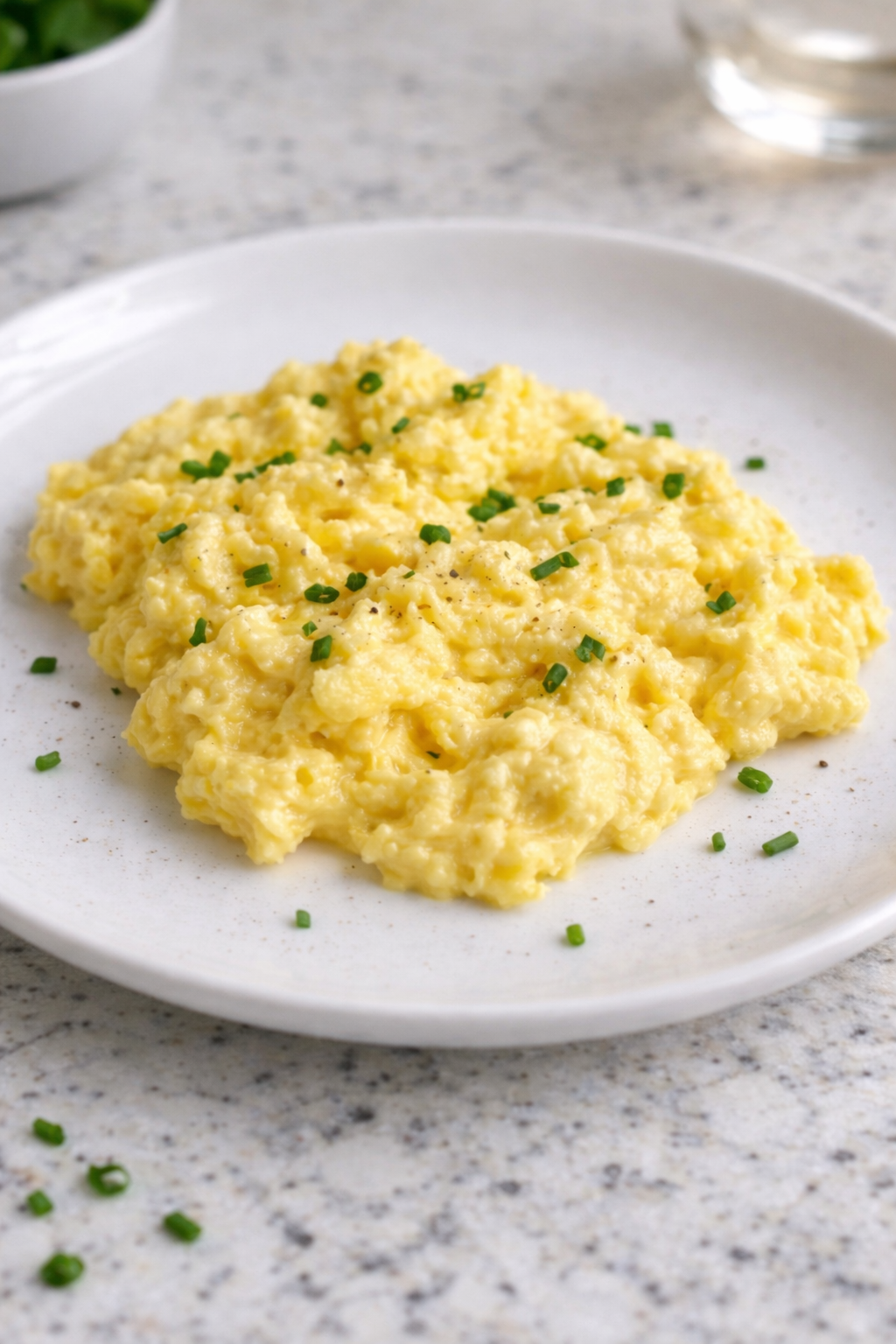
What Makes These Different From Other Soft Scrambled Egg Recipes
Most soft scrambled egg recipes leave you with one of two problems: either they’re undercooked with that glossy liquid (gross), or they’re overdone and rubbery.
This method solves both.
The cottage cheese adds moisture that keeps the eggs soft and creamy while they cook all the way through. You get small, custard-like curds with zero wetness and zero hard edges.
No french technique that requires constant stirring. No cream that makes them heavy. Just a simple ingredient swap that works every single time.
Why Cottage Cheese Makes Scrambled Eggs Perfectly Soft And Creamy
If you’re learning how to cook soft scrambled eggs, cottage cheese is the secret to getting them creamy but fully cooked.
It melts completely into the eggs (you can’t taste it at all) and adds moisture in exactly the right way — keeping them soft without any runny liquid or burnt edges.
What cottage cheese does:
- Creates creaminess without wetness
- Prevents drying out or browning
- Adds protein and richness
- Sets into that perfect custard-like texture
If you’ve struggled to get soft scrambled eggs right, this one ingredient changes everything.
Ingredients for Scrambled Eggs with Cottage Cheese
- 2 eggs
- 2 spoonfuls cottage cheese (whole milk or 2%)
- 1 teaspoon butter
- Pinch of salt and fresh pepper
That’s it. Four ingredients. Simplicity at its best.
How to Make Scrambled Eggs with Cottage Cheese (Step-by-Step)
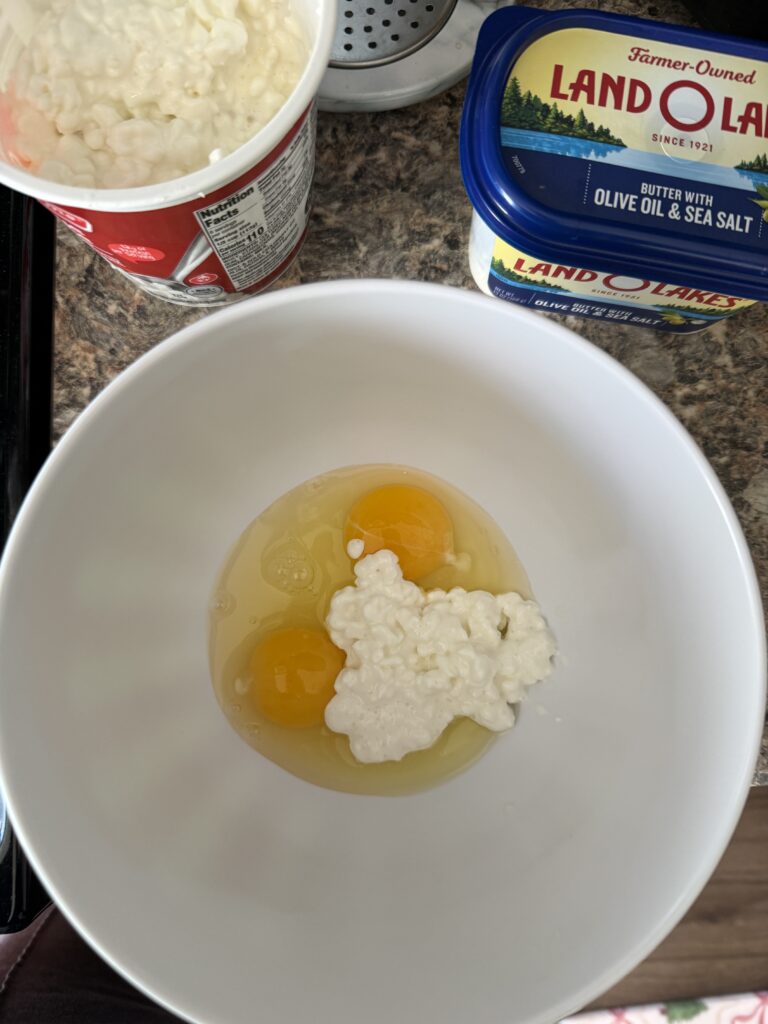
1. Whisk eggs and cottage cheese
Crack the eggs into a bowl. Add two spoonfuls cottage cheese. Whisk until mostly smooth to reduce the size of the curds — they melt completely in the pan.
2. Warm your pan on low to medium-low & Melt Butter
This matters more than anything.
High heat = dry eggs.
Low heat = soft curds that stay creamy and fully cooked.
Coat the pan evenly with the melted butter.
4. Pour in the egg mixture
You should hear a soft, gentle sizzle — not a loud one.
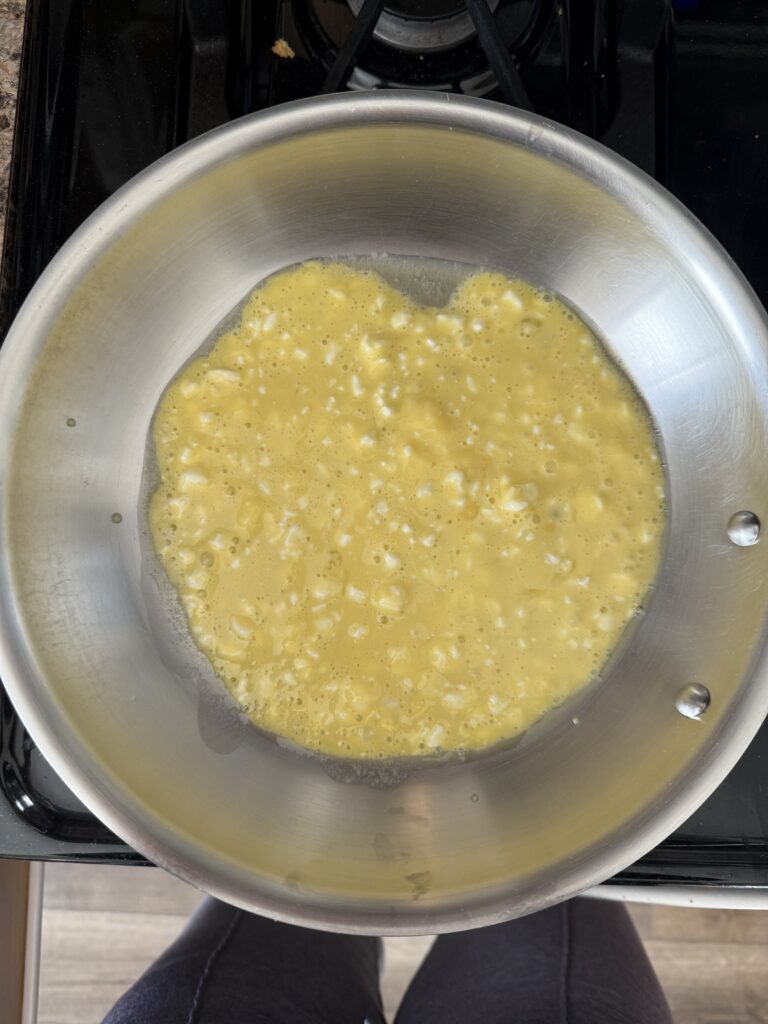
5. occassionally Stir slowly
Once the eggs show signs of firming (not entirely liquid), use a rubber spatula to push the eggs slowly around the pan. Let them rest, then stir again gently. You want to fold the egg more than you want to mix the egg.
The full cooking process should take 8–10 minutes.
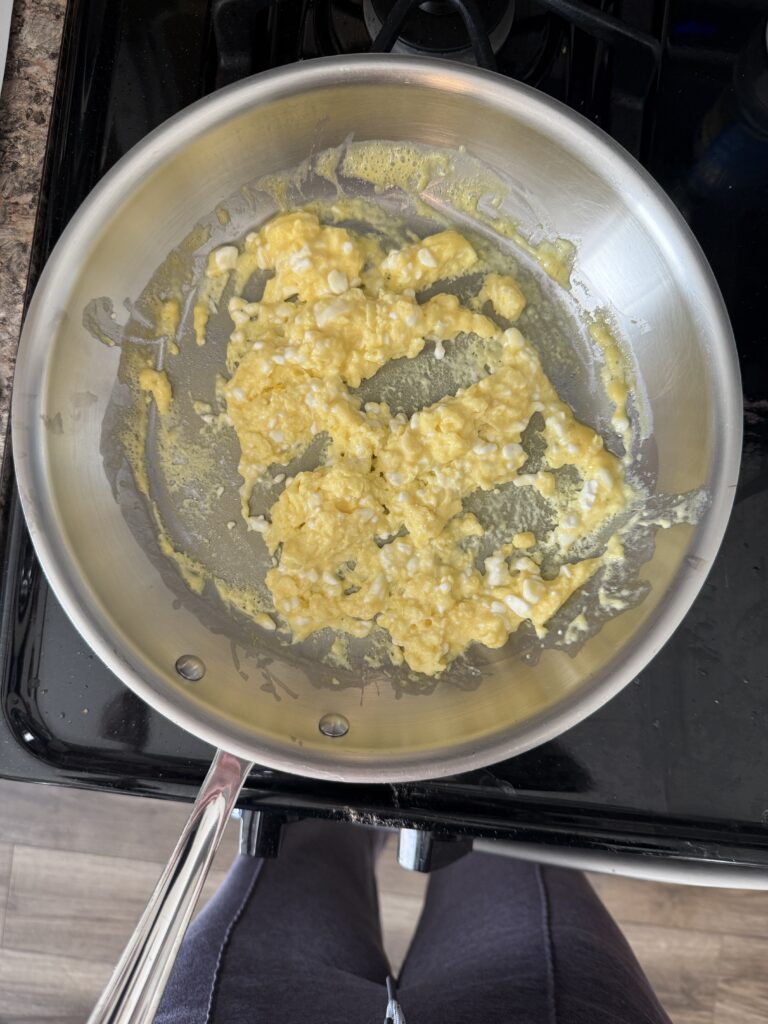
6. Season near the end
Add pinches salt and pepper during the last one to two minutes as desired.
Salt too early draws out water.
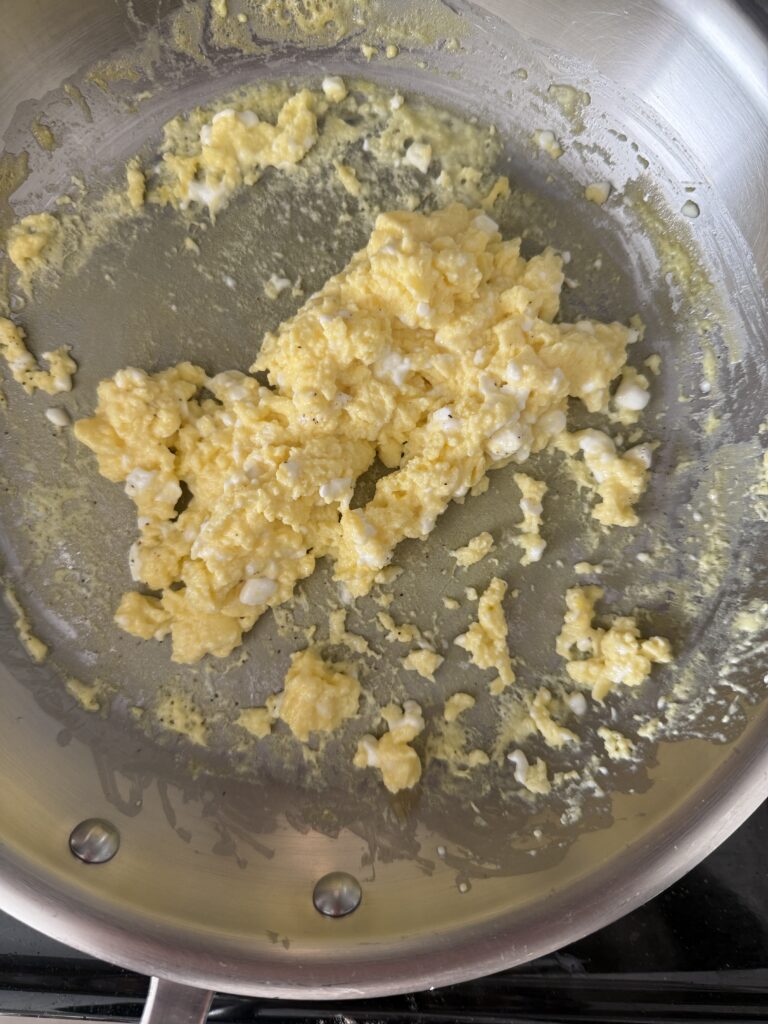
7. Turn off the heat and let the residual warmth finish cooking
This final 1-2 minutes is what gets everything fully cooked without drying the eggs out.
8. Look for the “cheese string” moment
While mixing the eggs, as soon as you see the cottage cheese melted enough for strings appear, that means everything has melted perfectly — immediately remove from heat.
9. Plate immediately
Soft scrambled eggs shift texture quickly and will continue to cook if you leave them in the pan. As soon as they’re perfect, get them onto a plate to cool for a minute and serve.
Common Mistakes (And How to Avoid Them)
Getting soft scrambled eggs right is all about heat control and timing. Here’s what trips people up:
Cooking on too-high heat → Eggs cook too fast and turn rubbery. Keep your burner on low to medium-low. A gentle sizzle is what you want, not a loud one.
Stirring constantly → This breaks up the curds too much. Stir slowly, let the eggs rest between folds, then stir again gently.
Salting too early → Salt draws out water and makes the eggs watery. Add salt and pepper during the last 1-2 minutes of cooking.
Walking away → These eggs need attention. Low and slow means you’re there the whole time, folding gently and watching the texture.
Leaving them in the pan too long → Eggs keep cooking from residual heat. Turn off the burner before they’re fully done, then plate immediately.
The cottage cheese keeps things forgiving, but heat control still matters.
Tips for Getting the Texture Perfect
- Keep the heat low (below medium is your friend)
- Stir slowly
- Don’t walk away
- Salt and pepper at the end
- Turn off the burner before they’re done cooking through
- Plate immediately
The cottage cheese keeps things forgiving, but heat control still matters.
How to Serve Scrambled Eggs with Cottage Cheese (Breakfast Combo Ideas)
These eggs are great on their own, but they also pair well with almost anything. Here are some of my favorite combinations:
For a quick, high-protein breakfast:
- Soft scrambled eggs + Greek yogurt + berries
- Eggs on a toasted everything bagel with cheese and bacon
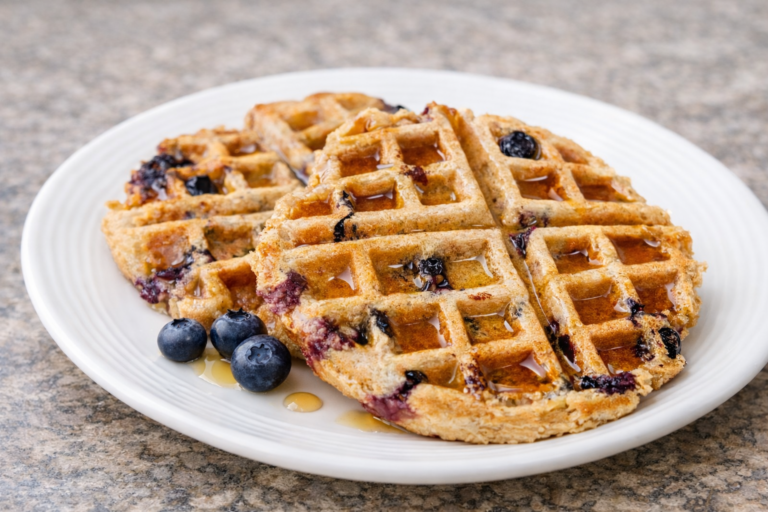
- Eggs with a waffle and fresh fruit
For a cozy, leisurely morning:
- Eggs with buttered toast and orange marmalade
- Eggs with oatmeal and a banana
- Eggs paired with a toasted asiago bagel with cream cheese
For toddlers (or picky eaters):
- Eggs + waffles + a small bowl of honey-infused Greek yogurt
- Eggs + banana + croissant
- Eggs with fruit cut into small pieces on the side
What works well:
- The creamy texture pairs perfectly with crunchy toast or bagels
- The mild flavor makes them versatile — sweet or savory sides both work
- They’re soft enough for young kids but satisfying enough for adults
Coffee is non-negotiable, obviously.

Perfect Soft Scrambled Eggs With Cottage Cheese
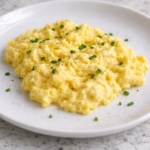
These soft scrambled eggs are creamy, custard-like, and fully cooked with no runny egg — thanks to one secret ingredient: cottage cheese. A quick, high-protein breakfast that takes just 10 minutes and turns out perfect every time.
- Prep Time: 2
- Cook Time: 8
- Total Time: 10
- Yield: 1
- Category: Breakfast, brunch, high-protein
Ingredients
- 2 large eggs
- 2 spoonfuls cottage cheese (whole milk or 2%)
- 1 teaspoon butter
- Pinch of salt
- Freshly ground black pepper
Instructions
- In a small bowl, whisk together the eggs and cottage cheese until mostly smooth.
- Warm a nonstick pan over low to medium-low heat.
- Add the butter and let it melt without browning.
- Pour in the egg mixture. You should hear a gentle sizzle — not a loud one.
- Once the eggs begin to set, stir slowly with a rubber spatula. Fold the eggs gently and let them rest briefly between stirs.
- Continue cooking for 8–10 minutes, stirring occasionally, until the eggs are soft, creamy, and forming small curds.
- Season with salt and pepper during the last 1–2 minutes of cooking.
- Turn off the heat and let the residual warmth finish the eggs.
- As soon as you notice subtle “cheese strings” from the melted cottage cheese, remove from heat and plate immediately.
Notes
- Cottage cheese melts completely — no visible pieces in the finished eggs.
- Cooking low and slow is the key to soft, fully cooked eggs.
- Add salt near the end to prevent excess liquid.
- Whole milk cottage cheese gives the richest texture, but low-fat works too.
- Serve with waffles, fruit, yogurt, toast, or on a bagel sandwich.
FAQs
Can you put cottage cheese in scrambled eggs? Yes! Cottage cheese melts completely into scrambled eggs and makes them soft and creamy without any runny liquid. You can’t taste the cottage cheese at all in the finished dish.
How much cottage cheese should I add to scrambled eggs?
I use about 2 spoonfuls of cottage cheese (roughly one heaping spoonful per egg). Honestly, I eyeball it every time — you can add more if you want them extra creamy or less if you’re just starting out. It’s pretty forgiving.
Can I add cottage cheese to scrambled eggs after cooking? No, you need to whisk the cottage cheese in with the raw eggs before cooking. That’s what helps it melt and create that creamy texture.
Do soft scrambled eggs with cottage cheese taste like cottage cheese?
Not at all. The cottage cheese melts completely and just adds creaminess and protein. The eggs taste like really good scrambled eggs.
Are these eggs runny at all?
Not at all. They’re soft, creamy, and fully cooked.
Can I use low-fat cottage cheese?
Yes, but whole milk gives the best texture.
Are these high protein?
Yes — cottage cheese adds a big boost.
Final Thoughts
These soft scrambled eggs are warm, nourishing, and grounding — especially when mornings feel chaotic.
They’re soft without being runny, creamy without being heavy, and fully cooked without dryness.
Cottage cheese is the secret to getting that texture right every single time.
Once you try this method, you’ll never go back.

Get the Weekly Wellth Newsletter
Stay up to date & receive the latest posts in your inbox.