



My Morning Coffee Ritual (And How I Kept It When Coffee Started Affecting My Health)
A morning coffee ritual is rarely just about coffee.
It’s about structure.
It’s about predictability.
It’s about starting your day on purpose instead of reaction.
For me, coffee has always been something I genuinely enjoy — the smell, the taste, the differences between beans, the way espresso feels sharper than drip. If I could drink more of it without consequence, I would.
But at some point, coffee stopped feeling neutral.
My heart raced. My thoughts sped up. What used to feel energizing started feeling destabilizing.
If you’ve ever wondered whether your morning coffee ritual could be affecting your health, especially your anxiety levels, the short answer is: it can. I unpacked the physiology separately in Why Does Coffee Suddenly Make Me Anxious?
This article is about something else.
It’s about how to keep your morning coffee ritual — even when caffeine becomes complicated.
What My Morning Coffee Ritual Really Is
When people talk about a morning coffee ritual, it can sound aesthetic. Slow pours. Journals. Perfect lighting.
Mine is simpler than that.
It’s the smell of freshly brewed coffee before the house is fully awake.
It’s wrapping both hands around a warm mug.
It’s that first sip before emails, decisions, logistics, or noise begin.
The ritual isn’t about productivity. It’s about orientation.
It’s the moment I shift from sleep to self. From reactive to intentional.
For years, I didn’t think much about it. I just knew I loved coffee — deeply. The smell. The taste. The experimentation. I’m particular about too sweet, too bitter, too weak, too acidic. I genuinely enjoy trying different roasts, different brew methods, different cafés. If my body tolerated unlimited coffee, I’d probably drink more just for the experience.
But the ritual itself? That’s the constant.
And it travels with me.
One of my favorite parts of any trip is finding a local coffee shop on the first morning.
That first cup in a new city is how I orient myself.
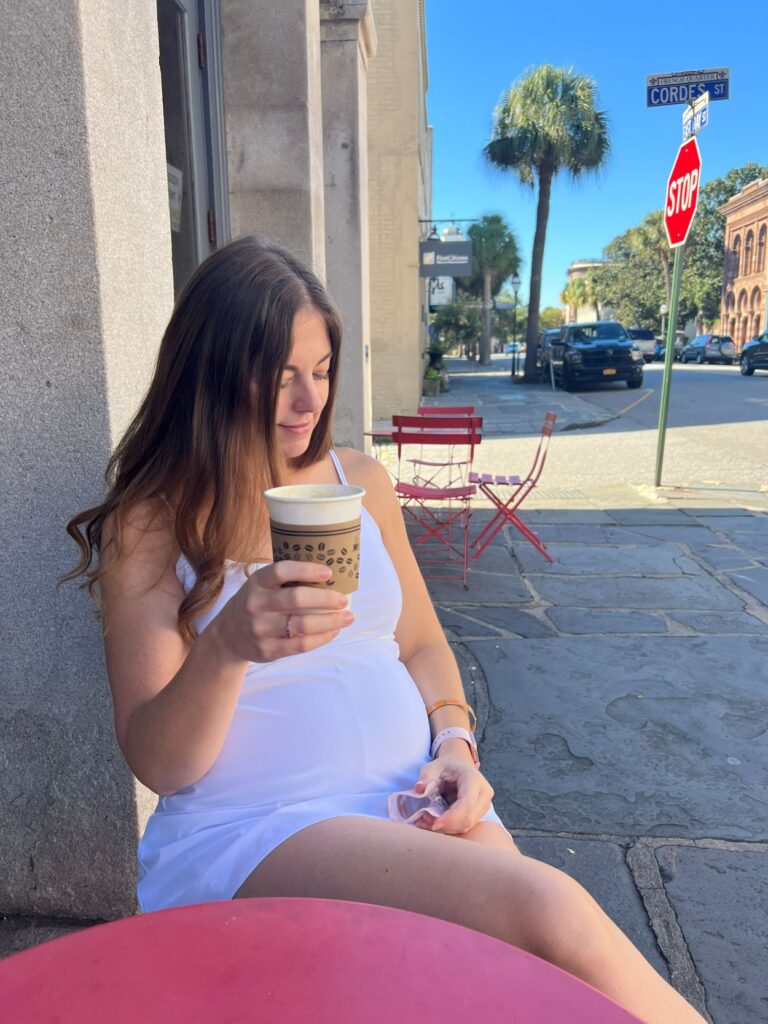
Whether it’s waking cobblestone streets of Charleston with a cup in hand, enjoying a cup while the Vegas strip wakes up, sipping a Chicory coffee at Cafe Du Monde, or a home brewed cup on a balcony overlooking Myrtle Beach, the setting changes — but the pause doesn’t. Coffee is how I arrive.
If you’ve read my travel pieces or browsed my travel archive, you’ll notice coffee shows up constantly. Not because I’m chasing caffeine — but because I’m protecting the ritual.
That first cup anchors the day. It tells my nervous system: we’re here. We’re steady. We begin from ourselves.
And that’s why it mattered so much when my body started pushing back.


Why Your Morning Coffee Ritual Feels So Important
When people defend their coffee habit, they’re not defending caffeine.
They’re defending the ritual.
A ritual does three things for your nervous system:
- It reduces decision fatigue.
- It creates a predictable transition into the day.
- It gives you a moment of control before demands begin.
In a life full of variables — work, children, messages, logistics — that predictability matters.
But for many of us, a morning coffee ritual is even deeper than that.
It’s identity.
It’s orientation.
It’s how we arrive in our own day before the world arrives for us.
That’s why it doesn’t disappear when you travel — it adapts.
The ritual is the anchor.
And if coffee starts affecting your body negatively, it can feel like you’re losing more than a drink. You’re losing that anchor.
That’s why quitting entirely often feels disproportionate.
When Coffee Starts Affecting Your Health
Caffeine stimulates cortisol. It increases heart rate. It amplifies existing stress.
If your sleep is inconsistent, your workload is high, or your nervous system is already taxed, your tolerance can shift.
That doesn’t mean coffee is “bad.”
It means your capacity changed.
And here’s the key distinction:
You don’t have to abandon your morning coffee ritual just because your caffeine tolerance changed.
You need to adjust the intensity, not eliminate the structure.
The Difference Between Ritual and Stimulation
This is the most important shift.
Coffee is a stimulant.
A morning coffee ritual is a container.
The container includes:
- The mug
- The timing
- The pause
- The sequence
- The predictability
Once you separate those from the caffeine dose, you gain flexibility.
If your ritual is working but your body is reacting, the solution isn’t necessarily quitting.
It’s recalibrating.
How to Maintain Your Morning Coffee Ritual (Without Overstimulating Yourself)
If you love your morning coffee ritual but suspect caffeine is impacting your health, here are practical adjustments that preserve the ritual while reducing the load.
1. Adjust the Dose Before You Eliminate
Try:
- Half-caf instead of full strength
- A single shot instead of a double
- A smaller cup
- Brewing slightly weaker
Many people jump from “full strength” to “nothing.” There’s room in between.
2. Change the Timing
Caffeine on an empty stomach hits harder.
Waiting 60–90 minutes after waking, or drinking coffee after food, can significantly reduce jitteriness and anxiety.
You keep the ritual — you just move it slightly.
3. Change the Brewing Method
Different brewing methods feel different physiologically.
Espresso is concentrated and fast.
Drip tends to feel steadier.
Pods are predictable and easy to portion.
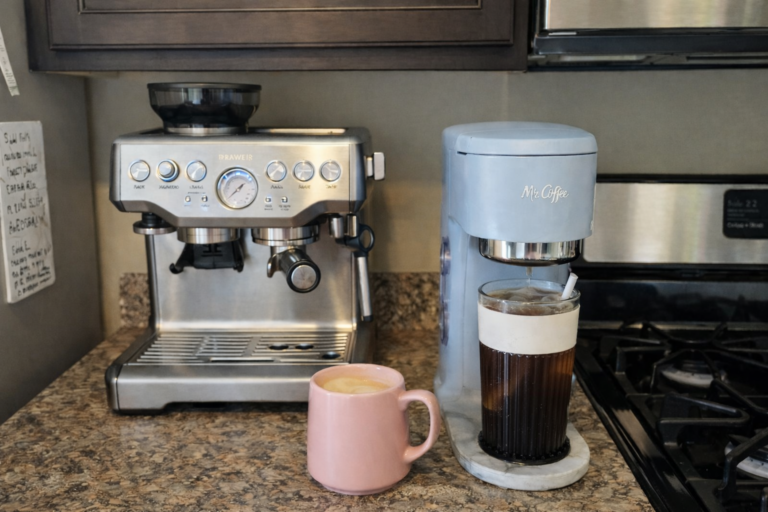
I rotate brewing methods at home based on how my body feels that week — something I explain more fully in Why I Own Multiple Coffee Machines.
The point isn’t collecting appliances.
It’s reducing intensity without losing structure.
4. Preserve the Sensory Cues
If caffeine is the issue, protect the sensory ritual:
- Use your favorite mug.
- Keep the same brewing sequence.
- Sit in the same place.
- Maintain the pause.
The nervous system responds to repetition and familiarity. That’s what stabilizes you.
You can even substitute:
- Decaf
- Low-acid blends
- Herbal coffee alternatives
- Plain hot water in the same mug
The ritual still signals safety.
5. Match Intensity to Your Stress Load
Some weeks your nervous system can tolerate espresso.
Some weeks it can’t.
Instead of forcing consistency, respond to context:
- High-stress week? Lower the caffeine.
- Slept well and feel calm? Enjoy the stronger cup.
- Summer heat? Iced coffee may feel lighter.
- Winter morning? A slower, warmer brew may feel grounding.
Flexibility is not inconsistency.
It’s intelligence.
Why This Matters Beyond Coffee
If your morning coffee ritual falls apart, it can ripple into other areas.
Your workout routine.
Your eating habits.
Your productivity systems.
I’ve seen this pattern before. When people start eating healthier and suddenly feel worse, they assume the solution is to quit.
Often, it’s just a matter of adjusting intensity and giving the body time to recalibrate.
Coffee works the same way.
The goal isn’t perfection.
It’s capacity.
What a Sustainable Morning Coffee Ritual Looks Like
A sustainable morning coffee ritual:
- Feels regulating, not frantic
- Creates structure without dependence
- Adjusts with your life stage
- Supports your health instead of competing with it
You can love coffee deeply and still respect your nervous system.
You can be particular about taste and still scale back intensity.
You can enjoy espresso some days and choose something gentler on others.
The ritual is yours.
The dose is adjustable.
The Real Win
The real win isn’t eliminating coffee.
It’s learning how to preserve what matters without overriding your body.
My morning coffee ritual still exists. It just evolved.
And that evolution feels healthier than clinging to a habit that no longer fits. Because the point was never caffeine.
It was starting the day grounded.
And you can absolutely keep that — even if your body asks for less stimulation.





Get the Weekly Wellth Newsletter
Stay up to date & receive the latest posts in your inbox.