



Is a Personal Trainer Worth It? What Investing $25,000 In One Taught Me
Is a personal trainer worth it? Ten years ago, I decided to find out.
I’d been an athlete my whole life—basketball, lacrosse, even coaching women’s teams. I knew what to do in the gym. I just wasn’t doing it.
I wanted to give myself a real shot at being in the best shape of my life… and maybe finally get the “bikini body” I’d always chased.
Hiring a trainer wasn’t easy financially. I had to rearrange my budget to make it work. But if I said health was a priority, it was time to start living like it.
So I gave myself a few months to see what would happen.
That was ten years ago.
Looking back, I didn’t need better workouts or more knowledge.
I needed a system—one that made showing up easier than quitting.
And that ended up being worth every dollar.

Zero Decision Fatigue Is Worth Paying For
Most people think they’re paying for expertise—someone to write a program, check form, and count reps.
What you’re really paying for is the luxury of not having to think.
My session was scheduled. The workout was planned. Someone was waiting. I didn’t have to decide if I’d go, or what I’d do once I got there. I just showed up and worked.
In a life full of decisions—work, meals, childcare, schedules—having one hour where someone else leads is a relief.
That’s worth paying for.
Accountability Beats Willpower Every Time
You don’t need more willpower. You need accountability.
Some days, the only reason I showed up was because my trainer expected me to.
That’s it. Not because I was “motivated.” Not because I loved burpees. Because someone was expecting me, and I’d paid for it.
That’s the whole point. The financial commitment and someone waiting for you creates built-in follow-through.
It made it so much harder to skip out, because I’d be letting not just myself down, but someone else too.
Consistency Is Supposed to Feel Boring
In nine years, I didn’t have one cinematic, life-changing workout. No montage moment. No “I finally did it” tears in the mirror.
What I had was hundreds of ordinary sessions.
And that’s exactly what consistency looks like.
It’s not exciting. It’s repetition. It’s showing up on the days you’d rather not and realizing months later that you’re stronger, calmer, and more confident.
That lesson bled into everything else—parenting, business, and health.
Boring isn’t failure. Boring is what actually gets results.
Your Trainer Can’t Outwork Your Lifestyle
This is where people get frustrated and start saying trainers “aren’t worth it.”
Here’s the truth: no trainer can fix poor sleep, chronic stress, or a diet that’s working against you.
The 30–60 minutes you spend in the gym matter way more when the other 23 hours aren’t undoing it.
So if someone asks, “Is a trainer worth the money?” the real answer is: yes — if you’re willing to do your part outside the session.
Otherwise you’re just paying someone to watch you tread water.
Training Forces You to Eat Better
Working out consistently makes you pay attention to what you eat—fast.
Not out of discipline, but because feeling awful during a session is motivation enough.
You know the feeling when you drink or eat crap. Bloated. Sluggish. Uncomfortable in ways I don’t need to spell out.
Working out is already hard. Why make it harder by showing up dehydrated, under-fueled, or hungover?
It was all just to avoid that pain.
So, I started paying attention to what I ate the night before my sessions.
I stopped eating out and drinking nights before I me with my trainer. I avoided foods that made me feel terrible.
You Still Have to Fuel Your Body
I still had to eat something! Starving yourself won’t make you strong.
Cutting carbs might drop the number on the scale, but it drains your energy.
Training taught me that eating well isn’t about restriction — it’s about giving your body what it needs to actually use the work you’re putting in at the gym.
It was obvious at the gym when I had properly fueled my body. I had more energy, faster recovery, and better results—inside and outside the gym.
This applies whether you’re working with a trainer or not. If you’re putting in the work but eating healthy, you’re just spinning your wheels.
These are my go-to protein smoothies to make my workouts matter: 3 Post-Workout Protein Smoothie Recipes →
Once You Have a Foundation, Everything Gets Easier
Once you have a solid baseline routine, getting “in shape” for something specific becomes surprisingly simple.
When I wanted to tone up or prepare for an event, I didn’t start from zero.
I already knew how to fuel my workouts. I already knew what made me feel good and what didn’t.
A few small tweaks—cleaner meals, an extra session, a bit more consistency—and my body responded quickly.
And it worked. Fast.
That foundation is why I could train for my first 100-mile bike ride in less than 3 months.
That’s the power of having a foundation.
Once you’ve built the system, maintaining it becomes easy.
Training Grounded Me Through Everything
A lot can happen over nine years.
My personal trainer and my sessions were there when life happened: when I lost a job, when a relationship ended, when I lost a family member, through my first pregnancy, and after I had my son.
It was an appointment with myself — a safe place to check out, move, and breathe.
Some days I needed to push hard; others, just to move.
A good trainer knows the difference—when to push and when to hold space.
That time became an anchor. It kept me steady when everything else around me felt uncertain.
It also gave me community—people who showed up alongside me, who are still friends today.
Those years built more than muscle. They built community, resilience, and trust in my own strength.
What A Personal Trainer Actually Costs
Let’s talk numbers, because this is where people psych themselves out.
Here’s what I paid:
- $25/month gym membership (access to the gym outside of my trainer)
- $25 per session (30 minutes, twice a week)
Caveat: I got a friends-and-family discount, but even at my trainer’s full price, $30/session, it’s still doable.
That’s about $225/month — roughly the same as a boutique studio membership like Barry’s, SoulCycle, or a ClassPass subscription.
Over nine years? Around $25,000 total.
Yes, it’s a lot. And not everyone can or should spend that.
But if you understand the value in prioritizing your health for success, this is a big way to solidify that.
And if you’re already investing in fitness—classes, memberships, wellness trends—it’s worth asking: What actually keeps me consistent?
Typical cost ranges:
- 1-on-1 training: $40–$150/session
- Semi-private / small group: $30–$60 per person
- Studio memberships with coaching built in: often the best cost-to-accountability ratio
If you can afford it, consistency might be the best return on investment you’ll ever get.
What About the Cost of Not Being Strong?
People rarely factor in what not being strong costs.
Physical therapy: $100+ a session.
Chiropractor visits: $75–$150.
Missed work, pain, fatigue—it all adds up.
Being strong isn’t just about looking good. It’s about being functional — at work, at home, in your actual life.
Can you lift your toddler without your back seizing up? Can you carry groceries, move furniture, or get through a day without feeling exhausted? Can you play with your kids without getting winded? Get through a long day with energy?
It’s why I preach the importance of strength training for women, especially moms.
Read More About That Here: 7 Reasons to Lift Weights →
You’re going to spend money on your body one way or another.
The question is whether you’ll invest in strength now or pay for weakness later.
The Results From Working With a Personal Trainer
When I started, I was out of shape.
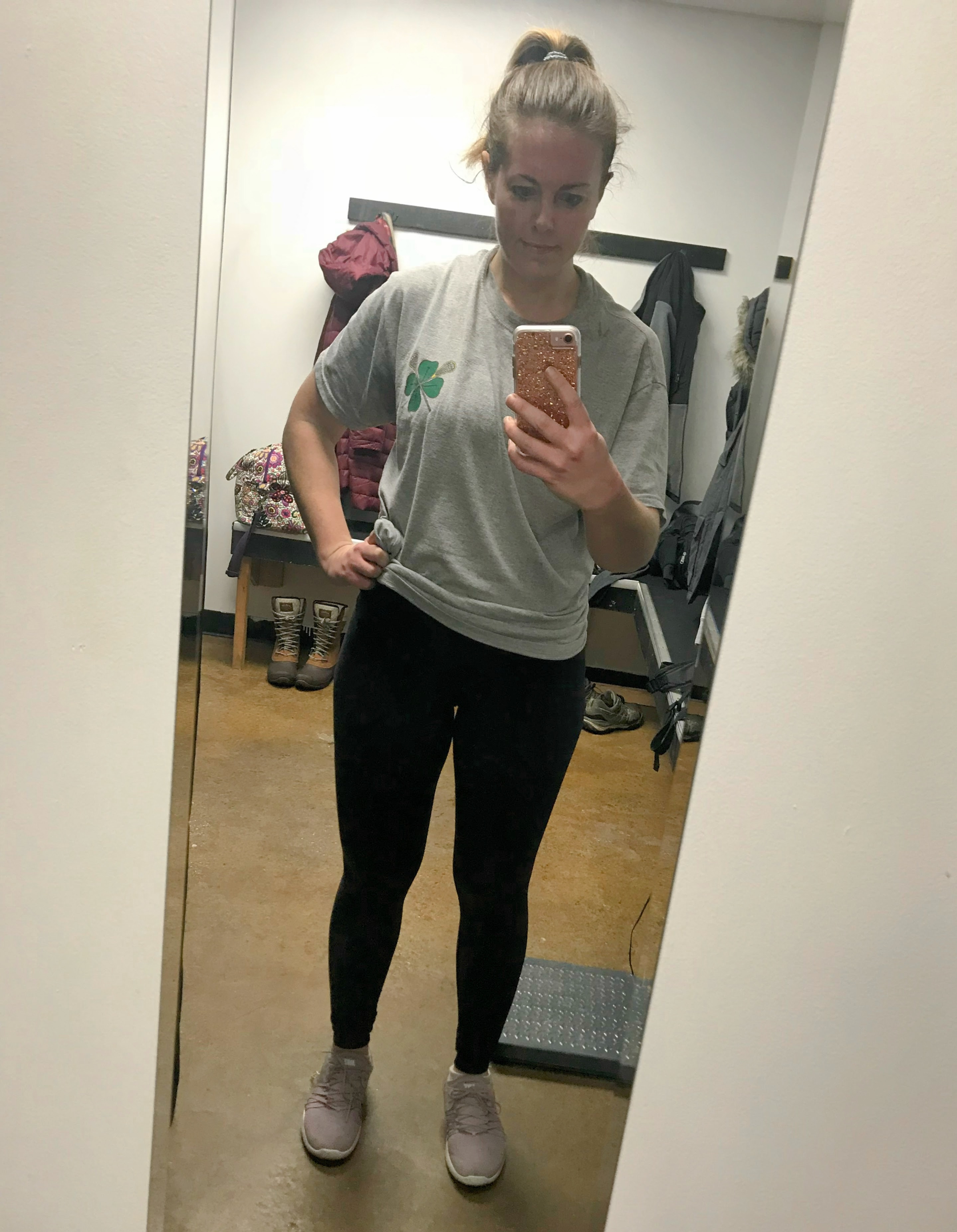
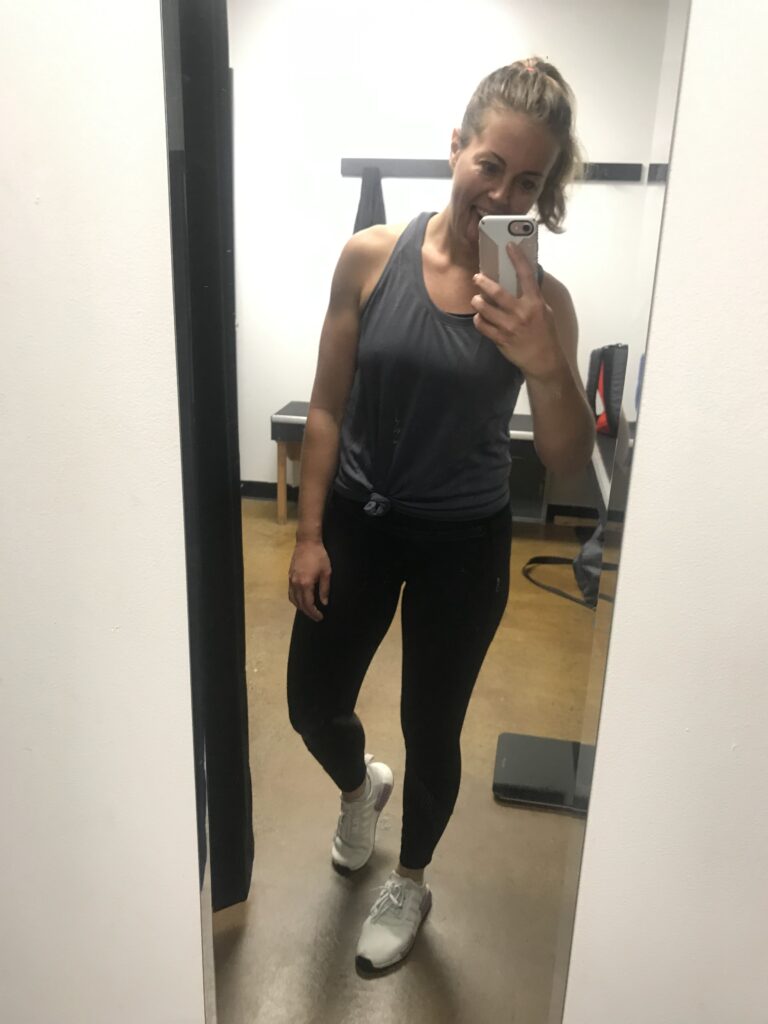
Within 3-4 months, I dropped from 151 lb to 139 lb and 25 % to 21 % body fat.
But the numbers were never the point. The point was that it wasn’t elusive anymore.
My body was no longer a mystery. I knew exactly what I needed to do if I wanted to lose weight or get stronger.
The consistency of personal training gave me a baseline to know when something was off with my health — if I felt unusually tired or weak, I knew it wasn’t normal for me.
And I got strong. Like, actually strong. That was the best benefit.
Still today, I can squat and carry my toddler with one arm while juggling groceries with the other. I can lift heavy things without hesitation. I am capable in my own body.
That’s what nine years of consistency gave me: not just a number on the scale, but a deep understanding of my own body and what it’s capable of.
It Doesn’t Have to Be a Personal Trainer
After nine years of 1-on-1 training, I eventually transitioned to Barre3—not because training stopped working, but because I moved.
My trainer, 25+ min away, was no longer convenient, and as much as I valued what we’d built, I knew from experience that if it’s out of your way, it won’t last.
So I found something new that still checks all the same boxes: supportive, convenient, and keeps me consistent.
For someone else, it might be CrossFit, Pilates, small-group strength, or an online program with live accountability.
The format doesn’t matter. The principle does: structure + support + accountability = consistency.
Find the thing that makes showing up easier than not showing up. That’s it. That’s the whole game.
What I Actually Paid For: A Sustainable Workout System
I thought I was paying for workouts. For someone to tell me what to do in the gym.
But that’s not what kept me coming back for nine years.
What I really paid for was a sustainable system for health and fitness that worked:
- Zero decision fatigue — I just showed up.
- Accountability — someone expected me to be there.
- Consistency — hundreds of small, ordinary sessions that added up.
- Better habits — eating to fuel, not restrict.
- A foundation — no more starting from scratch.
- An anchor — something steady through every life season.
All of those things together? That’s what a system is.
Not motivation. Not willpower. Not perfect discipline.
James Clear says it best: “You don’t rise to the level of your goals; you fall to the level of your systems.”
For nine years, personal training was my system. It made showing up easier than quitting. It removed the barriers between intention and action.
That’s what I actually paid for.
And that’s something no app, no Instagram fitness plan, and no motivational quote can replace.
How to Find the Right Trainer (So the System Works For You)
A great trainer doesn’t just tell you what to do — they help you build the system that keeps you consistent.
A bad one makes working out feel like a chore.
Here’s what matters most:
1. They’re aligned with you
Find someone who listens and adjusts instead of pushing a one-size-fits-all plan.
If you’re a woman, you might prefer someone who understands cycles, energy shifts, or postpartum recovery — but what matters more is empathy and communication.
I trained with a male coach for nine years because he knew how to meet me where I was, not where he thought I should be.
2. They’re convenient
If it’s out of your way, it won’t last.
Choose a gym or studio that fits into your real life — close to home, work, or daycare — so showing up feels natural, not like another errand.
3. They fit your budget (and still make you show up)
If it’s too cheap, you won’t care when you skip.
If it’s too expensive, you’ll resent it.
The right price point gives you enough skin in the game to stay consistent without adding stress.
4. They have real experience
Certifications matter, but curiosity and care matter more.
A good trainer keeps learning, explains why you’re doing something, and helps you understand your own body instead of just counting reps.
If a trainer doesn’t check these boxes, keep looking.
The right one doesn’t just make you sweat — they make consistency easier.
That’s the real value.
So… Is a Personal Trainer Worth It?
After nine years and $25,000 invested, here’s my answer:
A personal trainer is absolutely worth it.
Whether your goal is building strength, losing weight, improving cardiovascular health, or simply feeling better in your own body, it becomes possible because of the system that ensures you show up.
A system that removes friction — the planning, the decisions, the second-guessing — until there’s virtually no way not to do it.
It’s more than motivation or another workout plan.
You’re paying for structure, support, and accountability — the things that make progress inevitable.
That’s why. Once you have a system, results follow.
Because consistency always wins — over motivation, over willpower, over every excuse — and it keeps your health a priority so you can succeed in every other area of your life.






Get the Weekly Wellth Newsletter
Stay up to date & receive the latest posts in your inbox.