


Dirty Dozen and Clean 15: How to Choose Organic Produce on a Budget (2025)
Dirty Dozen and Clean 15 lists are designed to help you make smarter decisions about organic produce — but for many people, they end up doing the opposite, turning grocery shopping into a source of stress, guilt, and confusion.
You’re trying to eat well. You’re balancing a budget. You might be cooking for yourself, a family, or both. And suddenly you’re standing in the produce aisle wondering whether buying conventional strawberries means you’re “undoing” all your other healthy habits.
That pressure adds up fast.
This guide walks through what the Dirty Dozen and Clean 15 actually mean, how to use them realistically, and how to make organic choices that support your health without making food more complicated or expensive than it needs to be.
Note: The 2026 Dirty Dozen and Clean 15 list has not been released yet. This article reflects the most recent available data and will be updated when the new list is published.
What the Dirty Dozen and Clean 15 Actually Mean
The Dirty Dozen and Clean 15 lists are published each year by the Environmental Working Group (EWG).
They rank fruits and vegetables based on detected pesticide residue levels when grown conventionally, using data from the USDA and FDA.
What often gets lost in online discussions is what these lists aren’t saying.
They are not:
- A list of foods you should avoid
- A declaration that conventional produce is unsafe
- A mandate to buy everything organic
Instead, they’re meant to help people prioritize — especially when buying all organic produce isn’t realistic.
A few important clarifications:
- The lists measure relative pesticide residue, not toxicity levels
- Produce on the Dirty Dozen list is still considered safe to eat
- Washing, peeling, and cooking still reduce exposure
- The health benefits of eating fruits and vegetables consistently far outweigh the risks of pesticide residue
Seen this way, the Dirty Dozen and Clean 15 are decision-support tools — not moral rules about food.
The 2025 Dirty Dozen (And What to Do If You Can’t Buy Organic)
The Dirty Dozen includes fruits and vegetables that tend to retain higher levels of pesticide residue when grown conventionally.
2025 Dirty Dozen list:
- Spinach
- Strawberries
- Kale, collard & mustard greens
- Grapes
- Peaches
- Cherries
- Nectarines
- Pears
- Apples
- Blackberries
- Blueberries
- Potatoes
This list often triggers anxiety — but context matters.
If you can buy organic versions of these foods, especially the ones you eat often or eat raw, that can reduce pesticide exposure. But if organic isn’t available or affordable, that does not mean you should avoid these foods altogether.
Here’s what matters more than organic status alone:
- Eating fruits and vegetables regularly
- Preparing them in ways you actually enjoy
- Choosing options that fit your routine and budget
There are also practical workarounds:
- Washing and scrubbing produce can reduce surface residue
- Frozen versions are often cheaper and easier to find organic
- Seasonal buying can lower the cost of organic produce
- Prioritizing just one or two items is still meaningful
If your budget allows for only a few organic swaps, using the Dirty Dozen as a short list — not a strict rulebook — is exactly how it’s intended to work.
The 2025 Clean 15 (Where Organic Usually Isn’t Worth the Extra Cost)
The Clean 15 highlights fruits and vegetables that tend to have lower pesticide residues, even when grown conventionally.
2025 Clean 15 list:
- Pineapples
- Sweet corn (fresh or frozen)
- Avocados
- Papaya
- Onions
- Sweet peas (frozen)
- Asparagus
- Cabbage
- Watermelon
- Cauliflower
- Bananas
- Mangoes
- Carrots
- Mushrooms
- Kiwi
This list exists for one important reason: to give you permission.
If you’re buying these foods conventionally because they’re more affordable, easier to find, or simply what’s available — you’re still making a health-supportive choice.
For many people, the Clean 15 is the most empowering part of this framework. It removes pressure, simplifies decisions, and helps keep grocery shopping from turning into an all-or-nothing exercise.
How to Use the Dirty Dozen and Clean 15 on a Real Grocery Budget
This is where advice often becomes unrealistic — so let’s keep it grounded.
If you can only buy 2–3 organic items
Start with:
- Foods you eat multiple times per week
- Items eaten raw (like berries or leafy greens)
- Foods that actually show up in your real meals, not aspirational ones
Buying organic spinach you use every day makes more sense than buying organic fruit you rarely finish.
If you shop at budget-friendly stores
Stores like Aldi, Trader Joe’s, Costco, and local markets often rotate organic produce. Availability changes weekly, which means flexibility matters more than strict lists.
Checking the Dirty Dozen and Clean 15 before you shop helps you adapt on the fly instead of second-guessing every choice.
If frozen produce works better for you
Frozen fruits and vegetables are:
- Often less expensive
- Available year-round
- Picked at peak ripeness
- Lower-waste and easier to store
Frozen organic spinach, berries, or green beans can be a smart way to cover Dirty Dozen items without paying premium prices.
If everything feels overwhelming
Default to this simple principle:
Eating more fruits and vegetables consistently matters more than buying them organic every time.
Sustainability — financially and mentally — is part of health.
A Smarter Way to Think About Organic Produce Long-Term
Health isn’t built from one grocery trip. It’s built from patterns that repeat over time.
Choosing organic strategically can support those patterns — but so can:
- Staying within your budget
- Reducing stress around food choices
- Avoiding restriction-driven thinking
- Eating enough in the first place
If worrying about organic vs conventional makes eating well feel harder or more stressful, that stress may be doing more harm than the exposure you’re trying to avoid.
Good decisions are the ones that hold up in real life — not just on paper.
Will This Change in 2026?
Yes. The Dirty Dozen and Clean 15 lists are updated annually based on new testing data. Some items may shift year to year, but the overall structure remains consistent.
This article will be updated when the 2026 list is released so you can continue using it as a reliable reference — without having to start from scratch or relearn the framework.
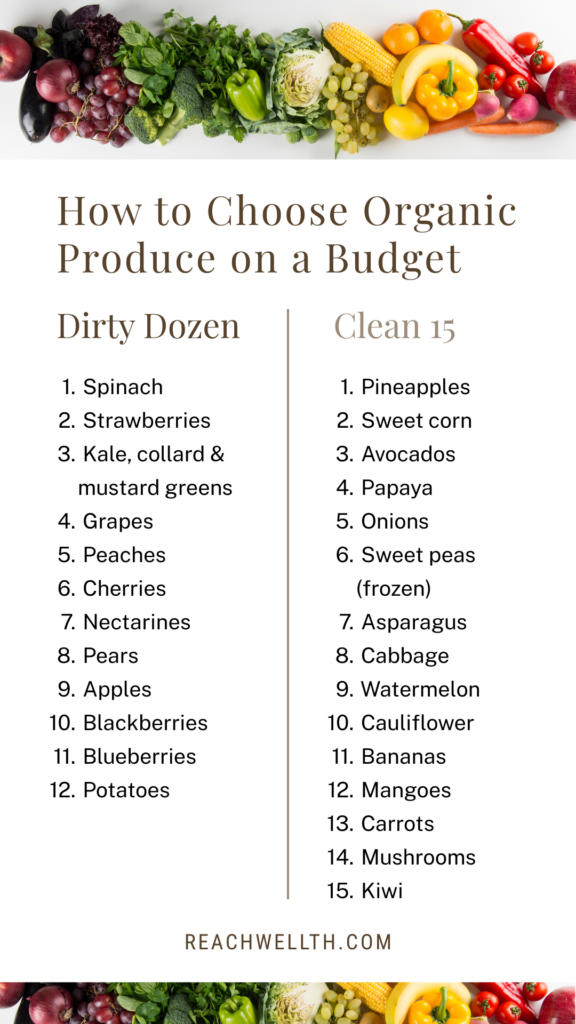
Quick Reference: Dirty Dozen vs Clean 15 Cheat Sheet
If you want an at-a-glance version to save or pin, the cheat sheet below summarizes when buying organic tends to matter most — and when it usually doesn’t.
Bottom Line
The Dirty Dozen and Clean 15 are tools — not rules.
Used thoughtfully, they help you spend your grocery budget where it makes the most sense. Used rigidly, they can turn food into something stressful and restrictive.
Aim for informed, repeatable choices that support your health over time. That’s what actually makes a difference.





Get the Weekly Wellth Newsletter
Stay up to date & receive the latest posts in your inbox.