



How to Catch Fruit Flies With Apple Cider Vinegar (and Keep Them From Coming Back)
To catch fruit flies with apple cider vinegar, you only need a small container, inexpensive filtered vinegar and one drop of liquid dish soap—but the trap is only half of the solution.
Fresh fruit on the counter is one of those simple things that makes healthy eating easier. You see the peaches, bananas or tomatoes, so you actually remember to eat them. Unfortunately, fruit flies appreciate the arrangement too.
Once they appear, they seem to multiply overnight—and there is a reason for that.
Fruit flies are attracted to fermenting produce and can complete their life cycle remarkably quickly. What begins as one or two tiny flies hovering near the fruit bowl can become an extremely annoying kitchen problem within days.
The good news is that you can catch fruit flies with apple cider vinegar and dish soap using a container you already own.
The better news is that you do not need to sacrifice your expensive bottle of raw, unfiltered apple cider vinegar to do it.
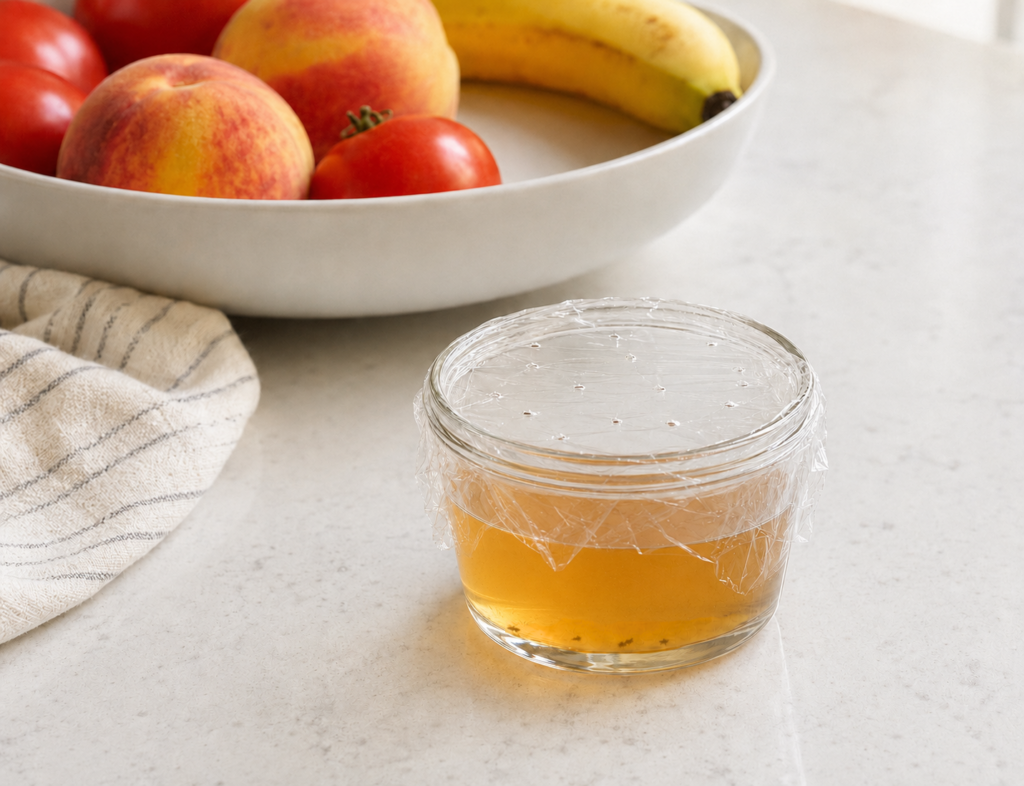
The Quickest Way to Catch Fruit Flies With Apple Cider Vinegar
Cheap, filtered apple cider vinegar is perfectly practical for this job. Add one small drop of regular liquid dish soap, set the trap near the area where you see the most activity and then address the food or residue that is allowing the flies to reproduce.
That last step matters. The vinegar trap catches the adult fruit flies you can see. Removing their breeding source is what keeps another generation from taking their place.
Pour approximately 1/4 cup—or about one inch—of apple cider vinegar into a small bowl, jar or drinking glass. Add one small drop of concentrated liquid dish soap and gently swirl the container without creating bubbles.
Leave the container open near the fruit bowl, trash can, recycling bin or sink where the flies are gathering. The fermented aroma of the apple cider vinegar attracts them, while the dish soap reduces the surface tension of the liquid. Instead of landing on the vinegar and flying away, the flies sink into it.
That is the entire trap.
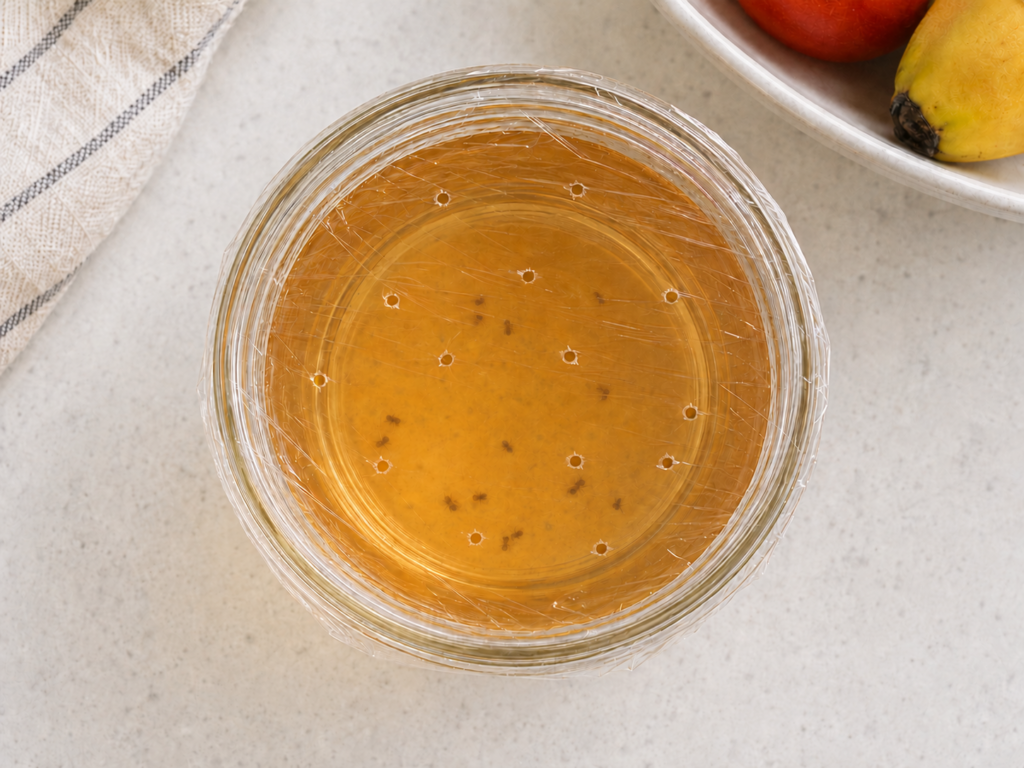
You can cover the container with plastic wrap and poke several small holes in the top if you prefer not to leave it open. The holes allow the flies to enter while making it harder for them to escape. However, plastic wrap is optional when the dish soap is doing its job.
What You Need
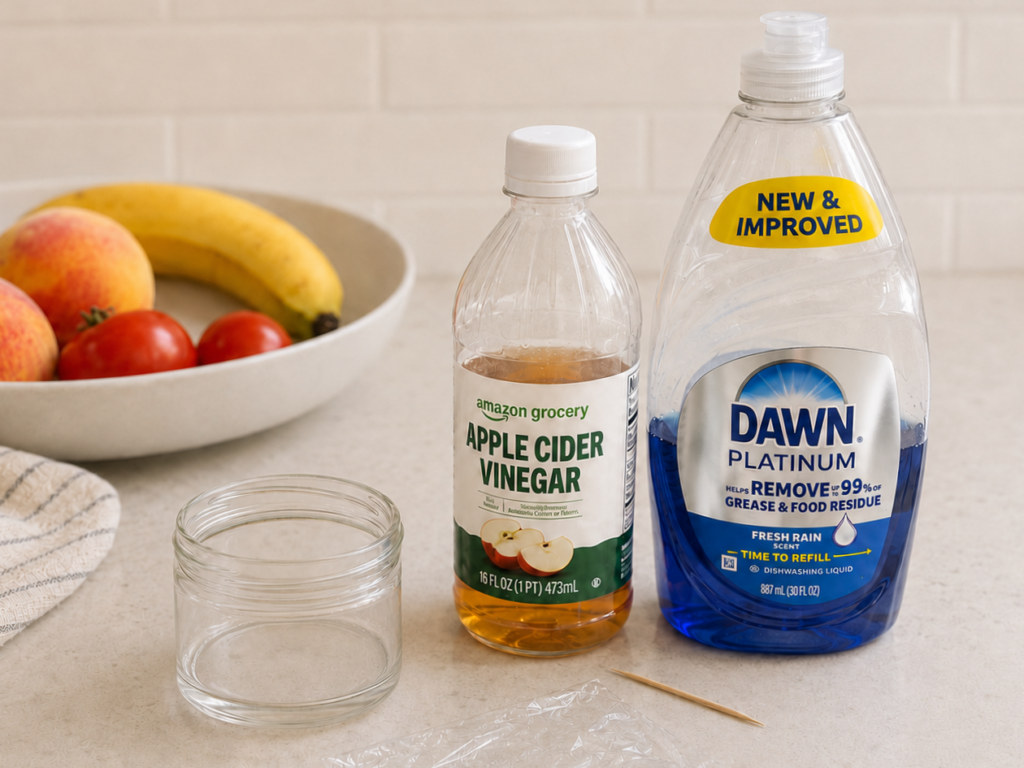
- 1/4 cup inexpensive, filtered apple cider vinegar
- 1 small drop of regular liquid dish soap
- A small bowl, jar or glass
- Plastic wrap and a toothpick, optional
Instructions
- Pour the apple cider vinegar into your container.
- Add one small drop of dish soap.
- Swirl gently once or twice. Avoid vigorously stirring or creating a layer of bubbles.
- Set the trap where you consistently see fruit flies.
- Check it daily and replace the mixture when it becomes crowded, dirty or no longer smells strongly of vinegar.
- Keep the container out of reach of children and pets, and wipe up any spills.
For a larger fruit fly problem, place two or three small traps near separate areas of activity rather than pouring more vinegar into one large bowl.
Why Does Apple Cider Vinegar Attract Fruit Flies?
Fruit flies are drawn to the smell of fermenting fruit because it signals a place to eat and lay eggs.
Apple cider vinegar has that sweet, fermented aroma, which makes it a convenient bait even when no spoiled fruit is sitting out.
The vinegar attracts the flies, but it is the dish soap that turns the bait into a more effective trap. Dish soap works as a surfactant, reducing the surface tension that would otherwise allow the tiny flies to stand on the liquid.
In other words, apple cider vinegar gets them to the bowl. Dish soap keeps them from leaving it.
Should You Use Filtered or Unfiltered Apple Cider Vinegar?
You do not need apple cider vinegar “with the mother” to make a fruit fly trap.
Raw, unfiltered apple cider vinegar may work, but there is no practical reason to use a more expensive wellness or cooking product when inexpensive filtered apple cider vinegar provides the fermented scent you need.
The consensus for homemade traps generally calls for apple cider vinegar without requiring a raw or unfiltered variety.
Filtered apple cider vinegar also has two small practical advantages: it is usually less expensive, and its clearer appearance makes it easier to see whether the trap is actually catching anything.
Save the good apple cider vinegar for salad dressing. The fruit flies can have the store brand.
Does It Matter Which Dish Soap You Use?
The essential feature is not the color, scent or brand of dish soap. It is whether the formula contains surfactants that effectively reduce the vinegar’s surface tension.
Many plant-based and naturally marketed dish soaps contain surfactants and may work perfectly well. However, formulas vary, and a mild product that works for washing dishes may not perform as consistently in a fruit fly trap.
If you tried the trap with a natural dish soap and the flies are landing on the vinegar without sinking—or simply hovering around the container—replace it with one small drop of a standard concentrated liquid dish soap.
You do not need a large squirt. Too much soap can overpower the vinegar’s aroma or create a foamy surface. Start with a 1-2 single drops and gently swirl it into the vinegar.
This is less about declaring one category of dish soap “good” or “bad” and more about using the product that reliably performs the job.
Why Is My Apple Cider Vinegar Fruit Fly Trap Not Working?
The recipe is simple, but a few details can determine whether you catch a dozen flies or watch them congregate around the rim.
You still have a more appealing food source
A bowl of vinegar may not compete with an overripe peach, sticky recycling container or forgotten potato. Put ripe produce in the refrigerator temporarily, throw away anything that is spoiling and wipe down the surrounding surfaces.
The dish soap is not breaking the surface tension
If the flies can land and take off again, try a different liquid dish soap. Use one small drop of a concentrated formula and swirl it gently through the vinegar.
You used too much dish soap
More is not necessarily better. A large squeeze can create excessive bubbles and interfere with the aroma that is supposed to attract the flies. Remake the trap using a fresh 1/4 cup of vinegar and only one drop of soap.
The trap is in the wrong place
Place it where the flies are already gathering. This is usually near countertop produce, the sink, the trash can, the compost container or recycling—not across the kitchen because the jar looks better there.
The plastic-wrap holes are too small or too few
If you covered the container and nothing is entering, add several more toothpick-size holes or remove the plastic wrap and try the open-bowl method.
The bait needs to be replaced
Apple cider vinegar loses aroma as it sits exposed. Replace the mixture every few days, or sooner if it becomes full of flies or food debris.
They may not be fruit flies
Not every tiny flying insect in the house is a fruit fly. Fungus gnats are commonly associated with damp houseplant soil, while drain flies often hover around drains and have broader, fuzzier-looking wings. If the insects completely ignore fermented bait, take a closer look at where they are gathering before repeatedly remaking the trap.
The Trap Is Only Half of the Solution
This is the part many fruit fly hacks leave out: trapping the visible adults will not eliminate an active breeding site.
Fruit flies lay their eggs on or near fermenting organic material. According to Nebraska Extension, potential sources include overripe or damaged produce, small amounts of beer or wine left in containers, garbage disposals, damp cleaning cloths and residue in trash or recycling bins.
After setting the trap, do a focused kitchen check:
- Refrigerate ripe fruit and vegetables for several days.
- Check stored onions and potatoes individually for one that has started to rot.
- Discard leaking, bruised or overripe produce.
- Wipe the counter underneath the fruit bowl and small appliances.
- Wash dishes rather than leaving them in the sink overnight.
- Rinse bottles and cans before placing them in indoor recycling.
- Empty and clean the trash and compost containers.
- Clean food residue from the sink strainer and garbage disposal.
- Wash or replace damp sponges, dishcloths and mop heads.
- Look underneath or behind countertop appliances for an unnoticed spill.
You do not need to dismantle the entire kitchen. Start with the places where food, moisture and fermentation are most likely to overlap.
Removing the source prevents new eggs from developing. The apple cider vinegar trap then catches the adult flies that remain.
How Long Does an Apple Cider Vinegar Fruit Fly Trap Take to Work?
You may see the first captured flies within several hours, particularly if the trap is placed close to the source. A more established problem can take several days to noticeably improve.
Do not judge the method solely by how many flies are in the bowl after the first hour. Check the trap the following morning, eliminate competing food sources and continue refreshing the bait while the remaining adults disappear.
If you are still seeing the same level of activity after several days, look again for a hidden breeding source or confirm that you are dealing with fruit flies rather than another small household pest.
Can You Catch Fruit Flies Without Apple Cider Vinegar?
Yes. Other fermented or sweet-smelling liquids can attract fruit flies, including leftover wine, beer or fruit juice. Add one small drop of liquid dish soap using the same method.
Filtered apple cider vinegar is simply convenient because it is inexpensive, shelf-stable and strongly associated with the fermented fruit smell the flies seek. White vinegar is generally less appealing because it lacks the same fruity aroma.
If you do not have apple cider vinegar, a small amount of old wine is probably the easiest substitute. It is also a useful way to repurpose the final splash in a bottle that is no longer worth drinking.
A Small Fix That Makes Fresh Food Easier
Fruit flies are not a sign that you should stop keeping fresh produce in the house. Often, they are simply an irritating consequence of warm weather, ripe fruit and a kitchen that is being used for actual life.
The goal is not a perfectly styled countertop with nothing edible on it. It is a kitchen that makes healthy choices convenient without creating unnecessary work.
Use inexpensive filtered apple cider vinegar, add one small drop of dependable dish soap and place the trap where the fruit flies are actually gathering. Then spend five minutes removing the source that is allowing them to reproduce.
It is a tiny household reset, but it protects your produce, reduces food waste and makes the kitchen feel usable again—which is exactly the kind of practical healthy living that matters.
FAQs
Does apple cider vinegar really catch fruit flies?
Yes. The fermented aroma of apple cider vinegar attracts fruit flies. Adding a small drop of liquid dish soap reduces the surface tension so the flies sink into the vinegar instead of landing and flying away.
What is the best ratio of apple cider vinegar to dish soap for fruit flies?
Use approximately 1/4 cup of apple cider vinegar with one small drop of liquid dish soap. Too much soap may create bubbles or overpower the vinegar’s aroma.
Is filtered or unfiltered apple cider vinegar better for fruit flies?
Either may attract fruit flies, but inexpensive filtered apple cider vinegar is the most practical choice. Apple cider vinegar with the mother is not required, and filtered vinegar is cheaper and easier to inspect.
Why are fruit flies not going into my vinegar trap?
The flies may have access to a more attractive food source, the trap may be placed too far from their activity or the dish soap may not be reducing the surface tension effectively. They may also be fungus gnats or drain flies rather than fruit flies.
Will apple cider vinegar get rid of fruit flies permanently?
An apple cider vinegar trap catches adult fruit flies, but it will not permanently solve the problem unless you remove the breeding source. Check for overripe produce, spills, food residue, recycling, trash and organic material in or near the sink.





Get the Weekly Wellth Newsletter
Stay up to date & receive the latest posts in your inbox.