


What Is Barre3? A Straight Answer From Someone Who Actually Goes
This post contains affiliate links, meaning I may earn a commission if you make a purchase—at no additional cost to you. As an Amazon Associate I earn from qualifying purchases. When this article was published, Trideer offered me a higher commission on purchases made through its Amazon links. All opinions are genuinely my own.
Barre3 keeps showing up — on your feed, in a friend’s group text, in that one article everyone suddenly seems to be sharing.
And underneath all of it is the same question: what is barre3, actually? Not the marketing line. The real version.
Here’s the short answer first, then the full one.
Barre3 is a low-impact group fitness class that blends strength, cardio, and mindfulness into one workout. That’s it at the surface.
But that description could apply to half the boutique studios out there, so let me tell you what actually makes it different — from more than 200 classes in, not from a press release.
What Is Barre3?
Barre3 is a fitness brand built around one class format: low-impact, full-body, and structured around three things woven together — strength conditioning, cardio, and mindfulness.
That’s where the “3” comes from. It isn’t three separate blocks bolted together. It’s all three running at once, class after class.
It started in 2008, when Sadie Lincoln opened the first studio in Portland, Oregon. It has since grown into one of the largest boutique fitness brands that’s entirely woman-owned, with 200+ studios plus a full online library you can stream from home.
So when you hear “barre3,” it can mean a studio class near you or a workout on your living room floor — same format, different setting.
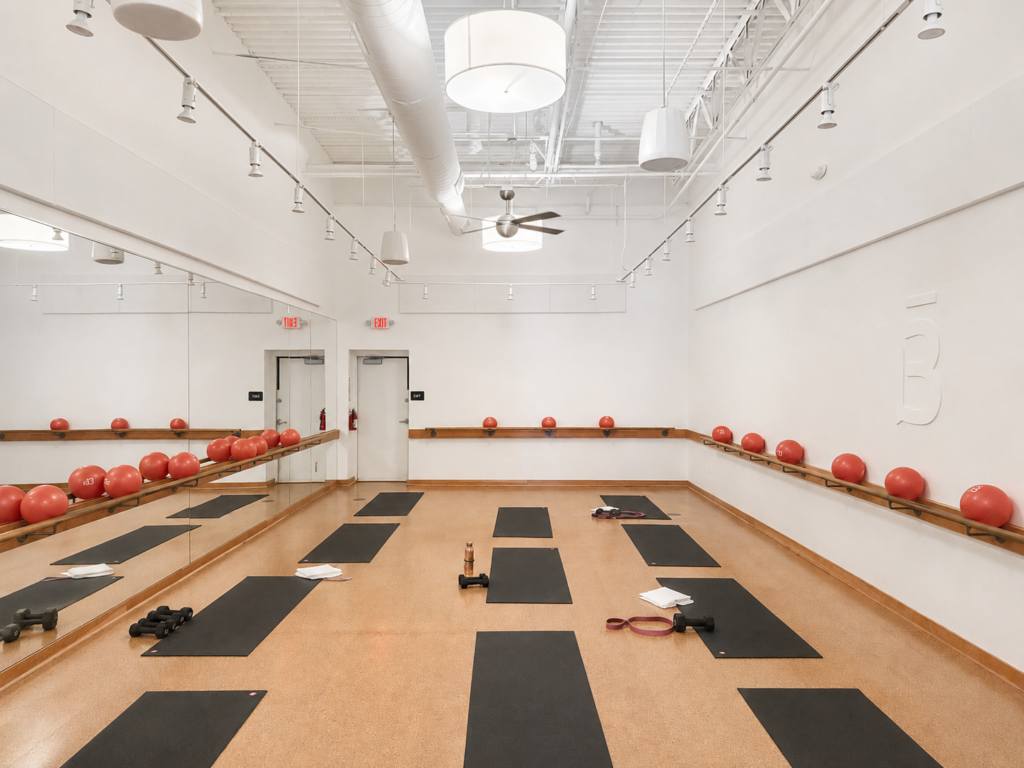
The name says “barre,” and there is a ballet barre in the room. But if you’re picturing an hour of tiny ballet pulses, that’s not quite it.
Barre3 borrows from barre, yoga, and Pilates, then builds the whole thing around functional movement — strength that carries over into how your body actually works in real life.
What Type Of Workout Is Barre3?
Low-impact. That’s the headline. Your feet mostly stay on the floor, there’s no jumping to jar your joints, and yet you will be shaking by the end. Low-impact does not mean low-effort — that surprises people the first time.
Underneath the low-impact label, barre3 is really three kinds of work in one session:
Strength comes from isometric holds and small pulses — think holding a low squat and then pulsing in a tiny range until the muscle genuinely fatigues. You’re loading the muscle without pounding your joints, which is why it holds up on days when a high-intensity class would wreck you.
Cardio shows up as short, large-range bursts — bigger dynamic movements that get your heart rate up between the strength sequences. They’re woven in, not saved for a separate “cardio day.”
Mindfulness is the part most workouts skip, and it’s the part barre3 is genuinely built on. Instructors cue your breath and your body position throughout, and the whole approach leans toward being present in the movement rather than performing at your absolute max.
That’s not a soft add-on — it’s the reason the format is sustainable enough to actually keep doing.
If your real problem is that a chaotic week eats your workout plan, this is one of the few formats that survives it. Health that fits into your life instead of competing with it → that’s the whole point.
What Does a Barre3 Class Look Like?
Every barre3 class opens the same way, with something called Primary Posture. It’s a simple alignment reset — feet forward, ankles and knees and hips and shoulders stacked, knees soft, ears over shoulders.
It takes a few seconds and it sets your body up for everything that follows. Once you know it, you’ll catch yourself standing in it in line at the grocery store.
From there, a typical class flows through:
- A warm-up of dynamic, large-range movement to get blood flowing and wake the muscles up.
- Strength sequences at the barre and on the mat — isometric holds and pulses that work the lower body, upper body, and core in sections.
- Short cardio bursts layered in to lift your heart rate.
- A closing stretch to release everything you just worked and bring the energy down before you leave.
The thing that makes it beginner-friendly: every single move comes with modifications.
Instructors offer layers — a way to make something gentler or more challenging — so a first-timer and a ten-year regular can take the exact same class and both leave having worked at the right level. Nobody’s watching to see if your rep is “perfect.”
What Equipment Barre3 Uses
In the studio, everything’s provided. At home or streaming online, you’ll want a few basics — none of them expensive:
- Dumbbells, usually in the 3-8 pound range (they go further than you’d think).
- An 8-inch
core ball — the small squishy one used for core and inner-thigh work. - Core sliders — little discs for your hands or feet that add control and challenge.
- A resistance band for added tension.
- A no-slip mat, which matters more at home (you won’t need to bring one to the studio).
You don’t need all of it to start. A mat and a set of light weights will get you through most classes.
The Three Barre3 Class Formats
Studios run three formats, and knowing the difference helps you pick your day:
b3 Signature
the foundational, balanced class. Strength, cardio, and mindfulness in the classic proportions. If you only take one type, this is it.
b3 Strength
heavier emphasis on weighted work and longer time under tension, without the cardio bursts. Endurance over intensity.
b3 Cardio
more sustained movement, less weight work, still fully low-impact. Gets your heart rate up without high-impact pounding.
Most come in 30, 45, and 60-minute options — the 45 (often called Signature 45) is the sweet spot for a lot of people, and the 60 just gives each section more room.
If you want the full breakdown of which format to pick, how the 45 and 60 actually feel different, and what it all costs, I go deep on that in my honest barre3 review.
How Barre3 Is Different From Barre, Pilates, And Bar Method
This is where the “what is barre3” question usually really lives — people want to know how it compares to what they’ve already tried.
Versus traditional barre (and formats like Bar Method): classic barre tends to be highly choreographed, with tiny isolated movements and a strong aesthetic focus.
Barre3 leans functional instead — strength sequences meant to translate into real-life mobility and balance, with modifications built for your body rather than a “perfect” line.
Versus Pilates: Pilates centers on core control and precise, flowing sequences, often on a reformer. Barre3 pulls in some of that core and control work, but adds the cardio bursts and the standing strength-and-balance work at the barre, so it plays more like a full-body class than a core-focused one.
The short version: if you liked the low-impact feel of barre or Pilates but wished it felt more like a complete workout, barre3 is usually the one that clicks.
Is Barre3 a Good Workout?
Short answer: yes — with the caveat that “good” depends on what you’re after.
If you want to feel worked without feeling wrecked, build real strength and balance, and actually keep a routine for more than three weeks, it delivers.
If you’re chasing max intensity or heavy powerlifting numbers, it’s not built for that.
I get into the honest version — where it shines, where it doesn’t, and whether the membership is worth it — in my full barre3 review.
What Happens If You Keep Going
The real story of barre3 isn’t one class — it’s what consistency does over months.
Strength you notice in ordinary things, balance that quietly improves, a routine that survives busy weeks.
I tracked exactly what changed after 200 classes → here’s what consistent barre3 actually delivered.
Who Barre3 Is For
Barre3 is for you if you want strength and movement without high-impact strain — coming back postpartum, working around cranky joints, starting over after a long break, or just wanting a workout that doesn’t demand you go all-out to count.
It’s for unpredictable schedules, because the format scales to whatever you’ve got that day. And it’s for anyone who’s tired of exercise that only “works” when they’re at 100 percent.
You don’t need to be flexible, coordinated, or already fit to walk in. You need a format that meets your body where it is — and this is one of the few that’s actually designed to.
Most studios run an intro offer, usually three classes for around $30–$45. Three classes is enough to know whether it clicks.
Start there, and you’ll have your own answer to “what is barre3” — the kind that comes from doing it.






Get the Weekly Wellth Newsletter
Stay up to date & receive the latest posts in your inbox.