



How to Make Chickpea Flatbread (Easy Socca Recipe)
Chickpea flatbread is one of the easiest ways to turn a simple pantry ingredient into something that feels like real food.
If you have chickpea flour, water, olive oil, and salt, you can make a savory flatbread that is crisp around the edges, soft in the center, and sturdy enough to use as a snack, side, or simple meal base.
This style of chickpea flatbread is often called socca, a thin chickpea flour flatbread commonly associated with the south of France. In Italy, a similar version is known as farinata. But you do not need to overthink it. At home, this is basically a pour-and-bake flatbread made from chickpea flour batter.
There is no yeast, kneading, rolling, or waiting for dough to rise. You whisk the batter, let it rest, pour it into a hot pan, and bake until golden.
It is the kind of recipe that works well for real life because it is practical, inexpensive, flexible, and surprisingly satisfying.
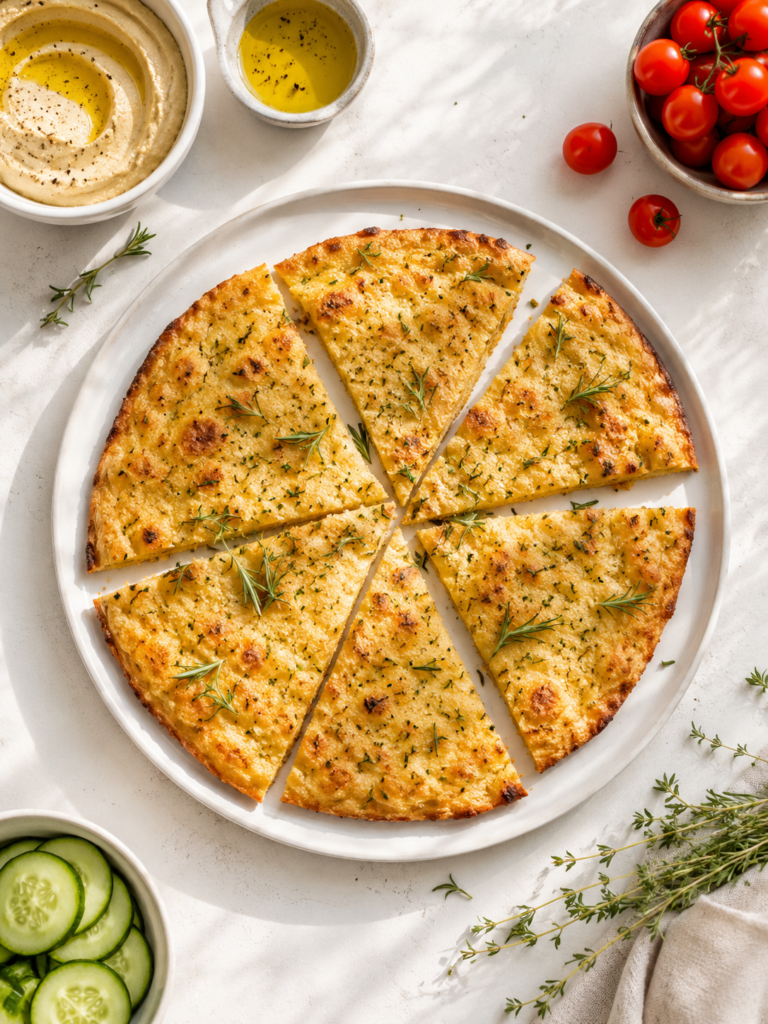
You can eat it with hummus, top it with vegetables and feta, serve it next to soup or salad, or use it as a quick gluten-free flatbread when you want something bread-like without making bread.
Why You’ll Love This Chickpea Flatbread
This chickpea flatbread is simple, but it works hard.
It is made with a few basic ingredients, most of which can live in your pantry. Once you have chickpea flour on hand, this becomes an easy recipe to make when you want something warm, savory, and homemade without a big cooking project.
It is also naturally gluten-free, dairy-free, and vegan as written. That makes it a helpful recipe for different eating styles, but it still feels like something you would want to eat even if you do not need a gluten-free option.
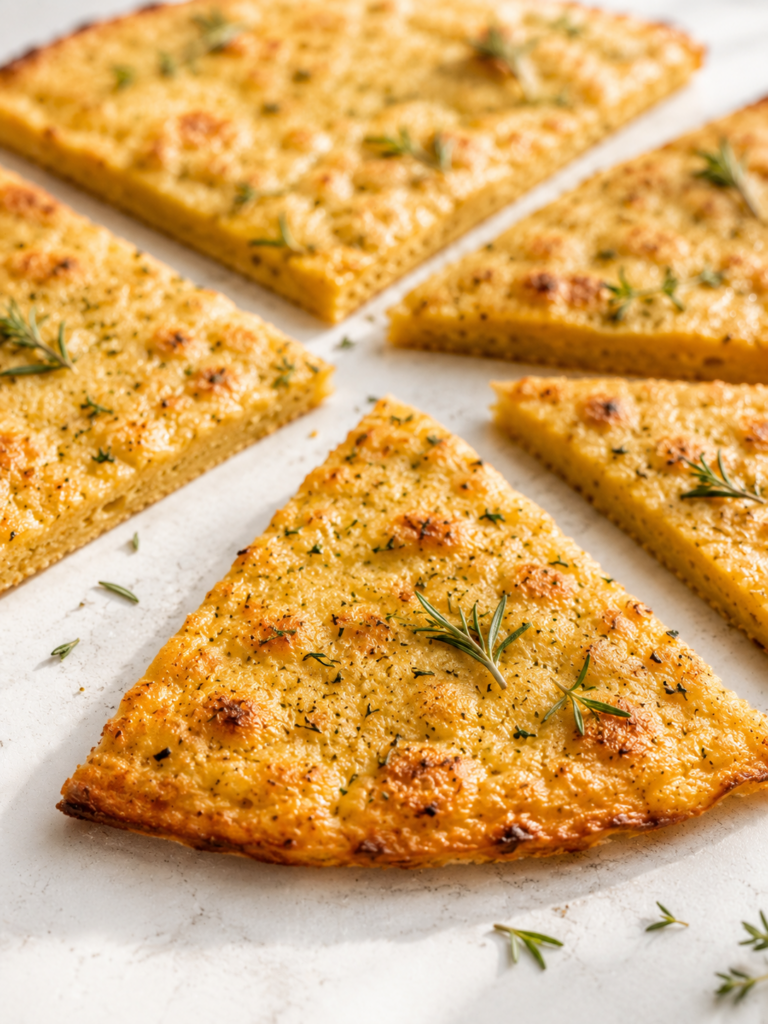
The texture is what makes it good. The edges get golden and crisp, while the center stays tender and almost creamy. It is not fluffy like pita or chewy like pizza dough. It is more rustic, savory, and slightly nutty.
It is also very flexible. You can keep it plain with olive oil and flaky salt, add herbs or spices to the batter, or use it as a base for toppings. It can be a snack, side dish, lunch, or easy dinner component.
What Is Chickpea Flatbread?
Chickpea flatbread is a thin savory flatbread made from chickpea flour, water, olive oil, and salt.
Instead of forming a dough, you make a pourable batter. The batter rests so the chickpea flour can hydrate, then it gets poured into a hot, oiled
The most common version is called socca, which is especially popular in Nice, France. A very similar chickpea flour flatbread is called farinata in Italy.
For an everyday kitchen, the important thing to know is this: chickpea flatbread is a simple way to make a bread-like food without wheat flour, yeast, or complicated steps.
Ingredient Prep
This recipe is low-prep, but a few small details help the texture.
First, whisk the chickpea flour well with the water. Chickpea flour can clump at first, so do not worry if the batter looks a little uneven right away. Keep whisking until it smooths out.
Second, let the batter rest for at least 30 minutes. This is not a complicated step, but it does matter. Resting gives the chickpea flour time to absorb the water, which helps the flatbread bake more evenly.
Third, preheat the pan. A hot
Chickpea Flatbread Ingredients
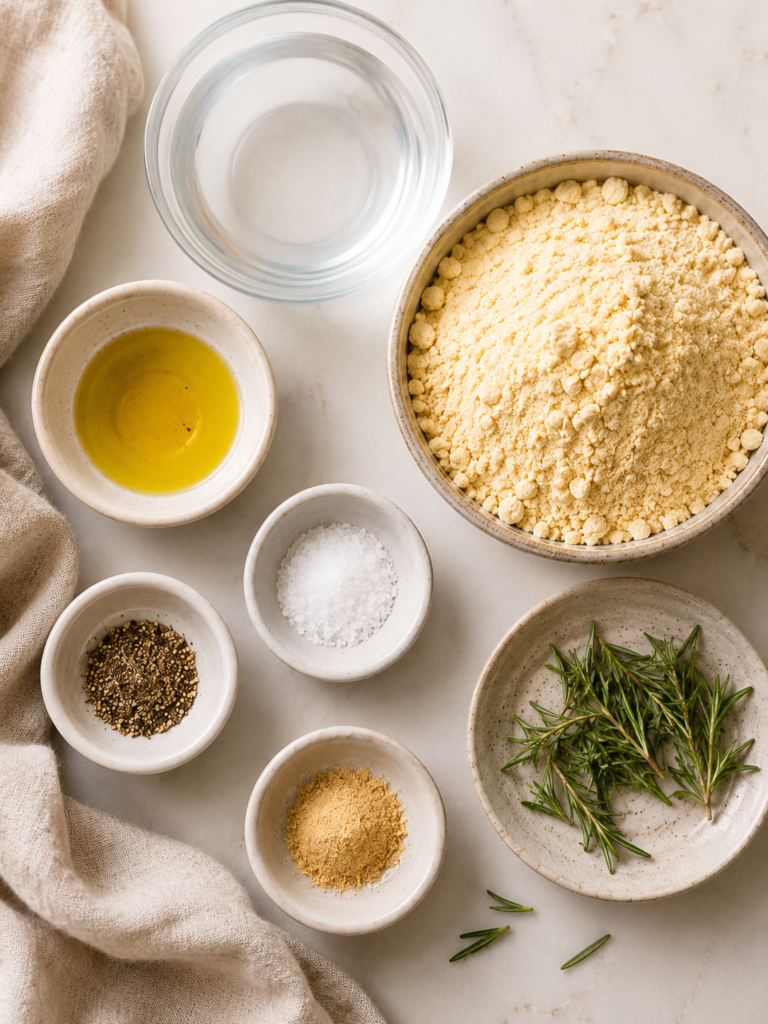
You only need a short list of ingredients for this chickpea flatbread recipe.
Chickpea Flour
Chickpea flour is the base of the recipe. You may also see it labeled as garbanzo bean flour or besan. It has a naturally savory, slightly nutty flavor and creates a sturdy flatbread without wheat flour.
Water
Water turns the chickpea flour into a pourable batter. A simple 1:1 ratio of chickpea flour to water is a good starting point for socca-style flatbread.
Olive Oil
Olive oil adds flavor and helps the flatbread crisp in the pan. You will use some in the batter and some in the
Salt
Salt is important here. Chickpea flour needs seasoning, so do not skip it.
Black Pepper
Black pepper is optional, but it adds a simple savory flavor.
Optional Seasonings
You can keep this recipe plain or add garlic powder, rosemary, thyme, za’atar, smoked paprika, or crushed red pepper flakes.
How to Make Chickpea Flatbread (Socca)
To make chickpea flatbread, start by whisking chickpea flour, water, olive oil, salt, pepper, and any seasonings in a medium mixing bowl.
The batter should be thin and pourable, similar to a crepe batter or thin pancake batter. If it feels very thick, whisk in a splash more water.
Let the batter rest for at least 30 minutes at room temperature. If you want to make it ahead, you can cover it and refrigerate it for several hours or overnight. Stir it well before baking.
When you are ready to cook, preheat the oven to 450°F. Place a 10-inch cast iron
Carefully remove the hot
Bake the chickpea flatbread for 12 to 15 minutes, or until it is set in the middle and golden around the edges. For more browning on top, broil it for 1 to 2 minutes at the end, watching closely.
Let it cool for a few minutes before slicing. Serve it warm with flaky salt, olive oil, dips, toppings, or whatever sounds good.
Portions & Serving Size
This recipe makes one 10-inch chickpea flatbread.
For a snack or side dish, it serves about 4 people. If you are using it as the main part of a meal, plan on 2 larger servings.
For a family-style meal with 2 adults and kids, you may want to double the recipe and make two flatbreads. One can be served plain for dipping, and the other can be topped with vegetables, cheese, eggs, chicken, or salad-style toppings.
Budget & Cost Estimate
Chickpea flatbread is a budget-friendly recipe because the main ingredient is chickpea flour, which is shelf-stable and can be used for several batches.
The exact cost depends on the brand of chickpea flour and olive oil you use, but one batch is usually inexpensive compared with buying specialty gluten-free flatbreads or prepared snack breads.
It is also a good “use what you have” recipe. The base is simple, and the toppings can come from leftover vegetables, herbs, dips, cheese, or proteins already in your fridge.
Health Benefits of Chickpea Flatbread & How This Works with Real Life
Chickpea flatbread is a simple way to add more legumes into your routine in a form that feels familiar and easy to eat.
Because it is made from chickpea flour, it has more protein and fiber than many flatbreads made with refined flour. That can make it feel more satisfying as a snack or meal base.
It is also naturally gluten-free, which makes it useful if you are avoiding wheat or cooking for someone who needs a gluten-free option. As always, check your chickpea flour label if you need it to be certified gluten-free.
To make it more balanced as a meal, pair it with a protein, healthy fat, and produce. For example, serve it with Greek yogurt dip and cucumbers, top it with eggs and spinach, or use it as a base for hummus, tomatoes, and feta.
Meal Prep & Freezer Friendly Notes
Chickpea flatbread is best fresh from the oven, especially if you want crisp edges. That said, leftovers can still be useful.
Store leftover slices in an airtight container in the refrigerator for up to 3 days. Reheat them in a
You can also make the batter ahead. Whisk it together, cover it, and refrigerate it for up to 24 hours. Stir well before baking because the flour may settle as it sits.
Freezing is possible, but not ideal. The texture is better from the refrigerator than the freezer. If you do freeze it, separate slices with parchment paper and reheat directly from frozen in a hot oven or toaster oven.
What to Serve With Socca
There are a lot of ways to serve chickpea flatbread.
For a simple snack, slice it into wedges and serve it with olive oil, flaky salt, and cracked black pepper.
For dipping, pair it with hummus, whipped feta, tzatziki, baba ganoush, Greek yogurt dip, Greek yogurt cream cheese, or a simple olive oil and balsamic plate.
For lunch, top it with greens, tomatoes, cucumbers, olives, feta, avocado, roasted vegetables, or leftover chicken.
For dinner, serve it alongside soup, salad, grilled chicken, turkey meatballs, or a Mediterranean-style bowl.
You can also use it as a pizza-adjacent base. Bake the chickpea flatbread first, then add toppings like marinara, mozzarella, pesto, tomatoes, or arugula. It will not taste like traditional pizza crust, but it makes a savory, sturdy base.
Recipe Tips for the Best Chickpea Flatbread
Let the batter rest. This is one of the most important steps for better texture.
Use a hot pan. Preheating the
Do not make it too thick. A 10-inch
Use enough oil. The oil helps the edges crisp and keeps the flatbread from sticking.
Season it well. Chickpea flour has good flavor, but it needs salt and benefits from herbs or spices.
Broil carefully. If you want more browning, broil for just 1 to 2 minutes and watch closely.
FAQs
Is chickpea flatbread the same as socca?
Yes, chickpea flatbread is often called socca when referring to the French-style version made with chickpea flour, water, olive oil, and salt.
Is chickpea flatbread gluten-free?
Yes, chickpea flatbread is naturally gluten-free because it is made with chickpea flour instead of wheat flour. If you need a certified gluten-free recipe, check the label on your chickpea flour.
Can I make chickpea flatbread without a cast iron skillet ?
Yes. Cast iron works well because it holds heat and helps crisp the edges, but you can also use a metal baking pan. The texture may be slightly different, but it will still work.
Why is my chickpea flatbread soggy?
It may be too thick, underbaked, or baked in a pan that was not hot enough. Use a hot
Can I use canned chickpeas instead of chickpea flour?
Not for this recipe. Socca-style chickpea flatbread needs chickpea flour to create the thin batter and classic texture.
What does chickpea flatbread taste like?
It tastes savory, slightly nutty, and mild enough to pair with lots of toppings. The edges are crisp, and the center is tender.
Can I make this ahead?
Yes. You can make the batter up to 24 hours ahead and refrigerate it until ready to bake. You can also store cooked leftovers in the fridge and reheat them in a
Final Thoughts
Chickpea flatbread is one of those recipes that proves simple food can still feel satisfying.
It is made with pantry ingredients, takes very little active work, and gives you something warm, savory, and flexible enough to use in several different ways.
Keep it plain for dipping, top it like a flatbread, serve it with a salad, or use it as a quick gluten-free base when you want something bread-like without making dough.
Once you make it once, it is easy to see how useful it can be. Chickpea flour, water, olive oil, and salt turn into a crisp-edged flatbread that feels simple, practical, and a little elevated — exactly the kind of recipe worth keeping in your back pocket.
PrintChickpea Flatbread (Socca)
This easy chickpea flatbread recipe, also known as socca, is made with chickpea flour, water, olive oil, and salt. It is naturally gluten-free, crisp around the edges, tender in the center, and perfect for dipping, topping, or serving as a simple snack or side dish.
- Prep Time: 5 minutes
- Cook Time: 15 minutes
- Total Time: 50 minutes
- Yield: 4 servings
- Diet: Gluten-Free
Ingredients
- 1 cup chickpea flour
- 1 cup water
- 2 tablespoons olive oil, divided
- 1/2 teaspoon fine sea salt
- 1/4 teaspoon black pepper
- 1/2 teaspoon garlic powder, optional
- 1 teaspoon chopped fresh rosemary or thyme, optional
- Flaky salt, for serving, optional
Instructions
- In a medium mixing bowl, whisk together the chickpea flour, water, 1 tablespoon olive oil, salt, black pepper, and any optional seasonings.
- Let the batter rest at room temperature for at least 30 minutes. Whisk again before baking.
- Preheat the oven to 450°F. Place a 10-inch cast iron skillet or metal baking pan in the oven while it preheats.
- Carefully remove the hot skillet from the oven. Add the remaining 1 tablespoon olive oil and swirl to coat the bottom of the pan.
- Pour the chickpea batter into the hot skillet and tilt the pan slightly to spread it evenly.
- Bake for 12 to 15 minutes, or until the chickpea flatbread is set in the center and golden around the edges.
- For extra browning, broil for 1 to 2 minutes at the end, watching closely so it does not burn.
- Let cool for a few minutes, then slice into wedges or squares. Finish with flaky salt if desired.
Notes
- For a thinner, crispier chickpea flatbread, use a larger pan or divide the batter between two pans.
- If the center seems too soft, bake for a few more minutes. Chickpea flatbread should be tender in the middle, but it should not be wet.
- This recipe is best served warm, but leftovers can be refrigerated and reheated in a skillet, toaster oven, or air fryer.
Get the Weekly Wellth Newsletter
Stay up to date & receive the latest posts in your inbox.