



Is Club Pilates Worth It? My Honest Review + What It Actually Costs
If you’ve been looking into Pilates and keep seeing Club Pilates everywhere, you’re not alone. At some point, it turns into a very specific question: is Club Pilates worth it?
Between the polished studios, reformer machines, and membership pricing, it feels like a bigger commitment than just trying a random workout class.
And if you’re anything like me, you’re not looking for something trendy — you want something that actually fits into your life and feels worth your time, energy, and money.
So I finally tried it.
Here’s what Club Pilates is actually like, what it costs, and whether it’s truly worth it — especially if you’re in your 30s or 40s and thinking about a more sustainable way to stay strong and active — the kind of healthy habit worth building by 40.
New to Pilates and want to know more about what it is before you sign up? Read: What is Pilates and what does it do →
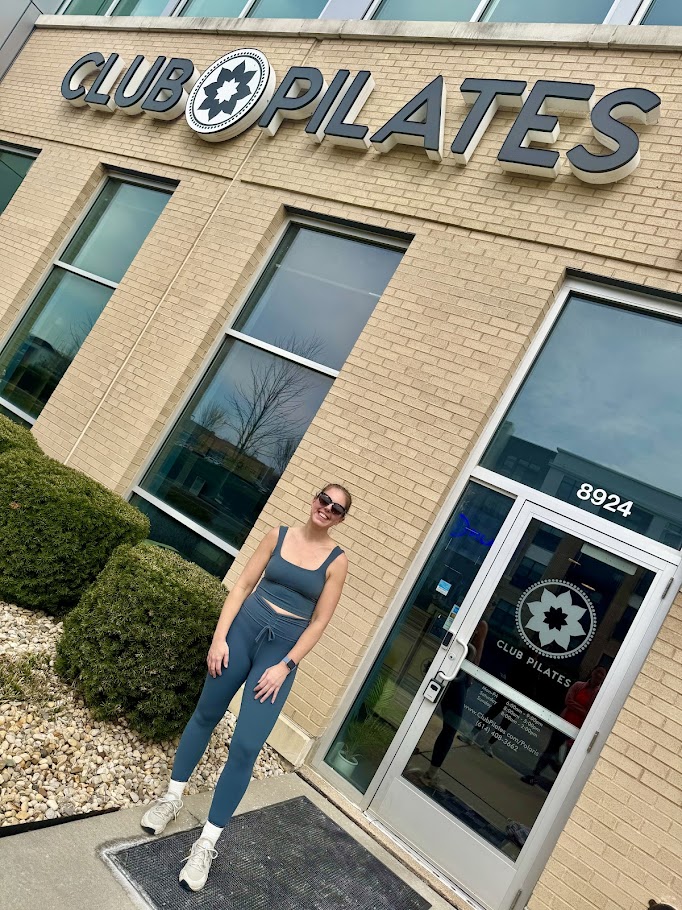
What Is Club Pilates?
Club Pilates is a nationwide reformer-based Pilates franchise — similar to how Barre3 or Orangetheory operates in their own categories, but focused entirely on Pilates.
If you’ve ever done mat Pilates, this is a completely different experience.
Instead of floor work, classes revolve around the reformer — a machine with springs, straps, and a sliding carriage that adds resistance while supporting your movement.
It looks intimidating at first, but it’s designed to help you move with more control and precision.
Most studios follow a similar structure:
- Small group classes (typically 8–12 people)
- A mix of strength, stability, and mobility work
- Instructor-led guidance through each movement
Club Pilates also uses a progression system. Classes start at Level 1 and move through 1.5 and beyond, with instructors assessing when you’re ready to advance.
As you move up, the workouts become more complex — greater range of motion, more coordination, and more advanced use of the equipment.
In addition to levels, there are different class formats depending on your focus:
- Reformer Flow – Full-body Pilates
- Cardio Sculpt – Faster-paced, more dynamic
- Control – Slower, strength-focused
- Center + Balance – Core and stability
- Restore – Stretching and recovery
Each class uses the same core equipment but emphasizes different outcomes.
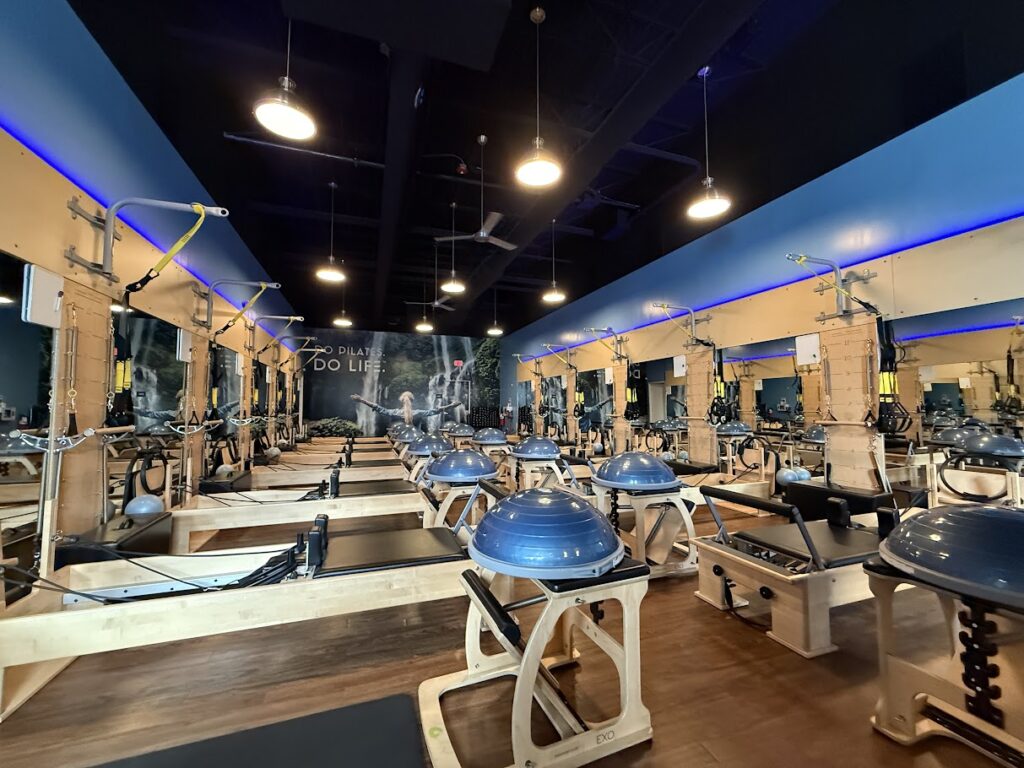
Why Club Pilates?
If it feels like Club Pilates is everywhere, it’s because it is.
It’s grown into one of the largest Pilates franchises, with 800+ locations globally and hundreds across the U.S. — and it’s still expanding.
But what actually sets it apart is how easy it is to step into.
You don’t need prior experience, you don’t need to understand the equipment, and you don’t need to figure out programming on your own. The class structure, level system, and overall experience are already built for you.
That makes it very different from traditional Pilates studios, which can feel more specialized, instructor-dependent, and harder to just try.
Club Pilates removes a lot of that friction — which is a big reason people aren’t just trying it, they’re sticking with it.
That same accessibility is also what’s driving its growth. But whether it’s actually the right fit for you depends on how you like to work out and what you’re trying to get out of it.
How Much Does Club Pilates Cost?
This is one of the biggest factors when deciding if Club Pilates is worth it — and one of the most searched questions about the studio. So let’s be specific.
Pricing varies slightly by location, but here’s a general breakdown of what you can expect:
| Class Packages | Estimated Cost |
|---|---|
| 4 classes/month | ~$89–$129 |
| 8 classes/month | ~$169–$229 |
| Unlimited | ~$199–$299 |
| Drop-in | ~$25–$40 |
Many locations offer a free introductory class to get you in the door before you commit.
The studio I visited was running a promo for the 8 classes or unlimited packages with 20% off your first month.
A few things worth knowing before you sign up:
- The 3-month minimum is real. Most memberships require a minimum commitment — this isn’t something you casually try for a few weeks and cancel. Factor that in before you give them your credit card.
- There is a 4-class pass but whether this option is worth it depends. 4 classes a month isn’t enough to build consistency, but if you’re using Club Pilates as a supplement to an existing routine rather than a primary workout, 4 classes might actually be exactly what makes sense for you.
- Drop-in rates add up fast. At $25–$40 per class, dropping in occasionally is the most expensive way to do it. If you’re going more than once or twice a month, a membership will almost always be the better deal.
That’s real money. Especially for something that may not fully replace what you’re already doing. The math only works if you’re replacing something else in your routine, or if this becomes your primary workout.
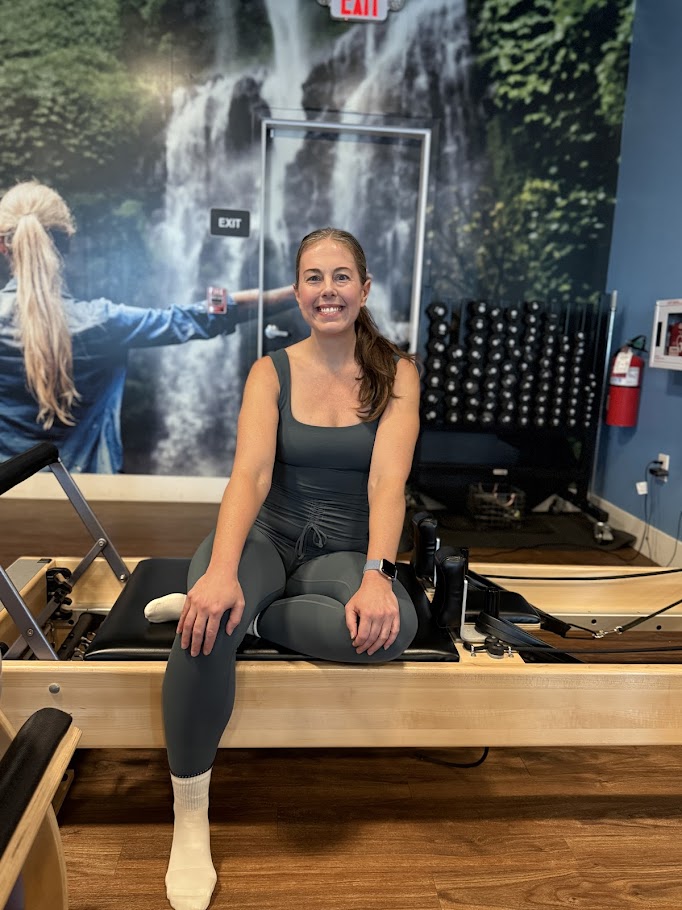
My Club Pilates Experience
I tried a Club Pilates location in Columbus, Ohio with a few friends, all at different fitness levels.
The studio was clean, minimal, and calm — well-lit, intentional, and nothing like the chaotic energy of a gym.
The intro class I attended was mostly women in their mid-30s and up, with a mix of fitness levels. I’d expect higher-level classes to skew more experienced.
The overall vibe felt very approachable.
Booking Your First Class + What to Expect
Most locations book through an app, which makes the whole process easy.
That said, arrive early — at least 15 minutes, especially your first time.
I showed up in fitted leggings, fitted tank, hair tied back, water bottle, grip socks. That’s the uniform.
Looser tops ride up during inversions and looser bottoms catch on the reformer straps — fitted is genuinely the move. CRZ Yoga’s Butterluxe line is what I wear; the matching longline sports bra stays put through the whole class.
Grip socks are required and cost $15–$30 a pair at the studio if you forget them, so just bring your own. The studio sends a reminder text with all the details before your class — reading it helps.
A class was ending when I walked in and it was crowded, tight, and unclear where to go. I did circles near the front desk until things settled. That’s easily avoided if you’re not walking in right at the start time.
The intro class is free and 30 minutes. It’s a taste, not a workout — designed to walk you through the reformer, basic movements, and how the studio operates. You won’t leave exhausted. You’ll leave knowing whether you want to come back.
Unlike other studio gyms, there’s no music and no cardio component (at least in the intro). It’s quiet and focused, which felt right for this kind of movement, but worth knowing if you’re used to a high-energy environment.
There’s no traditional cardio in the intro class — no jumping, no heart-rate spikes like you’d get in HIIT or Orangetheory.
That said, some higher-level classes (like Cardio Sculpt) incorporate faster-paced movements on the reformer that can elevate your heart rate — just not in the same way as a typical cardio workout.
The Intro Class
The class itself followed a clear structure.
It started with a quick intro — both to Pilates and to the equipment — and the instructor asked about everyone’s experience level, which was enough to gauge how much guidance the room needed.
From there, we did a short warm-up, then moved through about 6–8 different exercises using different parts of the equipment — starting on the reformer, transitioning to the mat, and then back again.
The class ended the same way it started, with a short reset to bring everything back down.
The part I liked most was the way the equipment allows for a deep, controlled stretch while still building strength.
The leg strap work on the reformer was easily my favorite — it felt challenging but supported, like you could push further without risking injury.
It’s a very different feeling than strength training with heavy weights, and one I didn’t expect to enjoy as much as I did.
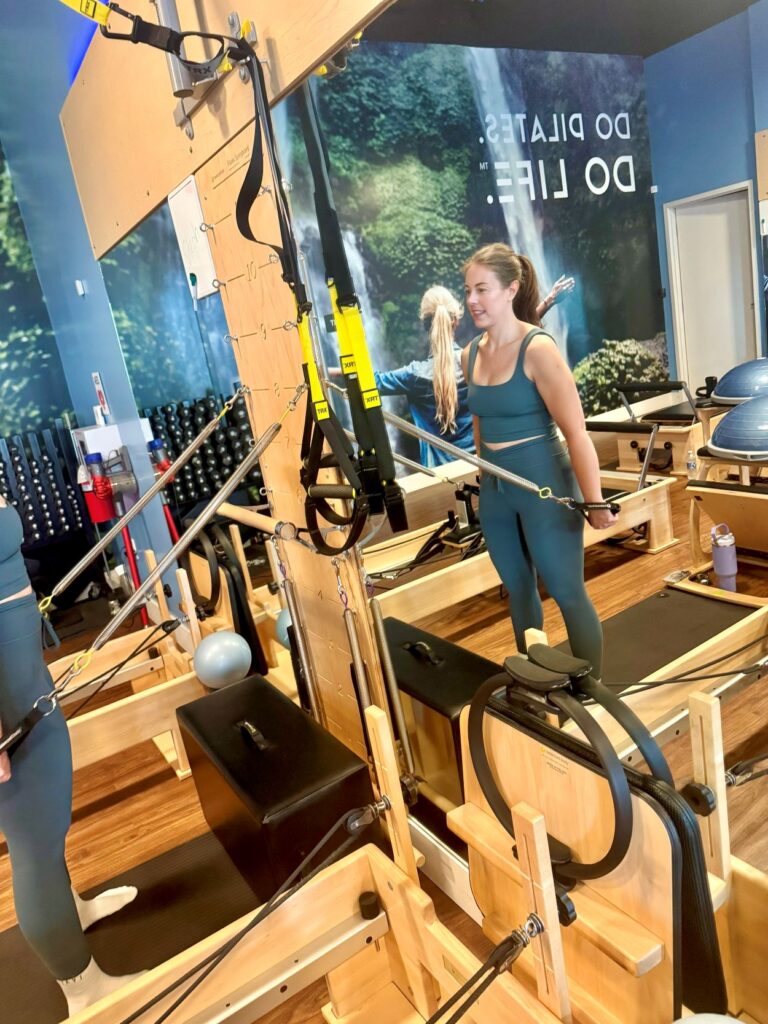
What a Club Pilates Class Actually Feels Like
Before going, I honestly expected Pilates to feel extremely difficult — like something you had to already be “in shape” to even attempt. That ended up being completely wrong.
Pilates has a reputation for being harder than it looks — and the reformer is usually what people point to.
It looks like something between a workout machine and a piece of physical therapy equipment, and everything I’d heard made it sound like there was a steep learning curve just to use it correctly.
Turns out it’s more approachable than it looks, and I actually loved using it.
The intro class was very beginner-friendly, and the instructor made everything feel straightforward and doable. It felt more like learning a system than trying to survive a workout.
The fear of not knowing what you’re doing is bigger than the actual experience of not knowing what you’re doing.
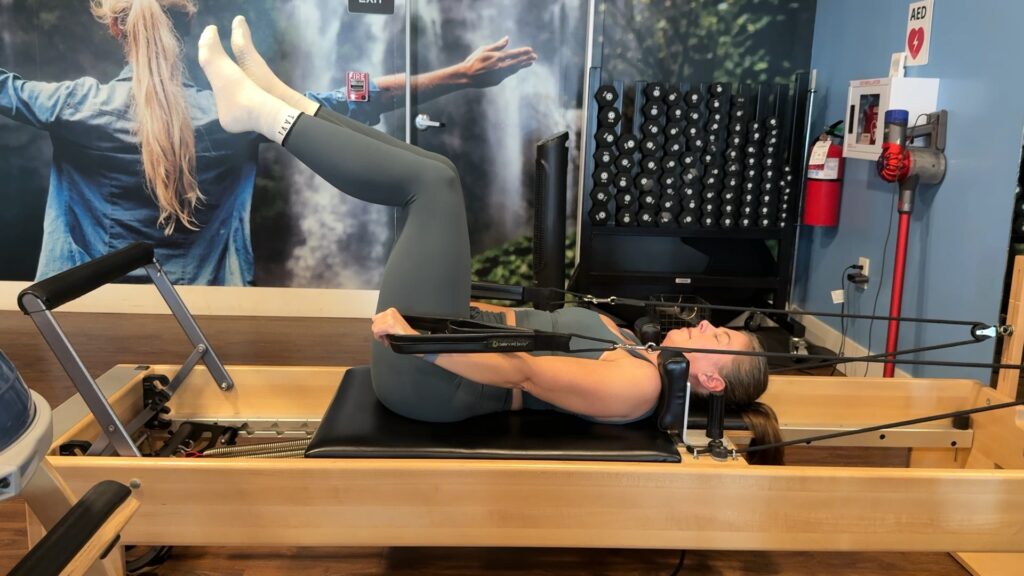
The Reformer
The reformer forces you to be intentional. You can’t power through a rep — you feel each muscle working, and the slower pace keeps you present instead of just moving through the motions.
The movements are slow and controlled, which means your muscles don’t get a break.
You’re holding positions longer than expected, working smaller stabilizing muscles that don’t usually get targeted.
It feels like a deep stretch meeting a muscle burn — uncomfortable in the best way. At some point you’ll probably start shaking — that’s normal, and it means it’s working.
The resistance is also self-calibrating in a way free weights aren’t. With
For someone whose legs are significantly stronger than their arms — which is more common than people admit — that matters. You’re not constantly compromising between what’s right for one muscle group vs. another.
The Learning Curve
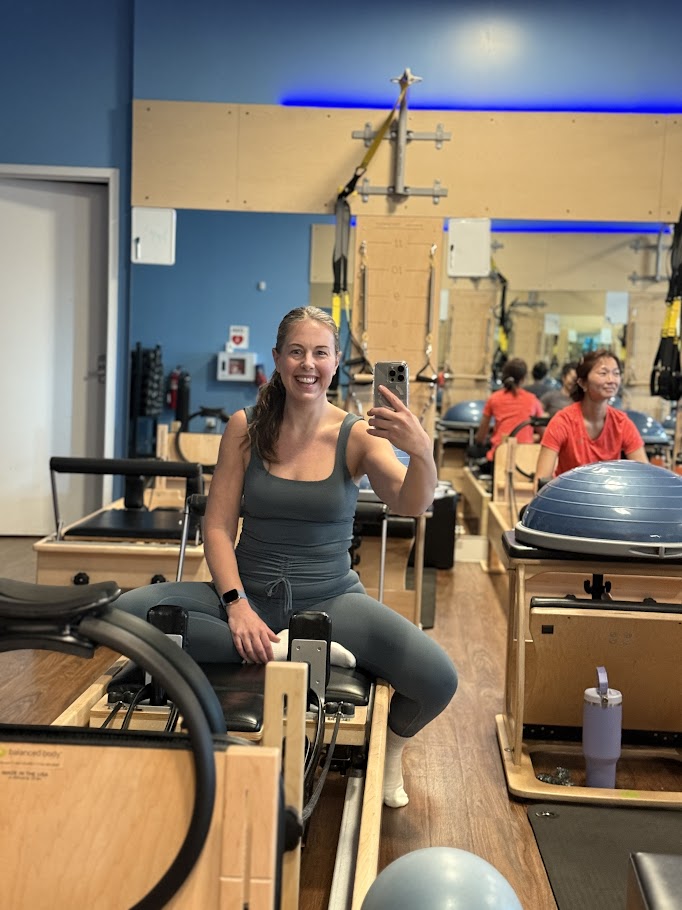
Having been regularly attending barre3 classes helped more than I expected.
The vocabulary was virtually the same — bridge lifts, tabletop, tricep extensions — just translated from standing to horizontal, and from free weights to the reformer.
Different environment, different equipment, same foundational language. If you have any background in barre, yoga, or general fitness training, you’re more prepared than you think.
You won’t necessarily leave drenched in sweat, but you’ll feel it later — in your posture, your core, how you move through the day.
The Real Question: Is Club Pilates a Workout Replacement or Supplement?
This is where most reviews get either too confident or too vague — so I’ll just be honest: based on one intro class, I don’t have enough information to answer this definitively. And I’d be skeptical of anyone who does.
The real question isn’t even replace or supplement — it’s whether this earns its place in your week, or just adds to it. That answer depends entirely on your routine and your budget.
What I can say is that the resistance work is real, the muscle connection is real, and at higher levels it’s probably doing more than most people give it credit for.
But whether Pilates can fully replace traditional strength training is a bigger question than this review can answer — and one worth looking at on its own.
And if the goal is to invest in something that actually improves your strength and consistency long-term, it’s worth comparing that spend to other options—like working with a trainer who can build a program around you.
My Honest Take: Is Club Pilates Worth It?
Honestly? I wanted to sign up on the way out. That’s probably the most useful thing I can tell you.
Club Pilates is good.
The experience is clean, the format works, and the slow-controlled-intentional style of movement is genuinely underrated — especially if most of your fitness life has been spent chasing intensity.
What I’d push back on is the way it’s often marketed as a complete fitness solution.
One intro class isn’t enough to say that definitively in either direction — and I’d be skeptical of anyone who claims otherwise.
What I do know is that it serves a real purpose: it’s recovery-forward, mobility-focused, and genuinely enjoyable in a way that doesn’t leave you wrecked.
Whether it earns a permanent spot in your routine depends on what you’re working with: your goals, your schedule, and whether the cost makes sense given how you’d actually use it.
This is the bigger question behind working out consistently — what survives a real week, not an ideal one.
If money were no object, I’d be back next week. That’s probably the most honest thing I can say about it.
The first class will probably make you want to take another one — mine did.
If you’re still deciding whether Pilates itself is a good fit — whether it should replace your current routine or just supplement it — it helps to zoom out. Read: Is Pilates Worth It →


Get the Weekly Wellth Newsletter
Stay up to date & receive the latest posts in your inbox.